

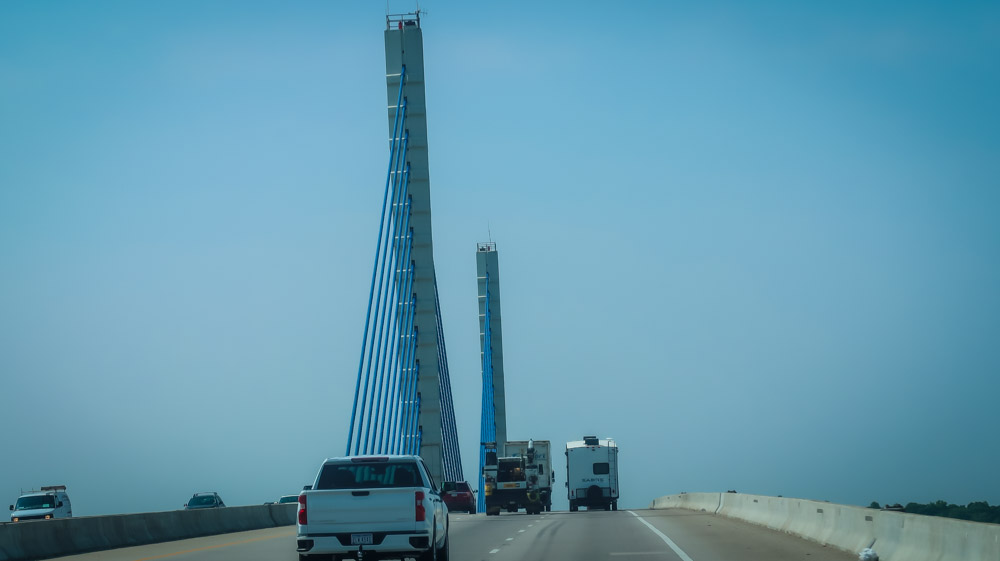
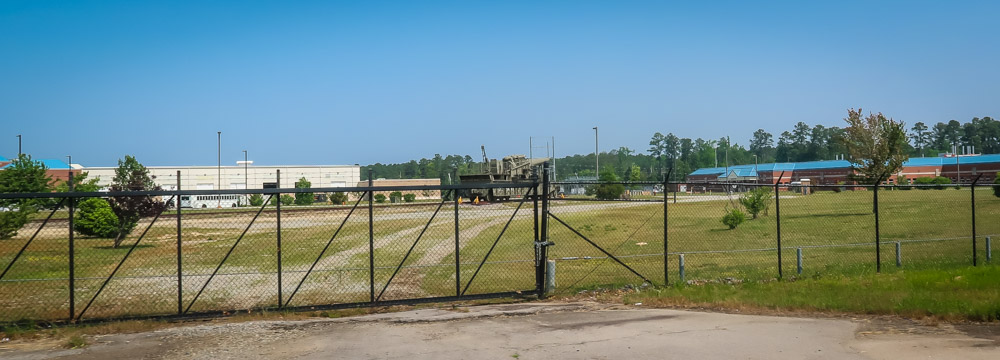
Monday – Sunny 56* @ 7am! BRRRR Day 22 of our adventure. Made coffee, tea and fruit protein drinks in blender with fresh fruit! Yummy! All packed up…stopped at the dump station and 8:45 am we’re on the road. Saw quail as we left the campground. 9:15am stopped at a 7-11 for our daily diet coke’s. As we were on the back roads we passed the Naval Weapons Station at Yorktown! Massive buildings. 10:30am we crossed the James River over this big bridge. Next we passed Fort Greg Adams Army Base Facility.
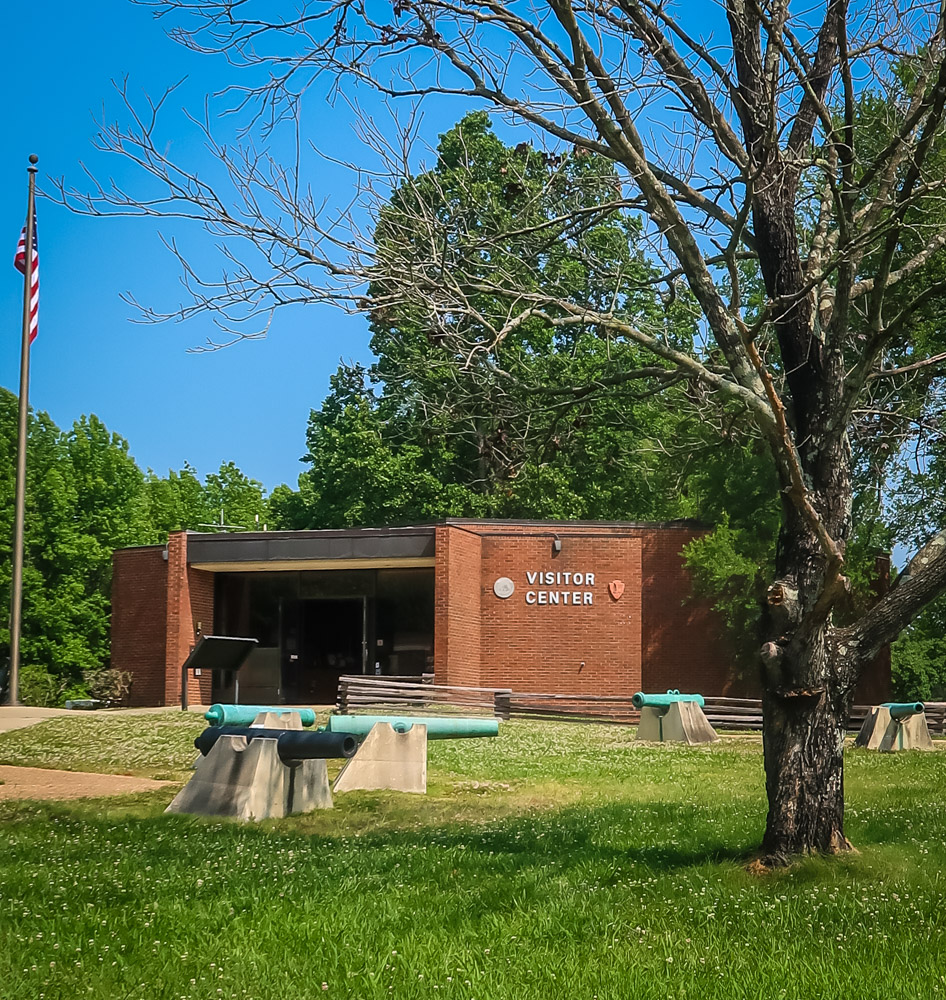
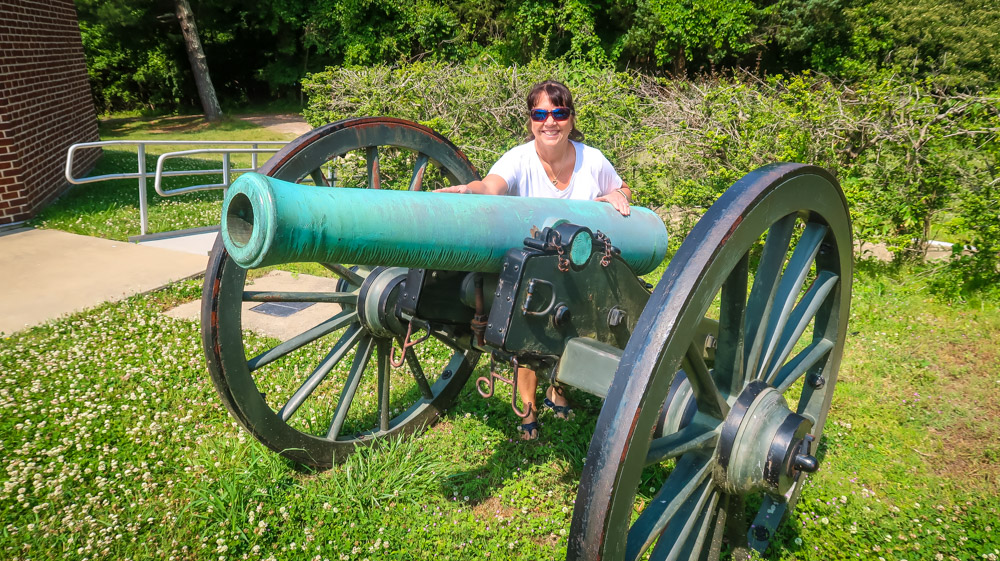
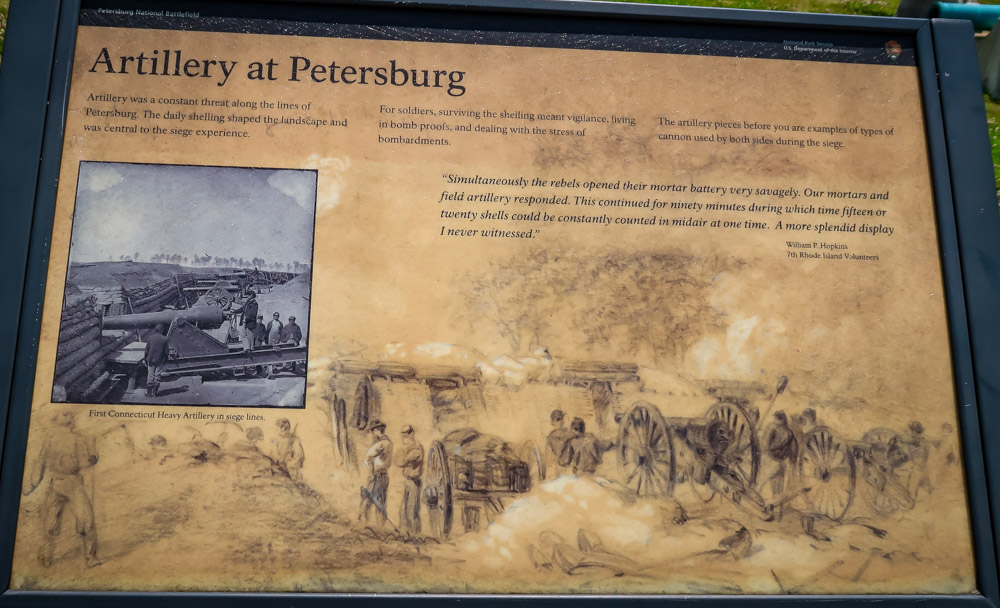
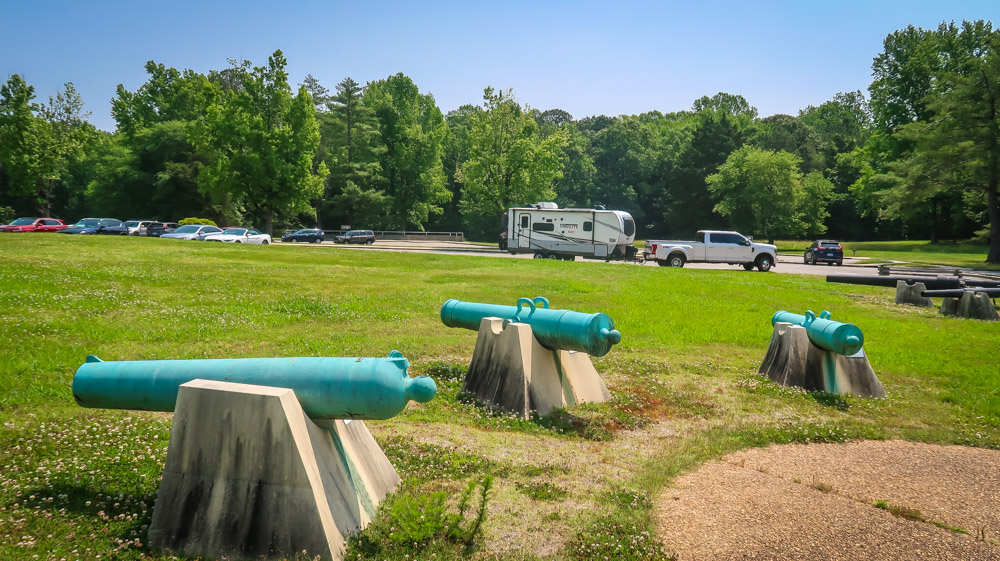
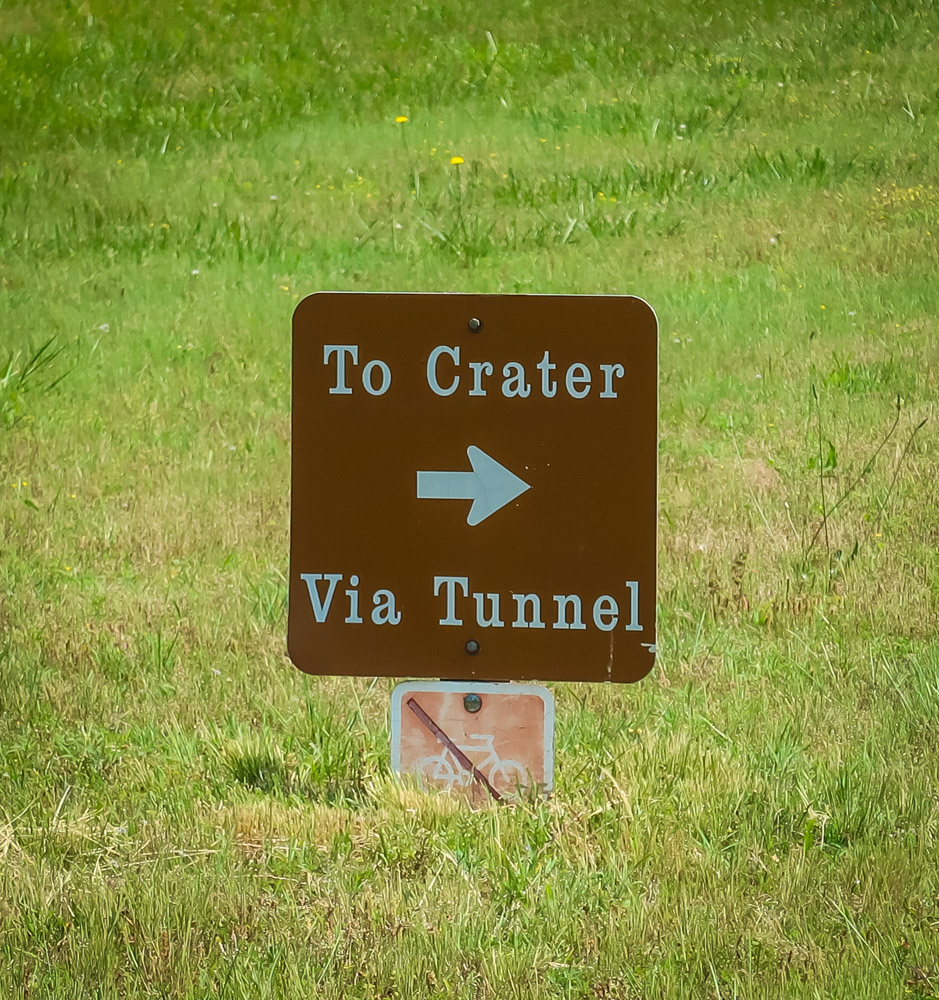
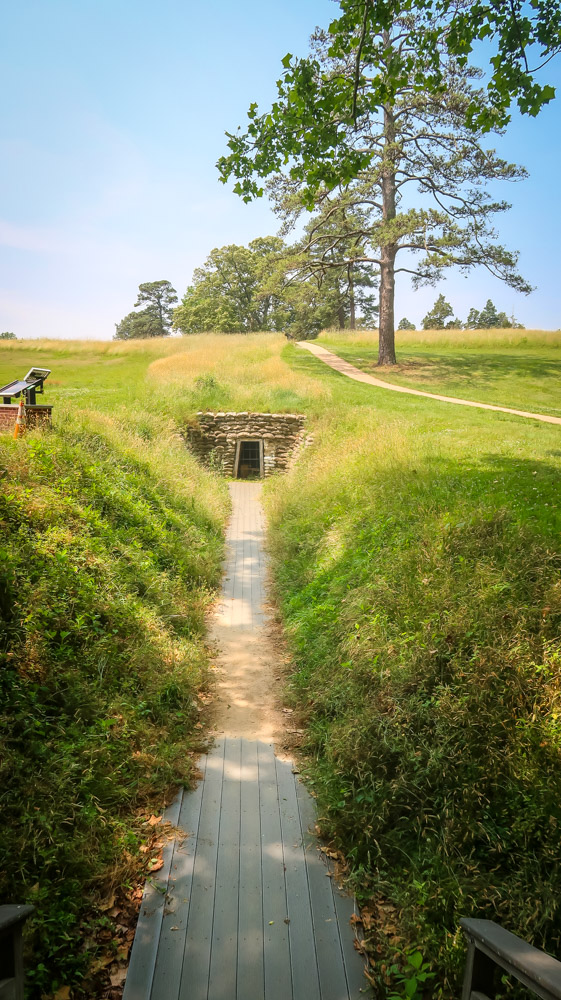
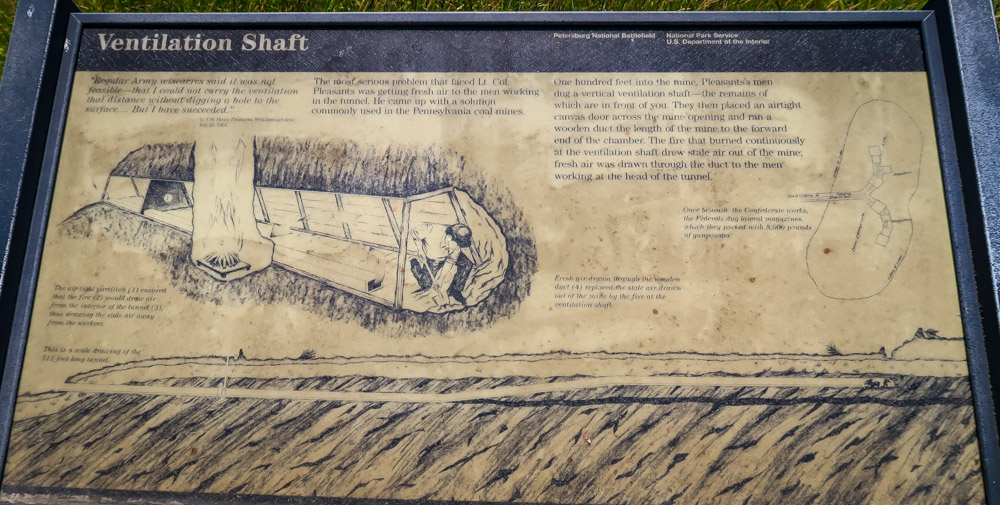
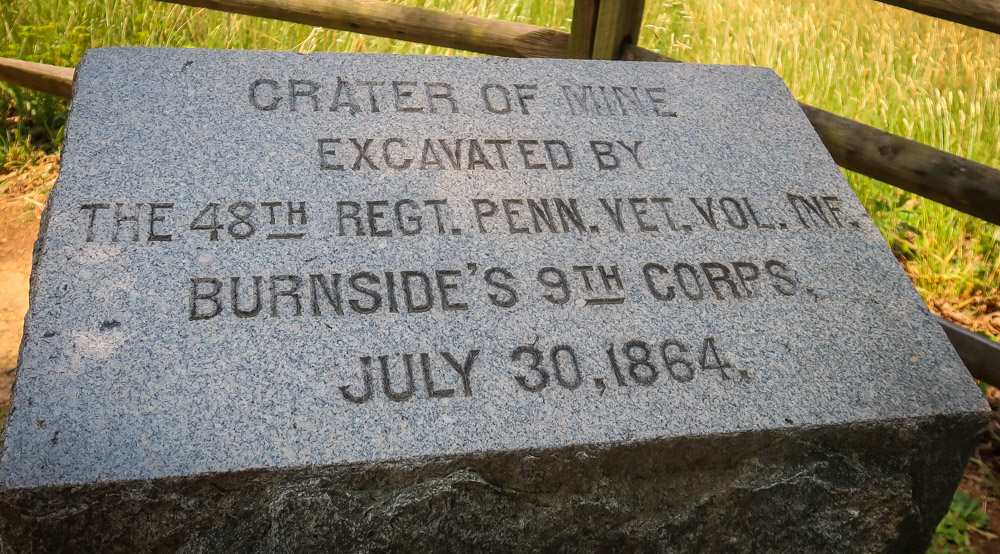
10:40 – We arrived at Petersburg Battlefield and you all know by now how excited I am! We spent about an hour in the visitor center looking at all the exhibits and talking with the rangers. Next we did the auto tour of the Battlefield. We stopped at the crater and walked the trail. Saw the mine shaft and tunnel where the explosion took place.
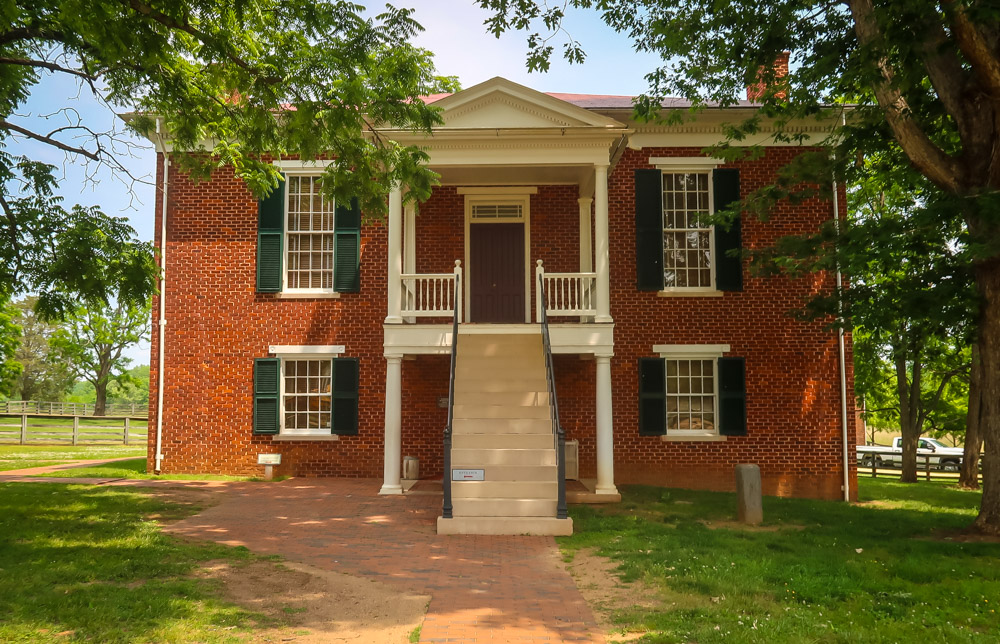
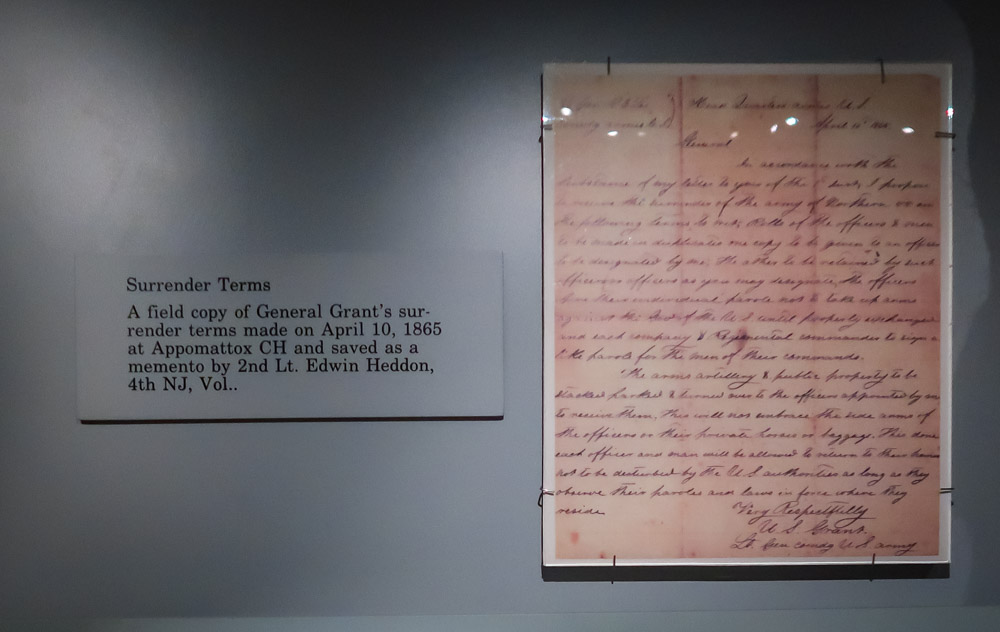
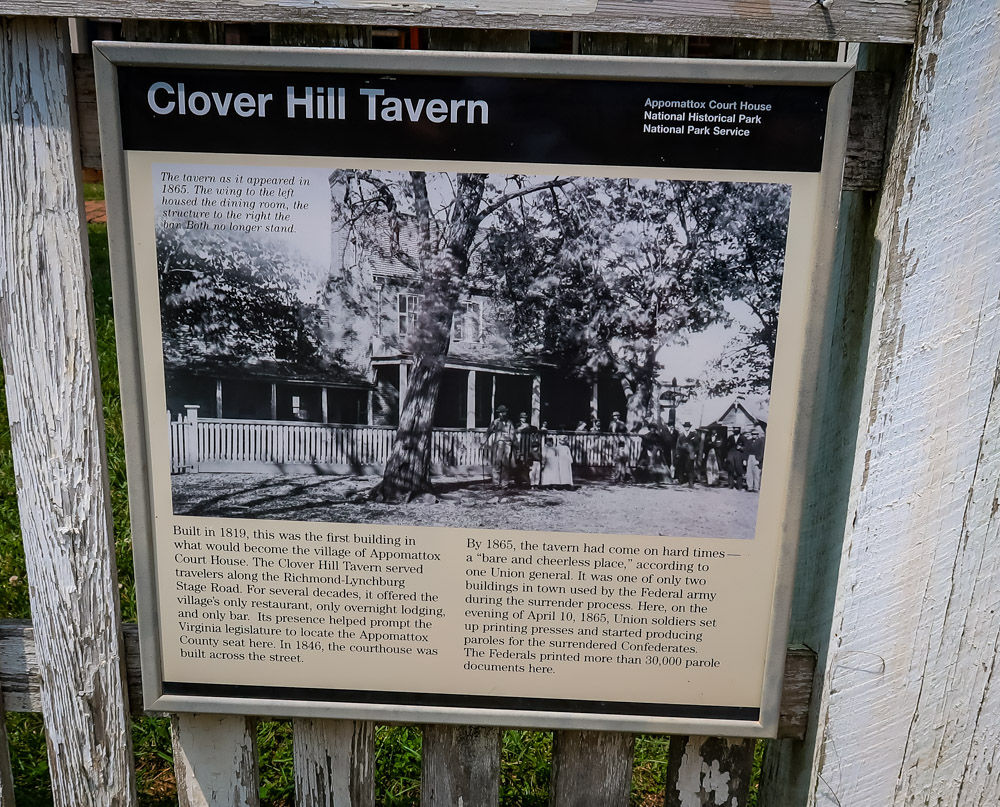
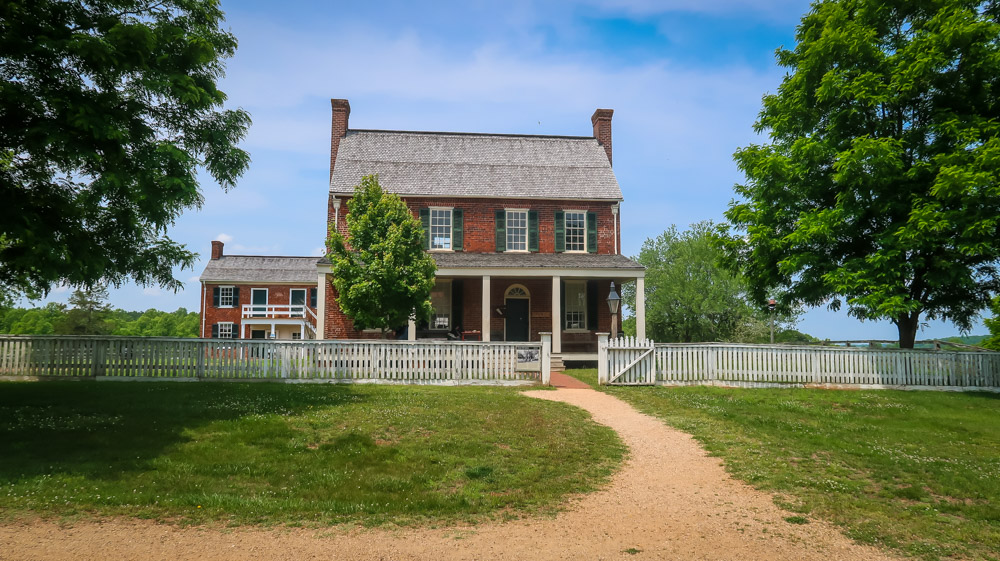
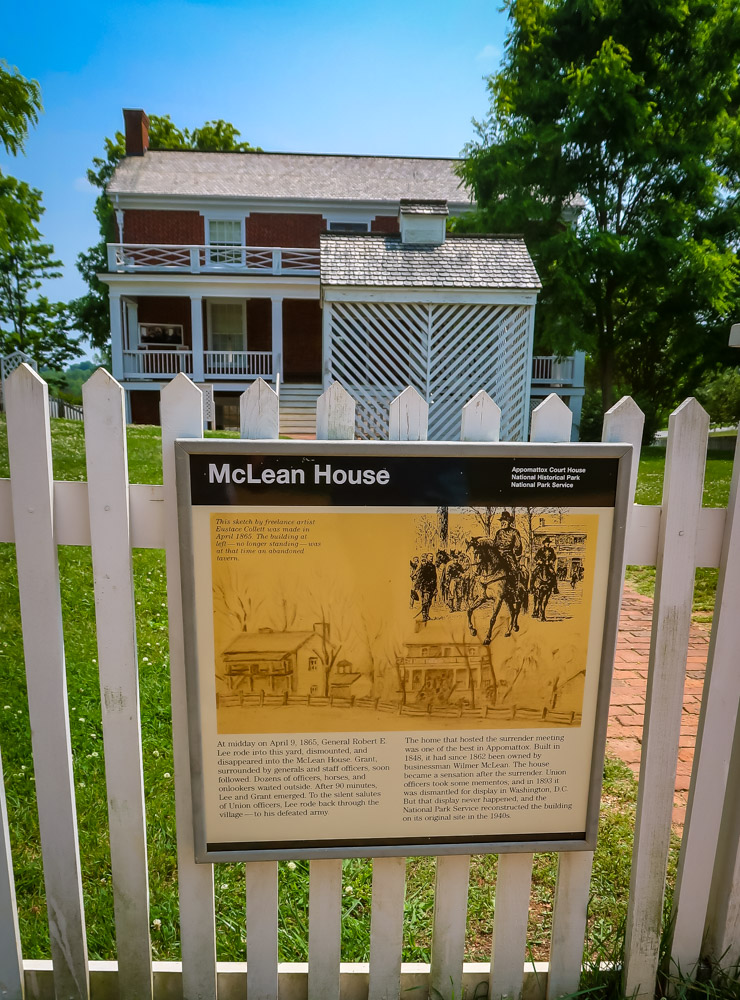
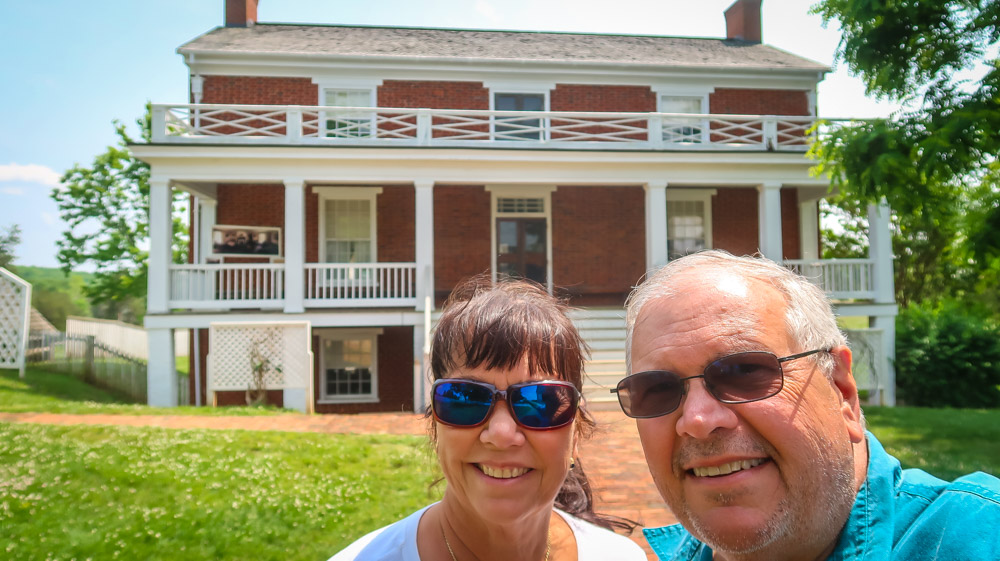
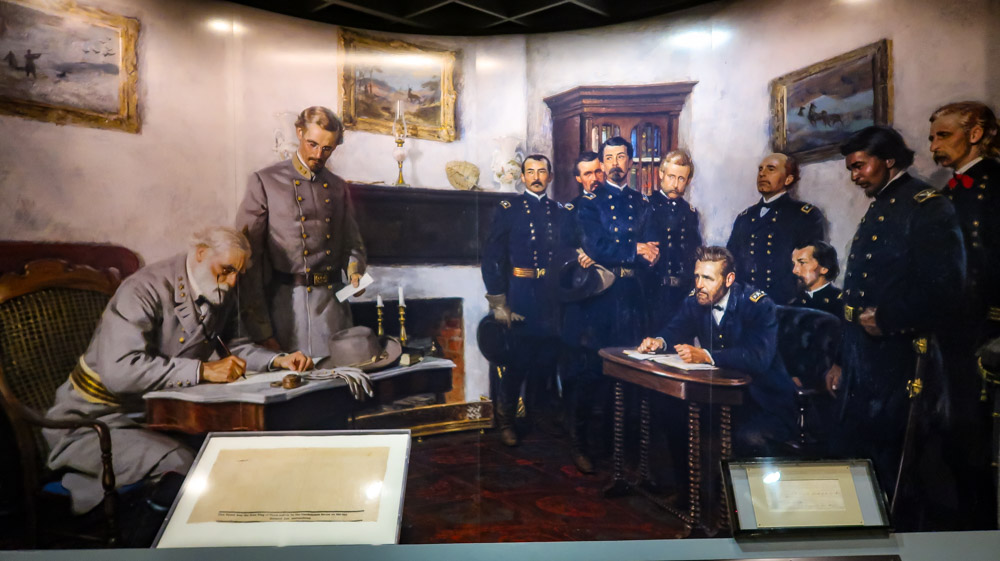
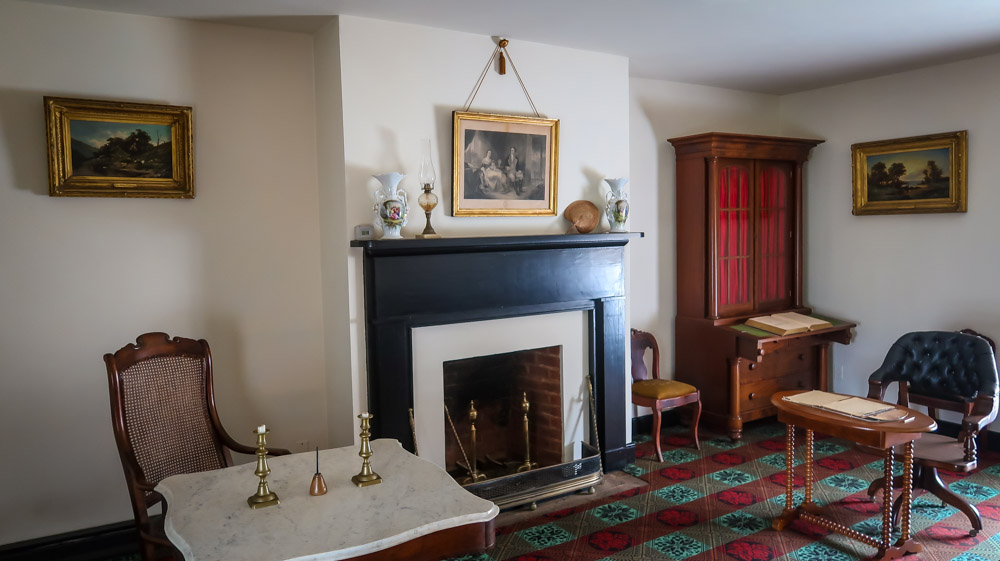
On to the next adventure! Drove to Appomattox. Yes more history and this was pretty interesting! Yes that came from me! We visited the visitor center which was, In the Appomattox Court house. Great displays and movie. Then we walked the grounds and into all the buildings. Really interesting to go into the McLean’s home where the surrender took place. When our adventure was over we went into Ruby and had a picnic lunch there in the parking lot.
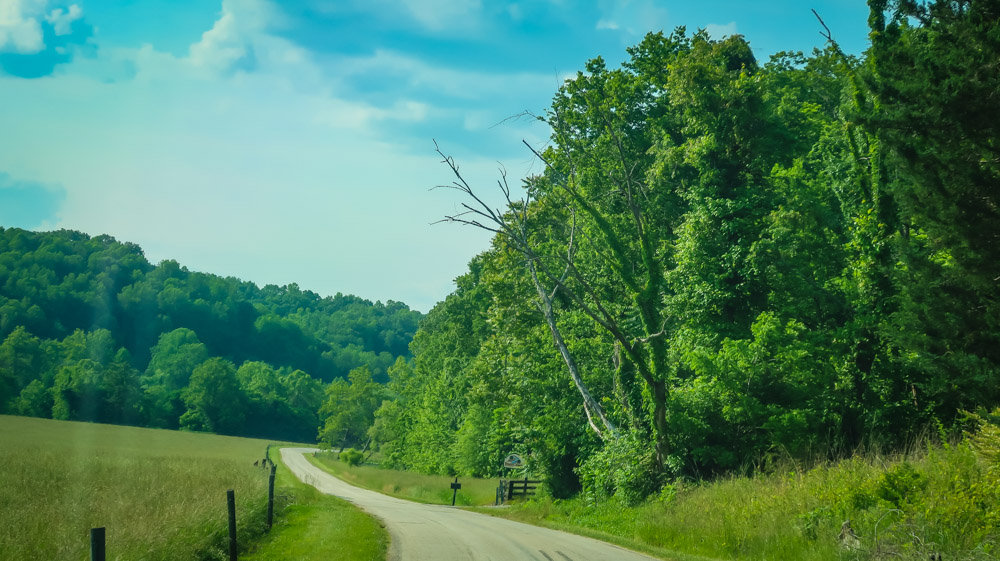
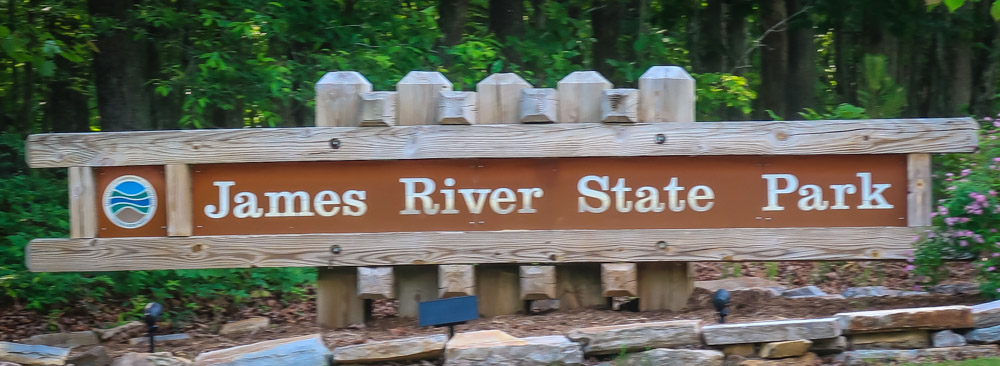
4:35 76* – Stopped at Sam’s Club to fill up the truck – 86.157 gallons at 3.36/gal = $290.26. Stocked up at Walmart next door. WOW an 18 count of eggs $2.04!!!! Onward to the campground. GPS took us around a train yard through a mall parking lot out but that was the only way out of town! Go figure! Then a 7 mile drive on a dirt and narrow road to James River State Park. We are out in the middle of no where!
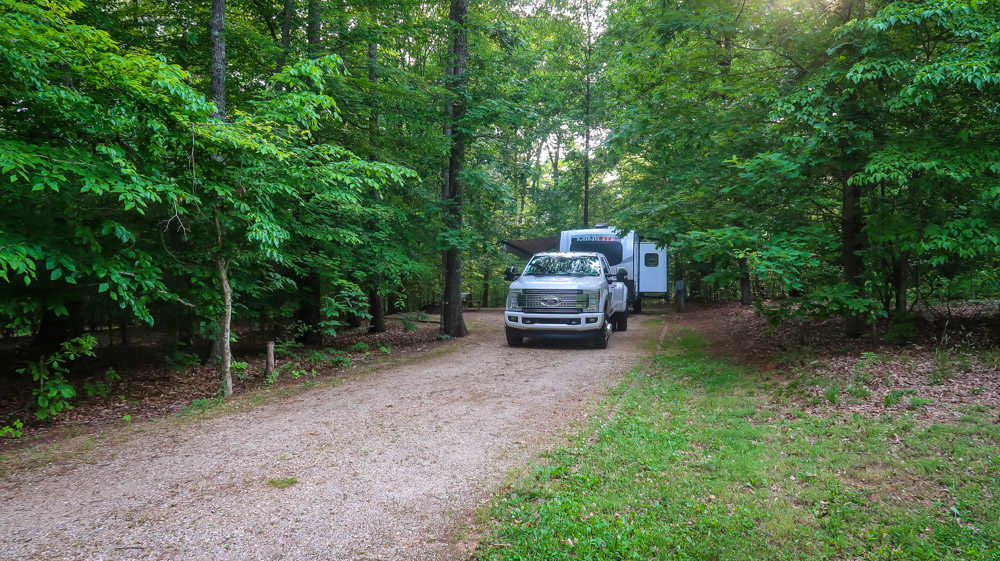
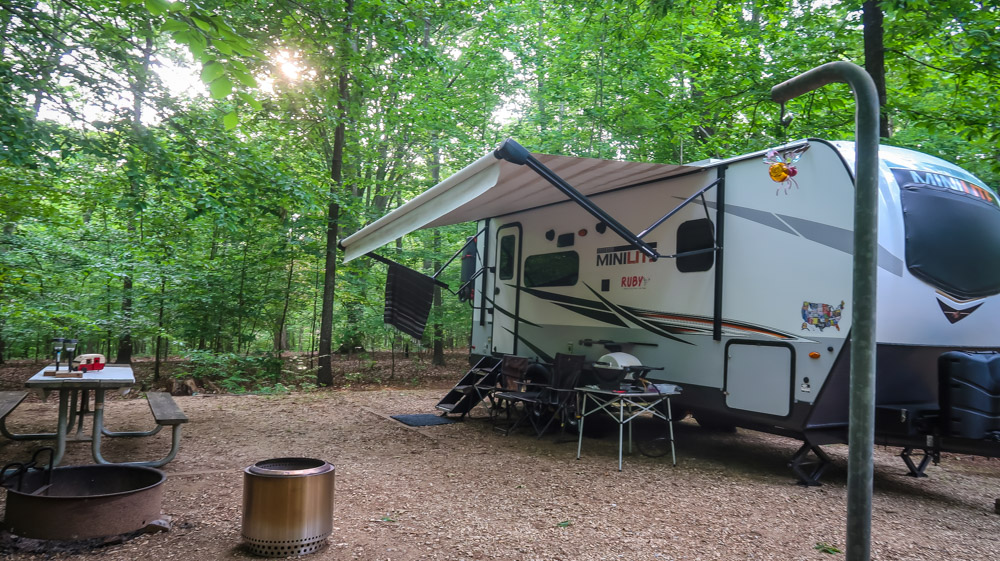
Here we checked into the campground and proceeded to site #18. Really long, wooded site. After setting up we took the nature trail around the area. Came back and grilled hamburgers and cooked green beans. Relaxed inside and watched 3 episodes of the Diplomat which I had recorded to bring with us.
251 miles traveled today.
Tuesday – 8am & 66* inside the RV! Sunny day. No service here! Today is a fix things, clean, laundry, explore and relax day. Did 4 loads of laundry at only $1.25/load!
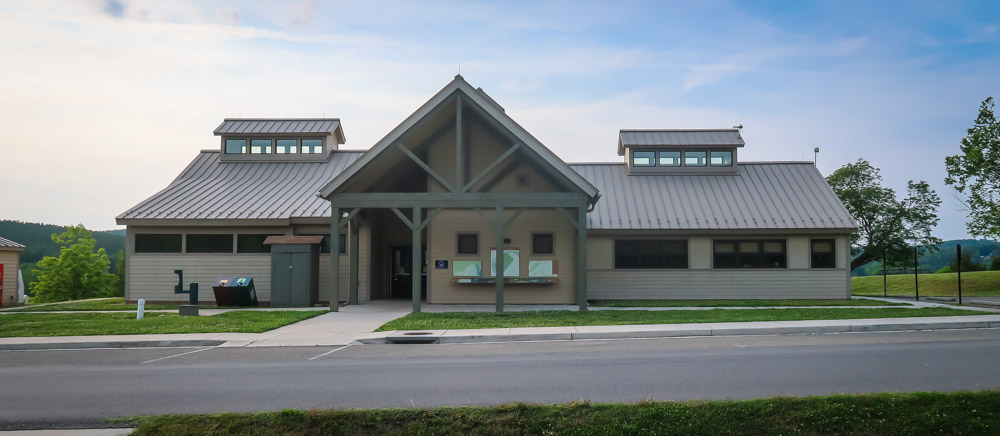
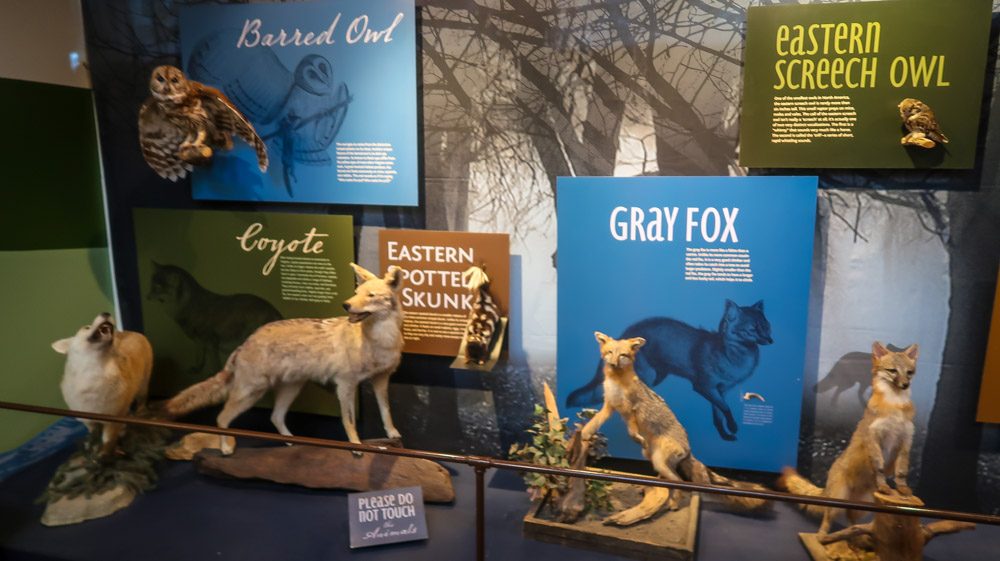
We enjoyed sitting outside listening to music all afternoon then drove to the visitor center and looked at all the displays. Big surprise to see was a bubblegum machine with 3 different milkweed seeds to purchase in plastic clear balls so you could plant milkweeds. Never saw anything like that before.
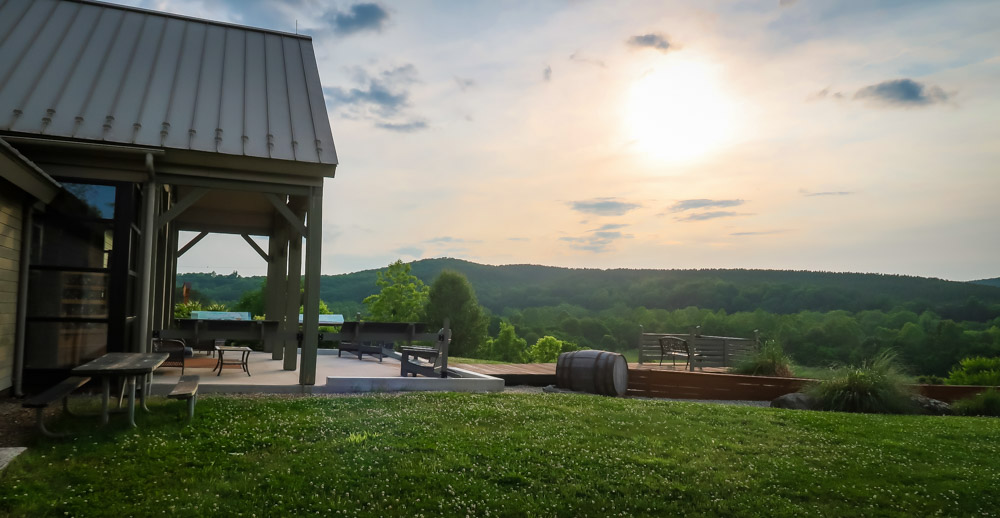
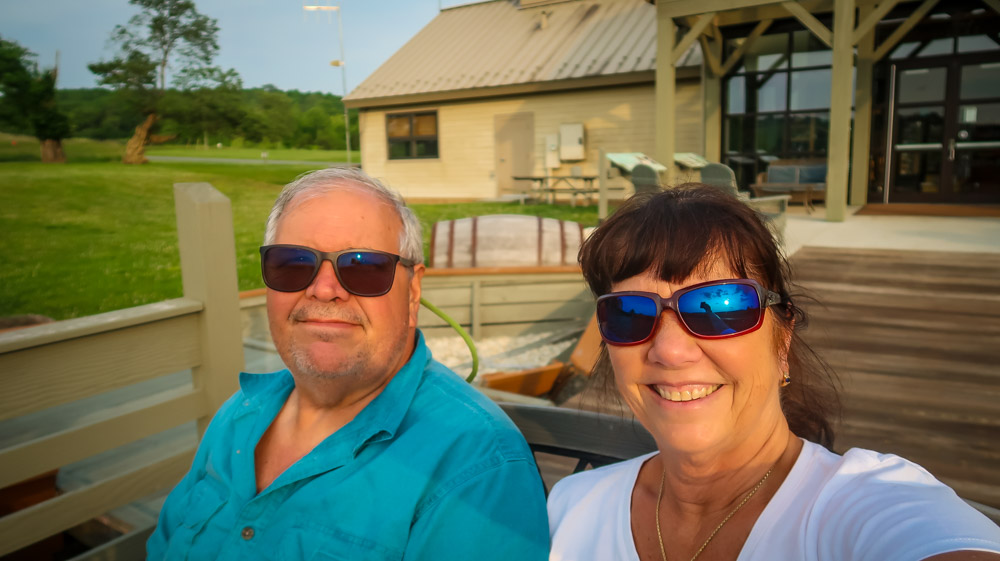
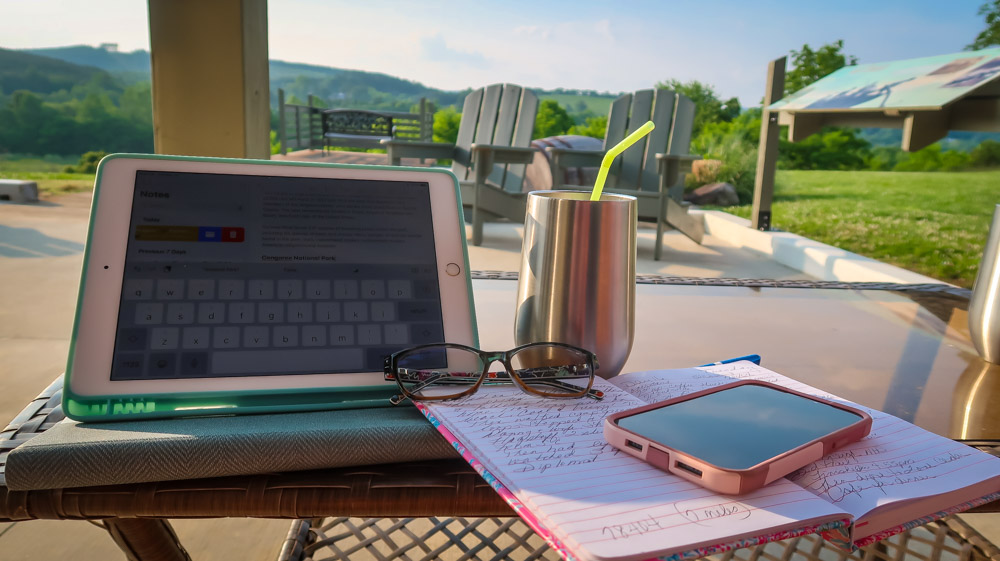
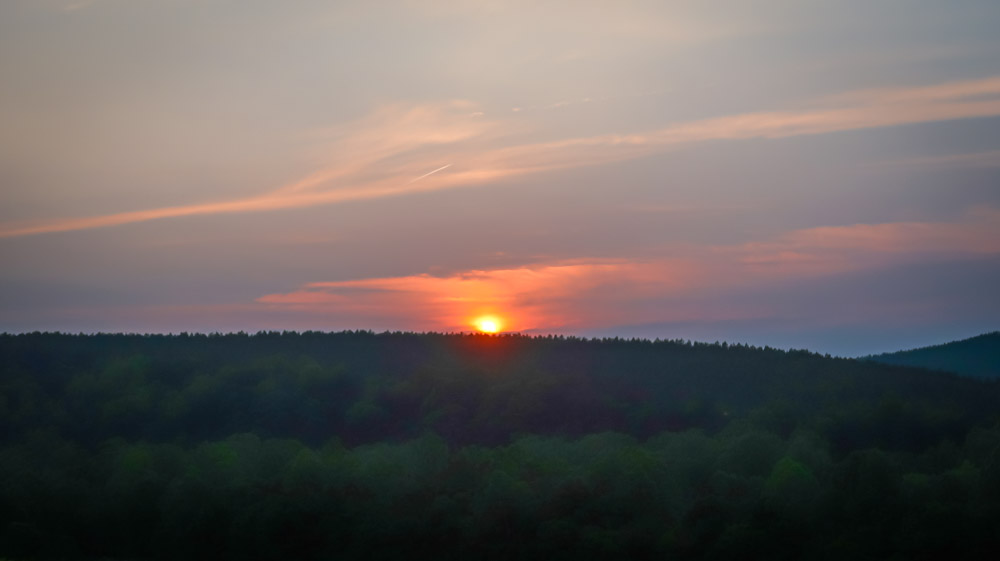
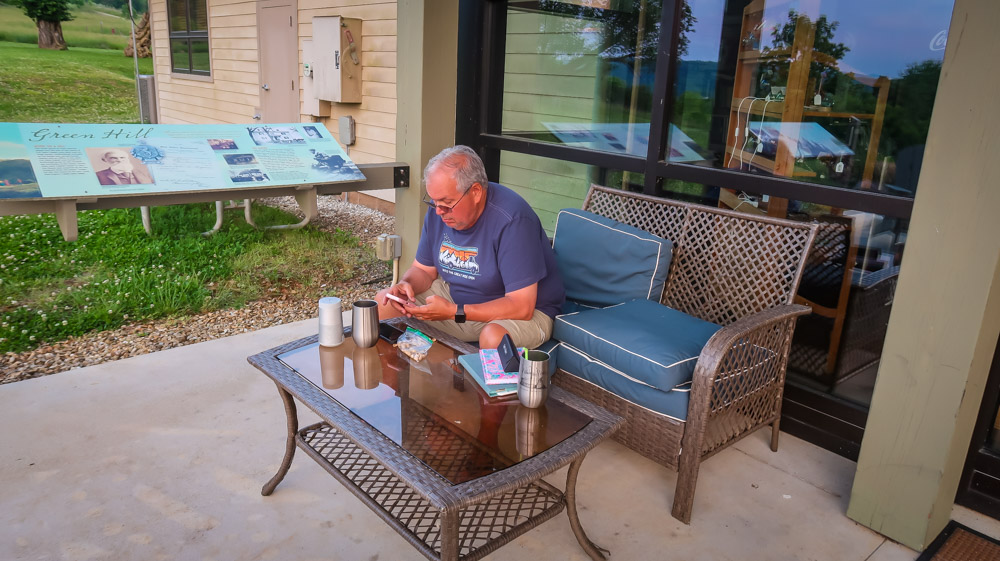
Went back and made dinner then we decided to go back to the visitor center and enjoy the sunset there since it was closed and mooch their Wi-Fi and enjoy their comfortable outdoor furniture on the back patio! THIS IS LIVING WHEN YOU’RE CAMPING! Enjoyed a nice campfire back at our site then finished the series of the Diplomat!
Traveled a whole 3 miles today!
Naval Weapons Station Yorktown is a US Navy base in Va. It provided a weapons and ammunition storage and loading facility for ships of the US Atlantic Fleet, and more recently, for those from the Fleet Forces Command. The station borders the cities of Newport News & Williamsburg. The complex is 13,248 acres!
The land of Naval Weapons Station Yorktown is a site rich in colonial history. The station sits amidst a setting of natural beauty surrounded by the distant echo of the first settlers in Virginia and the battle cries of the Revolutionary War. The site of the weapons station was acquired for the Navy by a presidential proclamation on August 7, 1918, and was at the time the largest naval installation in the world, its land area covering about twenty square miles. In 1932, the Navy Mine Depot became the Naval Mine Depot in recognition of expanded ordnance support. Then, on August 7, 1958, on the Station’s 40th anniversary, the name was changed to Naval Weapons Station Yorktown, again in recognition of a much expanded mission for naval ordnance. Today, the installation and its tenant commands continue to provide critical fleet ordnance support for the Navy.
Naval Weapons Station Yorktown hosts 40 tenant commands which include the Navy Munitions Command Atlantic, the Naval Ophthalmic Support and Training Activity, the Marine Corps Security Force Regiment, Navy Expeditionary Logistics Support Group, Naval Expeditionary Medical Support Command, Navy Cargo Handling Battalion One and 19 departments.
Kiskiack (Lee House)the only original country house still standing on Naval Weapons Station Yorktown. The site (1607–1776) Colonial Era history, as well as that of the American Civil War 1861–1865).
James River – River in Va that begins in the Appalachian Mountains and flows 348 miles to the Chesapeake Bay. It extends 444 miles. It’s the longest river in Va. It was called the Powhatan River by the Powhatans in the 16th and 17th centuries. The Jamestown colonists in 1607 renamed it James after King James 1 of England as they constructed the first permanent English settlement in America along the banks of th River for about 35 miles up stream.
Fort Gregg-Adams, in Va, is a US Army post and headquarters of the US Army Combined Arms Support Command/Sustainment Center of Excellence, the U.S. Army Quartermaster School, the U.S. Army Ordnance School, the U.S. Army Transportation School, the Army Logistics University & more! Fort Gregg-Adams also hosts two Army museums, the U.S. Army Quartermaster Museum & the US Army Women’s Museum. The installation was previously named Fort Lee after US Army Colonel and Confederate States General in Chief, Robert E. Lee. Fort Gregg-Adams census as of 2020- 9,874 nearly triple the size of the 2010 census count.
On 27 April 2023 during a redesignation ceremony the name of Fort Lee was changed to Fort Gregg-Adams which is named after two African American officers Lt. Gen. Arthur Gregg and Lt. Col. Charity Adams. The naming of Fort Gregg-Adams is notable as it is the first time in modern American history where a fort has been named after a service member who is still alive. Other infrastructure on the base have already been renamed including water towers, the street signs along the former Lee Avenue, now Gregg Avenue, and the signage for the Gregg-Adams Officers’ Club on base, into which notably Lt. Gen. Arthur Gregg had been denied entrance back in 1950 as a young Second Lieutenant, at a time when discrimination and segregation were still being practiced against African American Uniformed Personnel, even against an executive order to the contrary, signed by President Harry S. Truman two years prior.
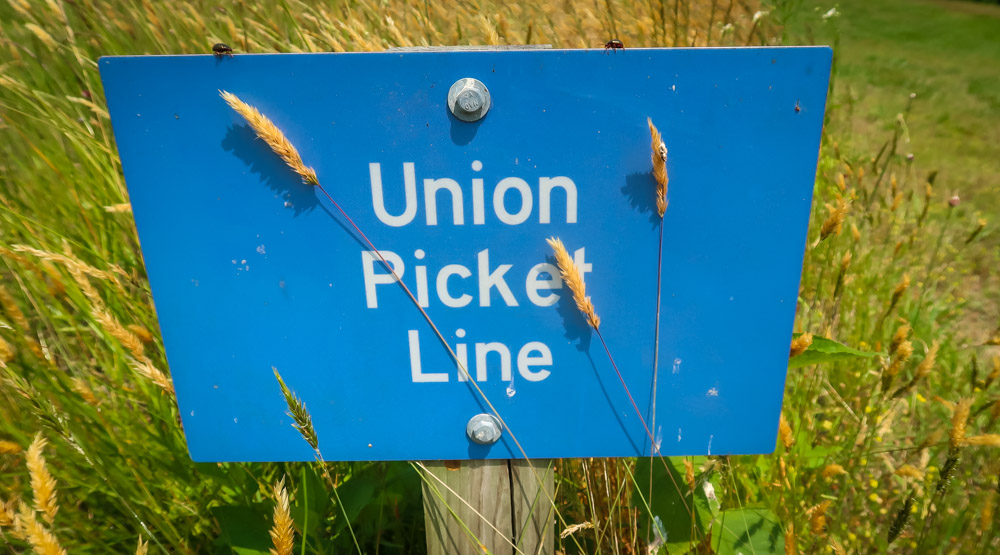
Petersburg Battlefield – The Siege of Petersburg was the longest military event of the civil war! Nine and a half months, 70,000 casualties, the suffering of civilians, thousands of U. S. Colored Troops fighting for the freedom of their race, and the decline of Gen. Robert E. Lee’s Army of No. Virginia all describe the Siege of Petersburg. It was here Gen. Ulysses S. Grant cut off all of Petersburg’s supply lines ensuring the fall of Richmond on April 3, 1865. Six days later, Lee surrendered.
Between May and mid-June of 1864 the Union army, under General Ulysses S.Grant, and the Confederate army, under General Robert E. Lee, engaged in a series of hard-fought battles in what is now called the Overland Campaign. Cold Harbor was the last battle of this campaign and was a crushing Union loss. This forced Grant to abandoned his plan to capture Richmond by direct assault.
Only twenty-five miles south of Richmond, Petersburg was an important supply center to the Confederate capital. With it’s five railroad lines and key roads, both Grant and Lee knew if these could be cut Petersburg could no longer supply Richmond with much needed supplies and subsistence. Without this Lee would be forced to leave both cities.
Grant pulls his army out of Cold Harbor and crosses the James River heading towards Petersburg. For several days Lee does not believe Grant’s main target is Petersburg and so keeps most of his army around Richmond. Between June 15-18, 1864 Grant throws his forces against Petersburg and it may have fallen if it were not for the Federal commanders failing to press their advantage and the defense put up by the few Confederates holding the lines. Lee finally arrives on June 18 and after four days of combat with no success Grant begins siege operations.
This, the longest siege in American warfare, unfolded in a methodical manner. For nearly every attack the Union made around Petersburg another was made at Richmond and this strained the Confederate’s manpower and resources. Through this strategy Grant’s army gradually and relentlessly worked to encircle Petersburg and cut Lee’s supply lines from the south. For the Confederates it was ten months of hanging on, hoping the people of the North would tire of the war. For soldiers of both armies it was ten months of rifle bullets, artillery, and mortar shells, relieved only by rear-area tedium, drill and more drill, salt pork and corn meal, burned beans and bad coffee.
By October 1864 Grant had cut off the Weldon Railroad and continued west to further tighten the noose around Petersburg. The approach of winter brought a general halt to activities. Still there was the every day skirmishing, sniper fire, and mortar shelling.
In early February 1865 Lee had only 45,000 soldiers to oppose Grant’s force of 110,000 men. Grant extended his lines southwesterly to Hatcher’s Run and forced Lee to lengthen his own thinly stretched defenses. By mid-March it was apparent to Lee that Grant’s superior force would either get around the Confederate right flank or pierce the line somewhere along it’s 37-mile length. Th Southern commanders hoped to break the Union stranglehold on Petersburg by a surprise attack on Grant. This resulted in the Confederate loss at Fort Stedman and would be Lee’s last grand offensive of the war.
With victory near, Grant unleashed General Phillip Sheridan at Five Forks on April 1, 1865. His objective was the South Side Railroad, the last rail line into Petersburg. Sheridan, with the V Corps, smashed the Confederate forces under General George Pickett and opening access to the tracks beyond. On April 2, Grant ordered an all-out assault, and Lee’s right flank crumbled. A Homeric defense at Confederate Fort Gregg saved Lee from possible street fighting in Petersburg. On the night of April 2, Lee evacuated Petersburg. The final surrender at Appomattox Court House was but a week away.
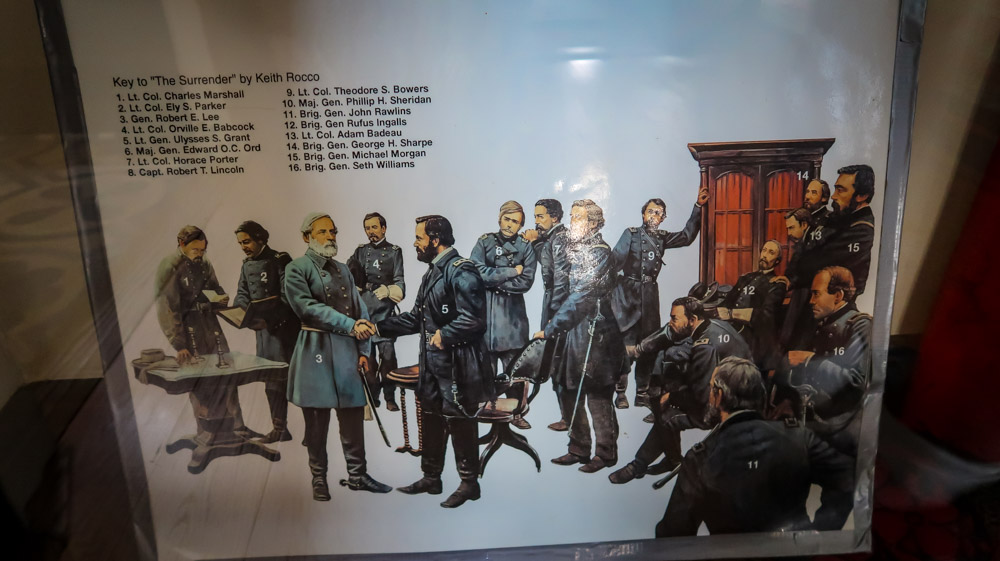
On April 9, 1865, the surrender of the Army of Northern Virginia in the McLean House in the village of Appomattox Court House, Virginia signaled the end of the nation’s largest war. Two important questions about its future were answered. Could the nation survive a civil war intact, and would that nation exist without slavery? The answer to both was yes and a new nation was born.
Appomattox Court House – the surrender meeting was brief & civil. The surrender terms were generous. The reality of emancipation for four million enslaved people and the future of our nation hung in the balance. This quiet village and landscapes once composed an average Virginia stage road town with a county courthouse at its center. Its name is now immortalized for the tentative peace brought to the nation from Robert E. Lee’s surrender of the Army of Northern Virginia to Ulysses S. Grant’s Federal armies.
Trapped by the Federals near Appomattox Court House, Confederate general Robert E. Lee surrendered his army to Union general Ulysses S. Grant, precipitating the capitulation of other Confederate forces and leading to the end of the bloodiest conflict in American history.
Union victory. Lee’s formal surrender to Grant at Appomattox Court House on April 9, 1865, brought the war in Virginia to an end. While this event is considered the most significant surrender of the Civil War, several other Confederate commanders had to capitulate and negotiate paroles and amnesty for Southern combatants before President Andrew Johnson could officially proclaim an end to the Civil War. That formal declaration occurred sixteen months after Appomattox, on August 20, 1866.
General Lee’s final campaign began on March 25, 1865, with a Confederate attack on Fort Stedman, near Petersburg. General Grant’s forces counterattacked a week later on April 1 at Five Forks, forcing Lee to abandon Richmond and Petersburg the following day. The Confederate Army’s retreat moved southwest along the Richmond & Danville Railroad. Heavily outnumbered by the enemy and low on supplies, Lee was in dire trouble. Nevertheless, he led a series of grueling night marches, hoping to reach supply trains in Farmville, Virginia, and eventually join Maj. Gen. Joseph E. Johnston’s army in North Carolina. Union troops captured the valuable supplies at Farmville on April 7.
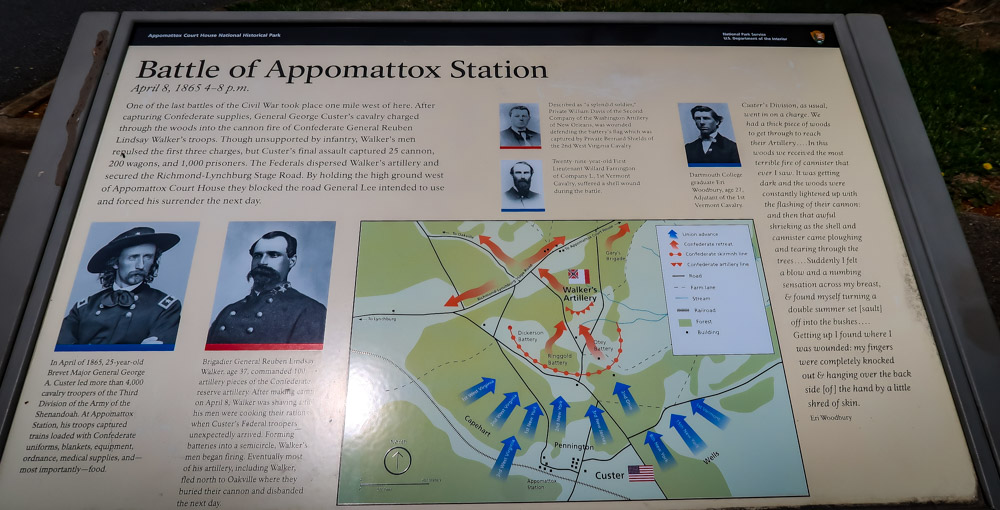
On April 8, the Confederates discovered that their army was blocked by Federal cavalry. Confederate commanders tried to break through the cavalry screen, hoping that the horsemen were unsupported by other troops. But Grant had anticipated Lee’s attempt to escape and ordered two corps (Twenty-fourth and Fifth), under the commands of Maj. Gen. John Gibbon and Bvt. Maj. Gen. Charles Griffin, to march all night to reinforce the Union cavalry and trap Lee. On April 9, those corps drove back the Confederates.
Rather than destroy his army and sacrifice the lives of his soldiers to no purpose, Lee decided to surrender the Army of Northern Virginia. Three days later, a formal ceremony marked the disbanding of Lee’s army and the parole of his men, ending the war in Virginia. The Grant-Lee agreement served not only as a signal that the South had lost the war but also as a model for the rest of the surrenders that followed.
James River State Park – 1,561 acre in Va, nestled in the foothills of the Blue Ridge Mountains, it opened June 20, 1999, it preserves part of the route of the Kanawha Canal in addition to portions of the James River. There’s more than 130 acres of native warm season grasses that blanket fields adjacent to the James River. These fields are maintained by periodic prescribed fire to facilitate growth of the native grasses. Very few areas of this size with warm season grasses still exist in the Eastern United States. There’s an Equestrian loop, tents only loop, group camping loop and 2 loops of RV’s. We stayed in the Red Oak Campground which has 30 campsites, with electric & water. Lots of hiking trails in this park to explore.













Another Hreat article !! I’m going to check them out for future rv stays at the facilities. I like the bases for stays. Very safe.
Great history at these locations.
LikeLiked by 1 person
Thank you Carol! I put the site number so you can check them out! Hope your travels are going well!
LikeLike