

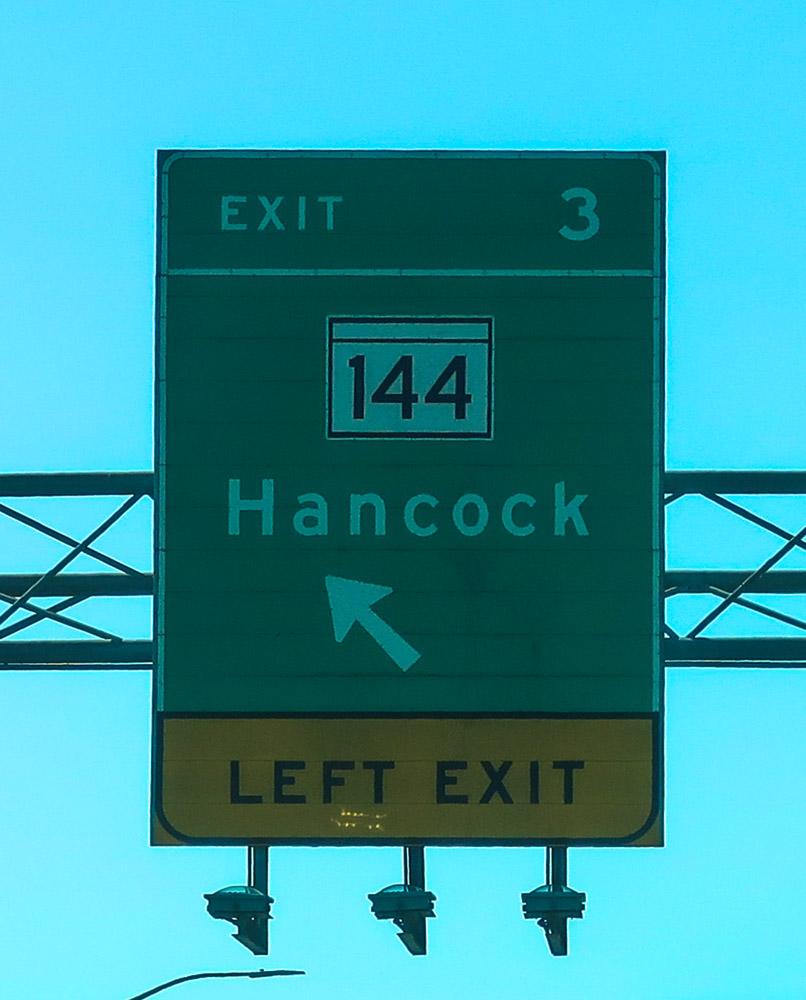
🌞🥶🌞🥶 Started the day at 7am! It’s 37* outside & 64* inside! WTH! Yup we ran out out LP Gas in the middle of the night so the heater didn’t run! Switched over to the other 30 gallon tank. That was a first for us Showered, got dressed had our coffee, tea and oatmeal. Packed everything up said our goodbyes to Frank & Janet as we both pulled out at 8:12. They have a 5 hour drive back to Pa. 10:07 West Virginia
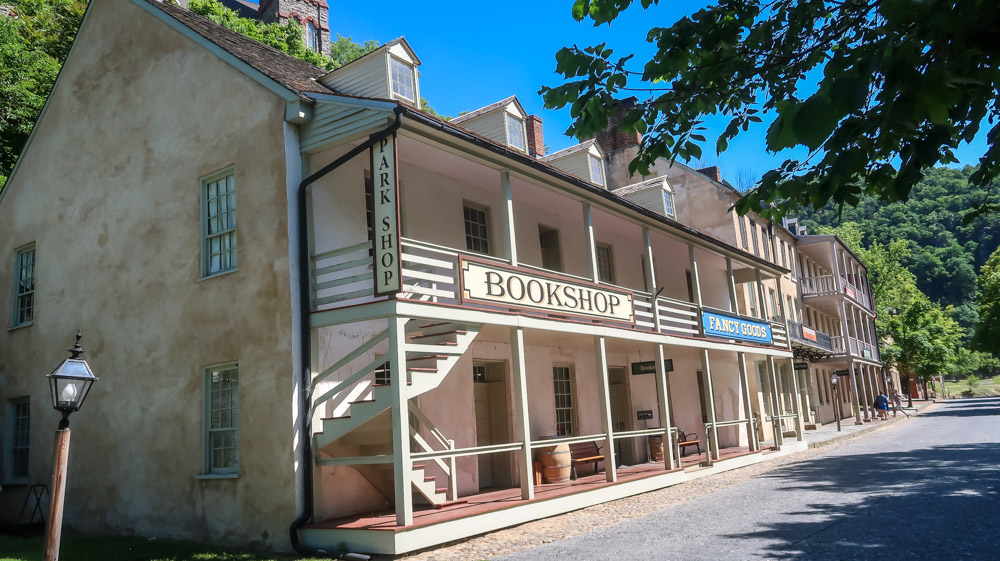
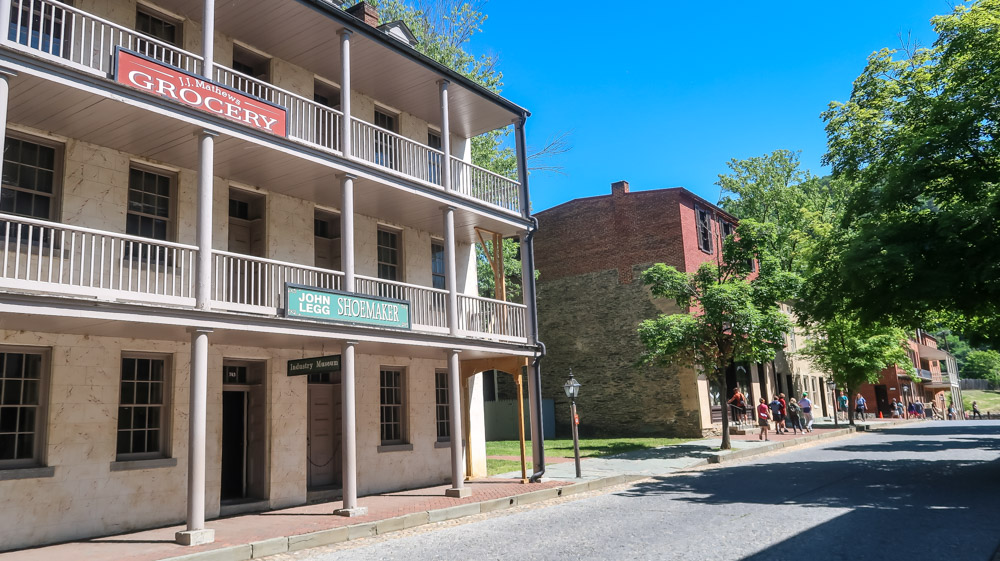
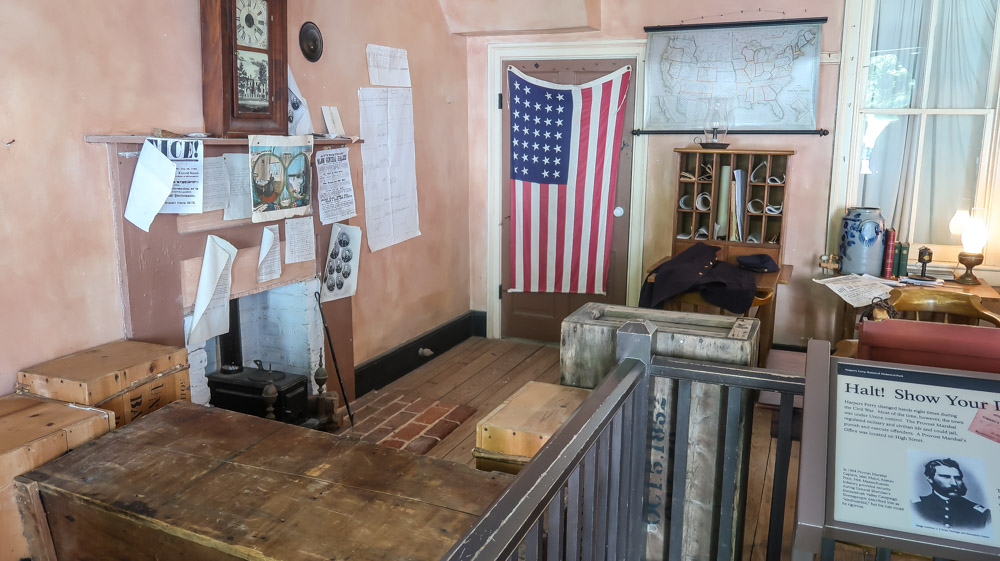
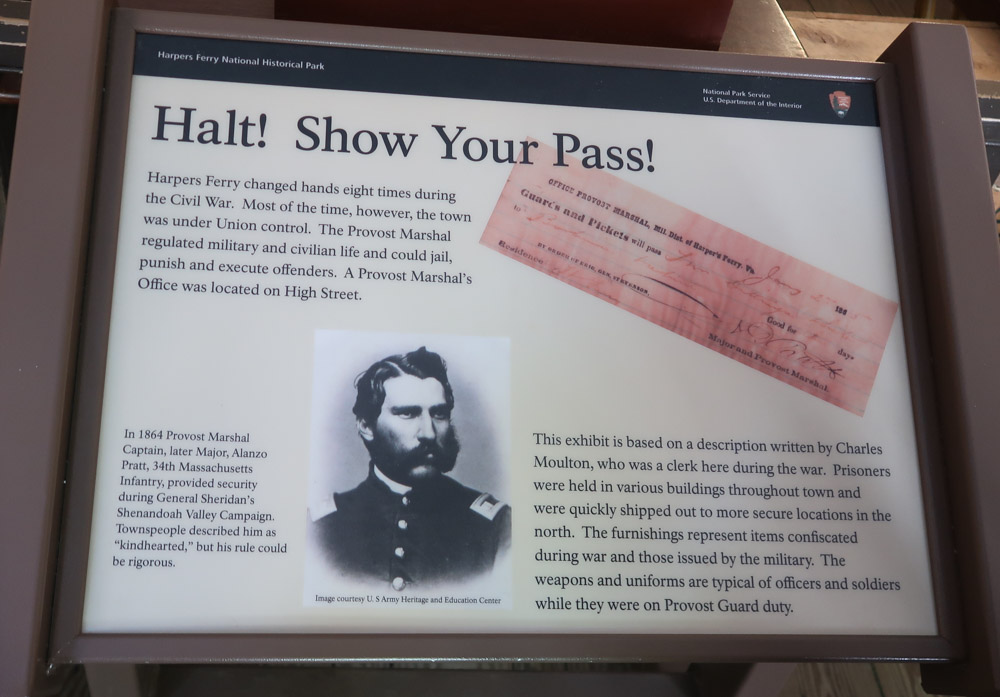
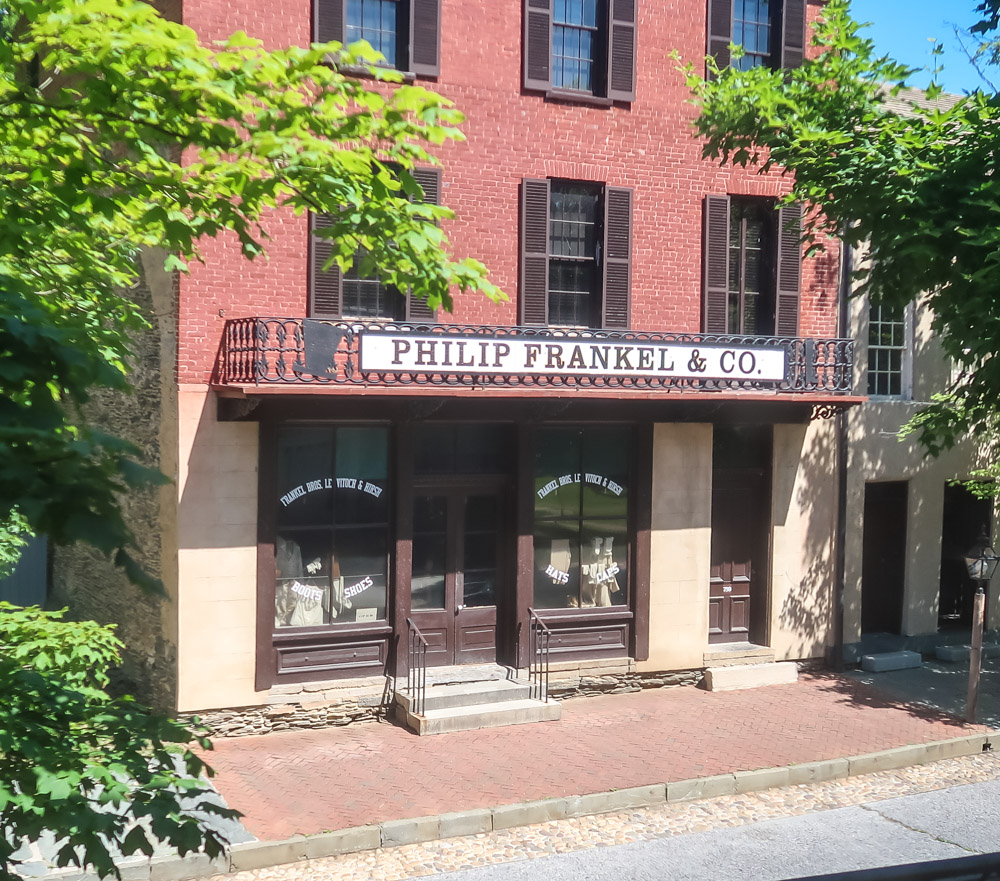
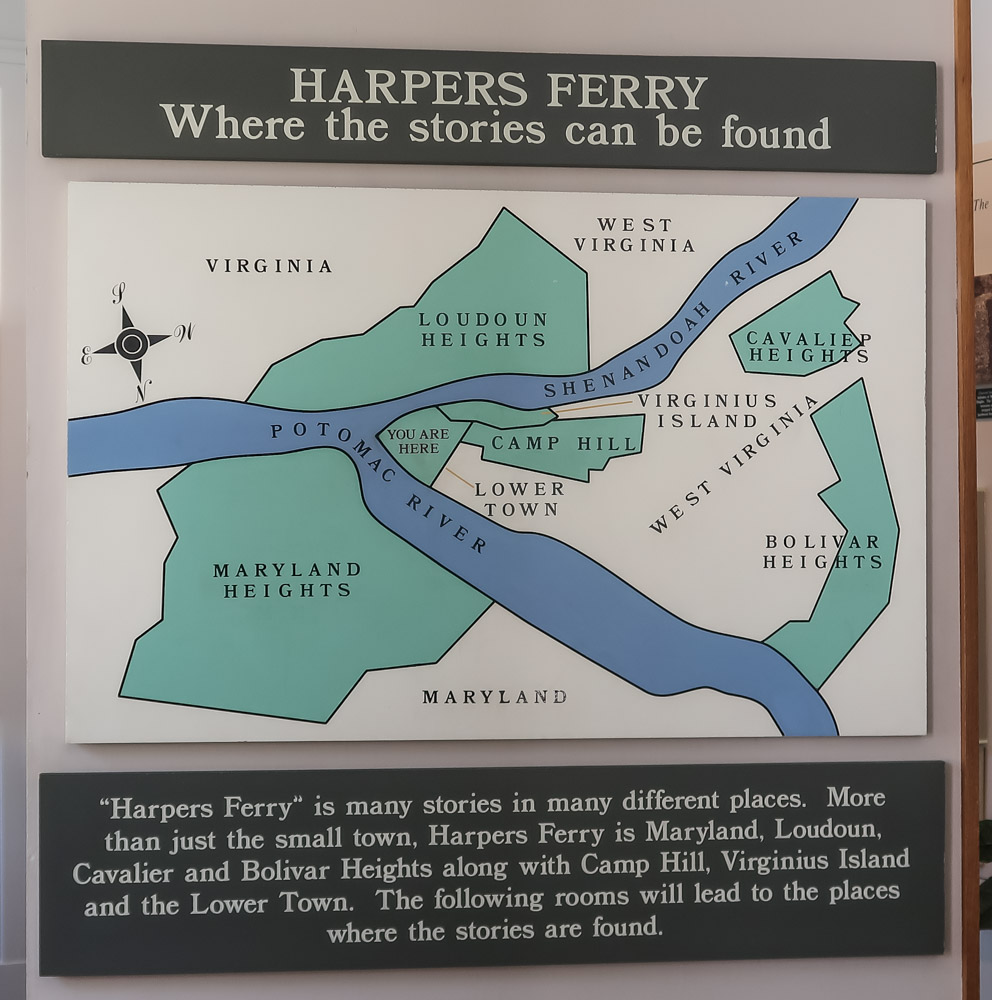
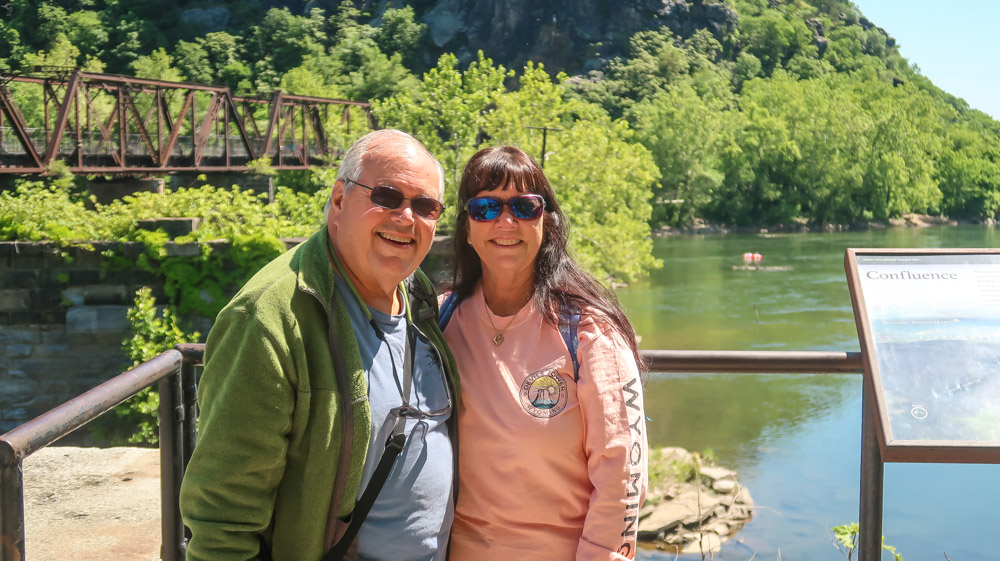
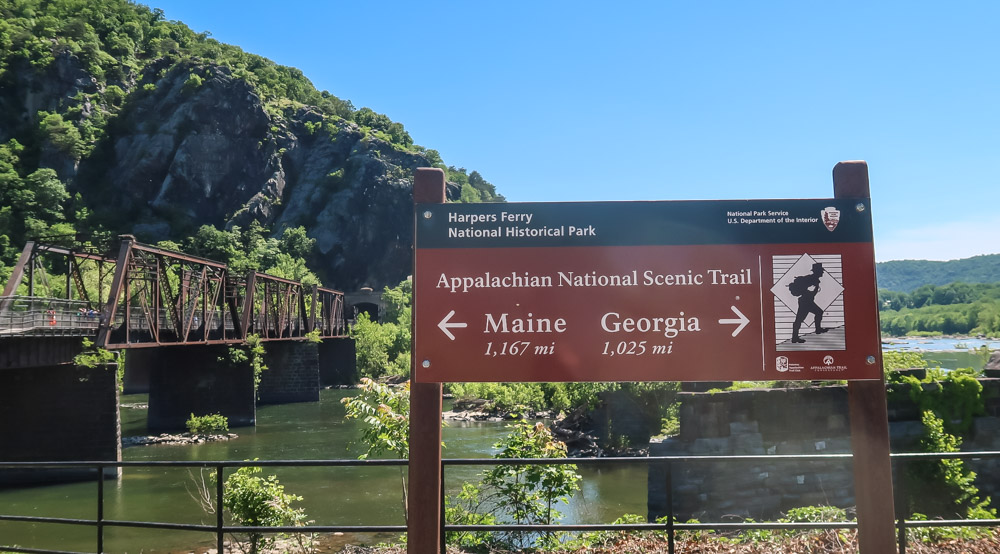
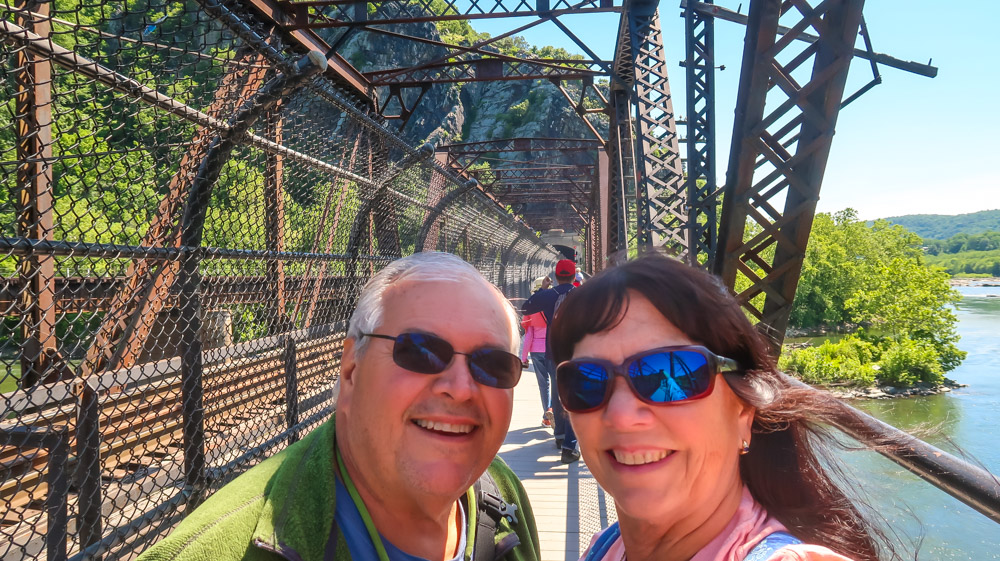
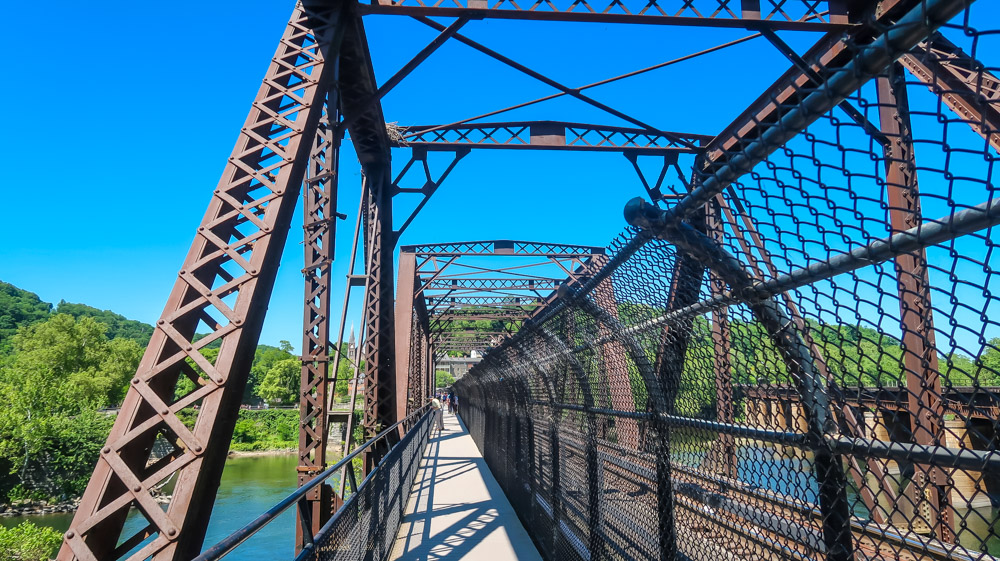
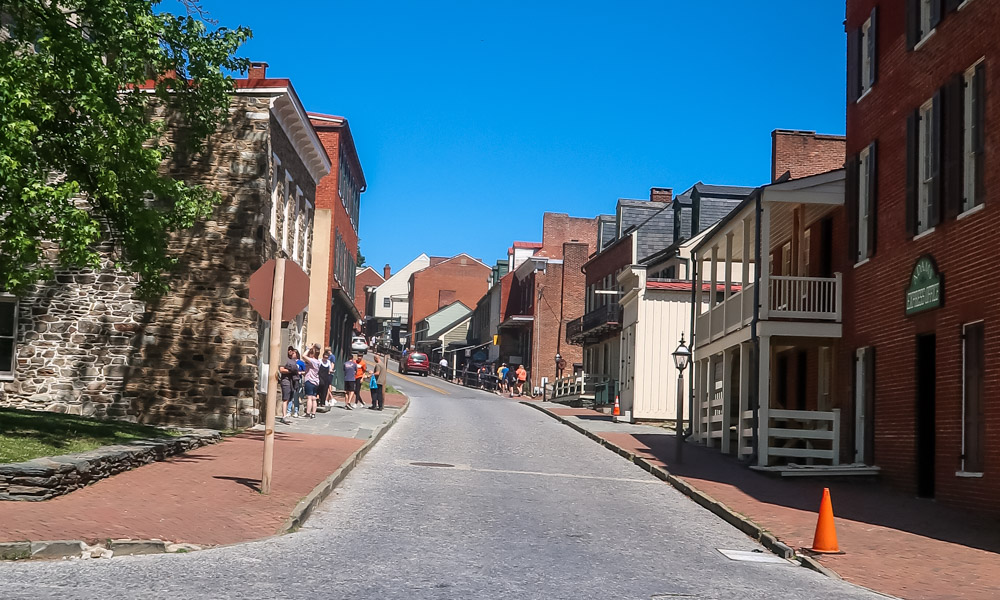
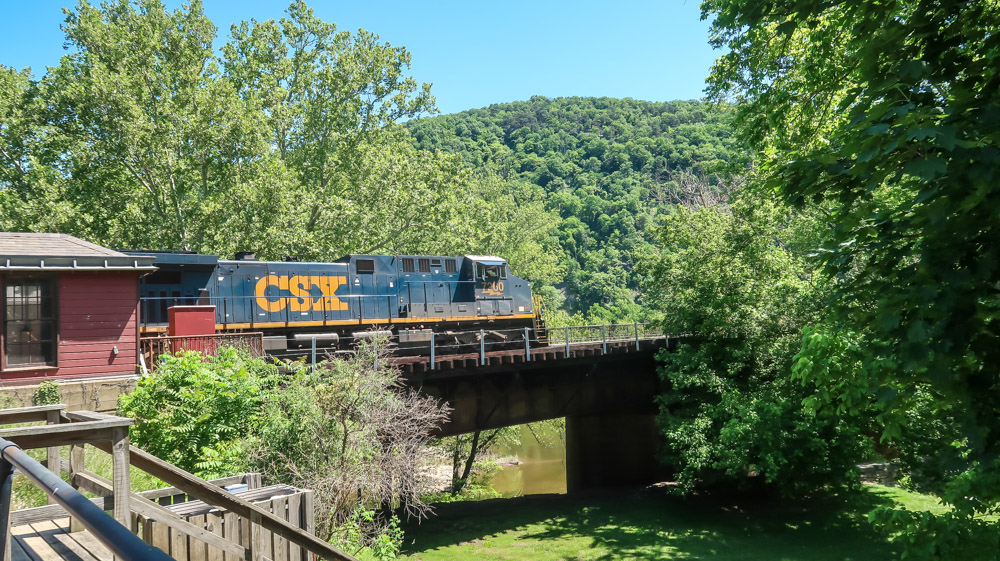
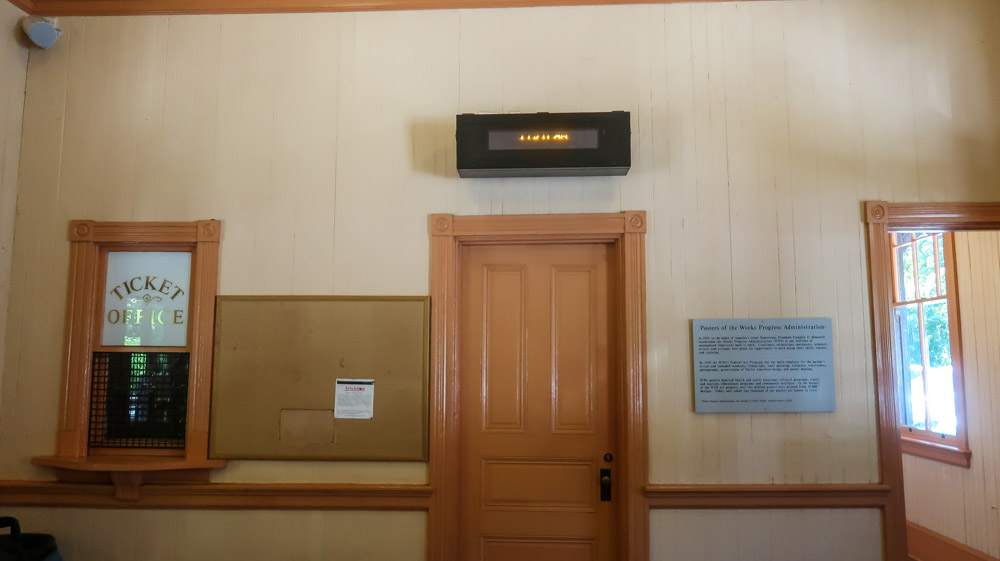
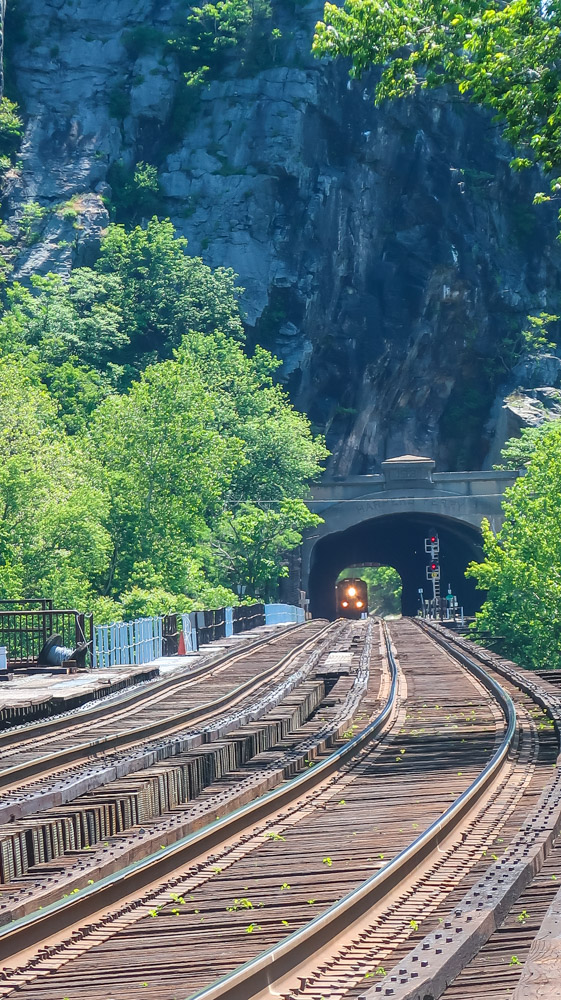
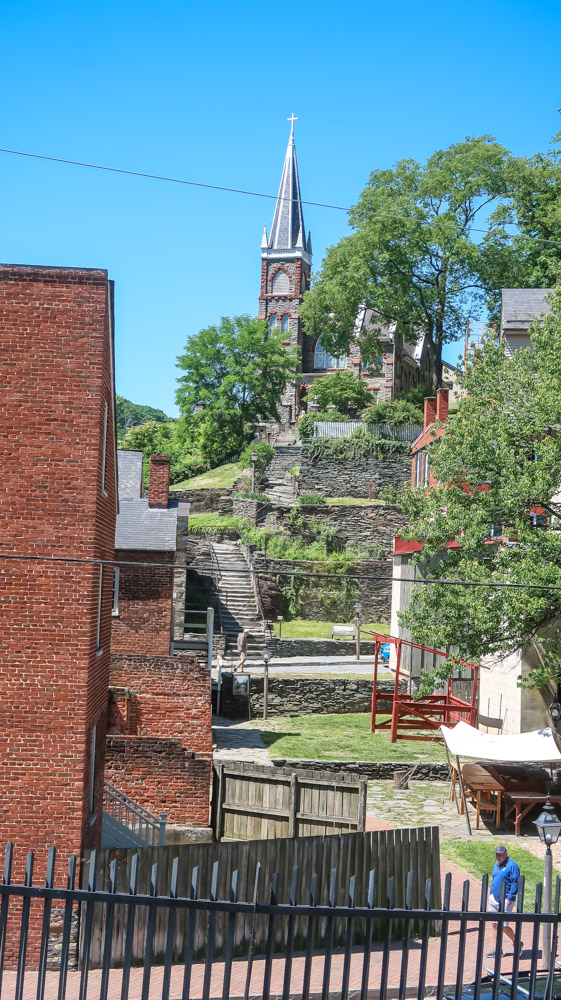
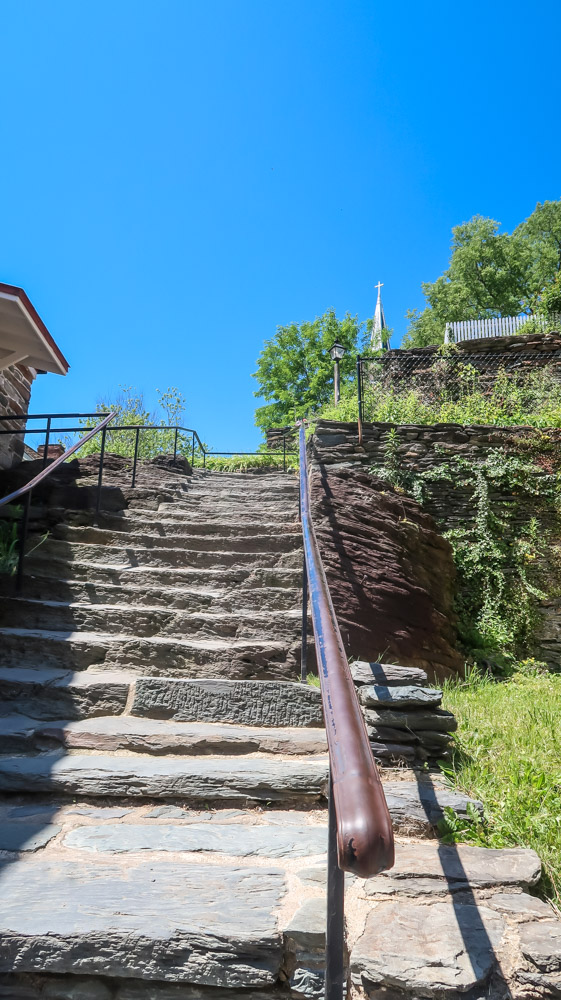
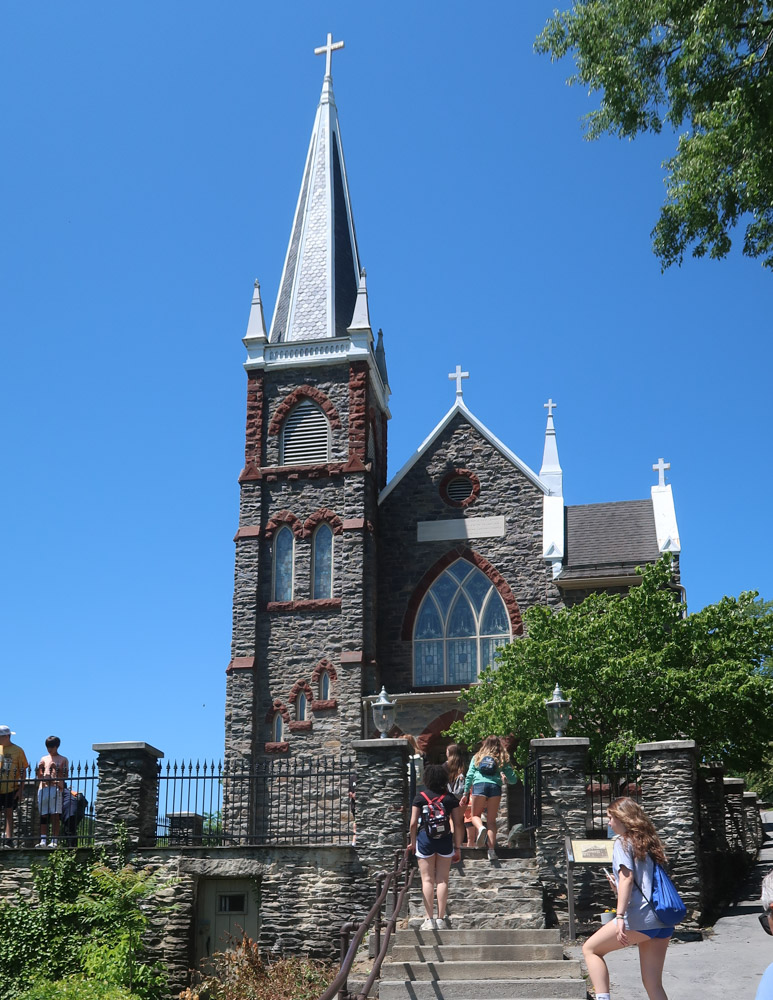
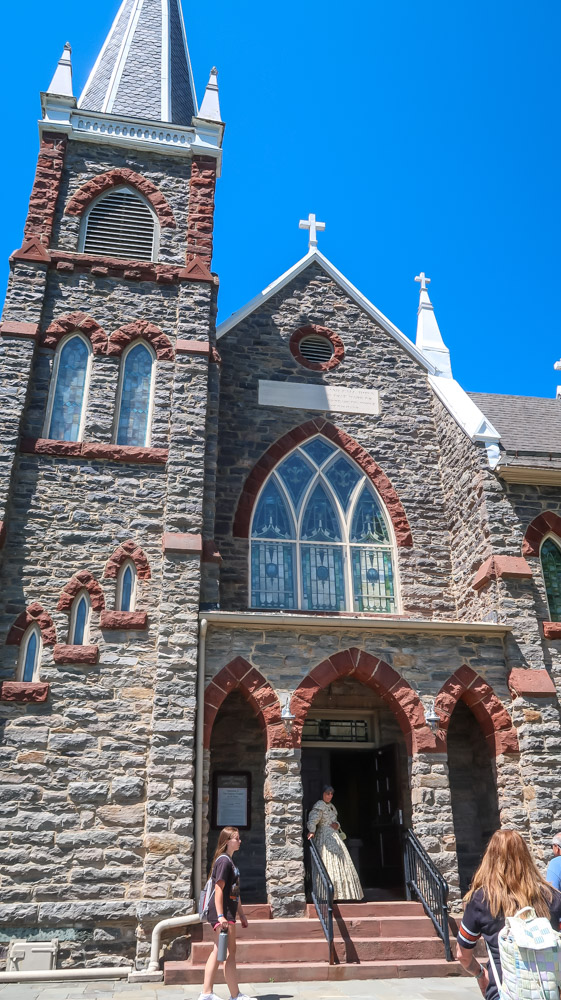
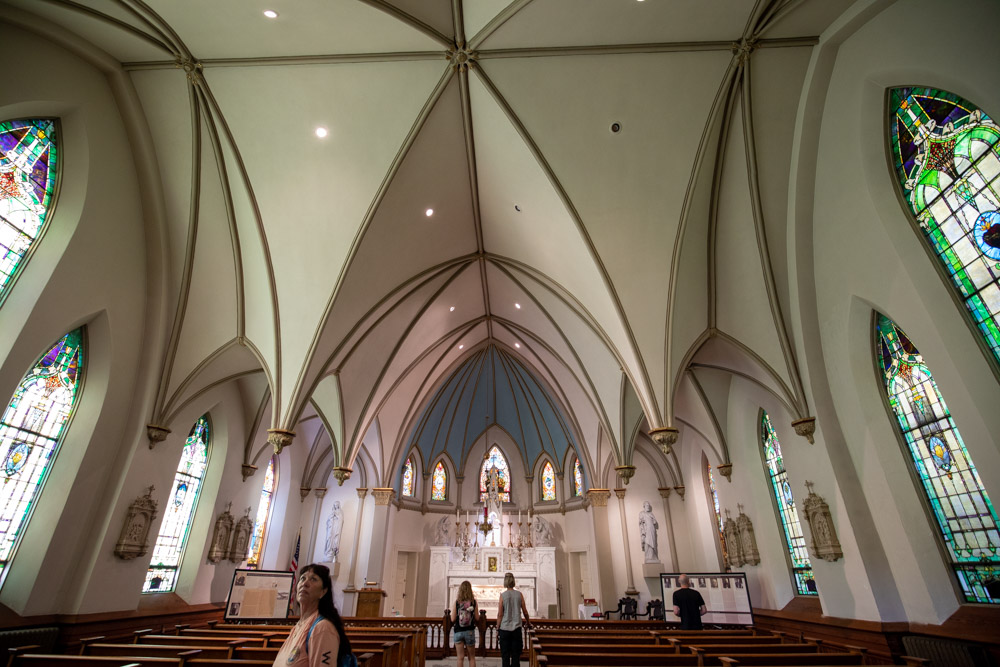
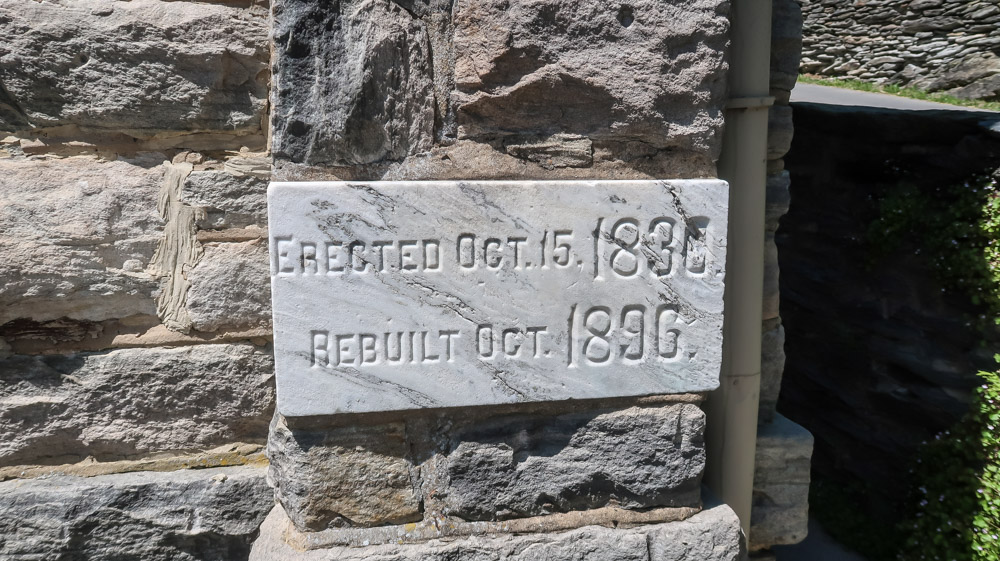
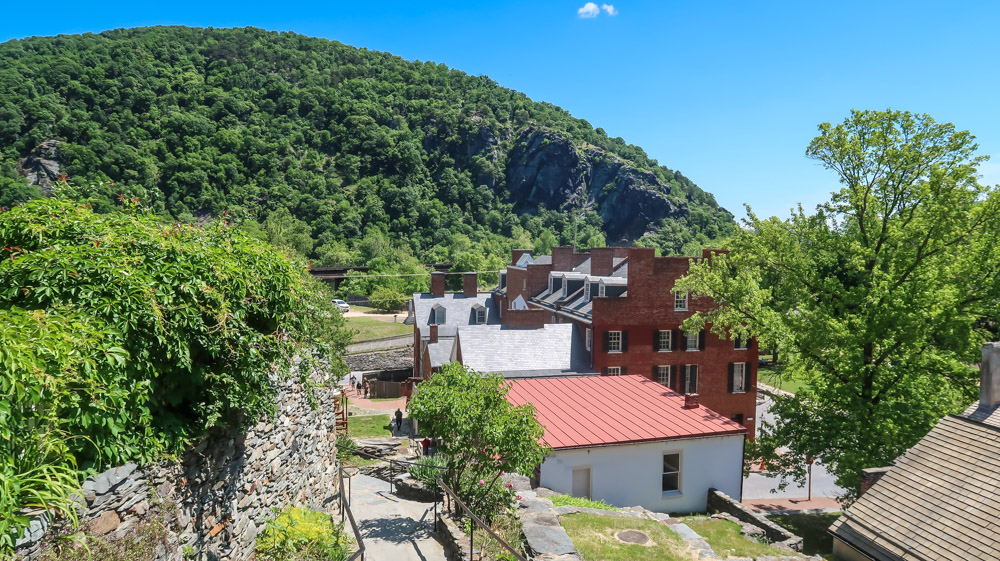
10:30 am 1st stop Harper’s Ferry. What a big surprise to us for when we walked inside the visitor center, you take a shuttle a bus to the downtown area! We walked in and out of all the old buildings, about 100 ft of the Appalachian Trail and went down to the water where we stood on the corner of Va., W.Va., & Maryland! Cool old train station which was still functioning. We watched as passengers boarded an Amtrak and as a freight train went by. Went inside the Historical Chapel of St. Peter. Father Costello was the Pastor several months before John Brown raided the Federal Arsenal at Harper’s Ferry. It survived the Civil War. The windows were installed about 1898. Robert Harper was given a land grant of 125 acres by Lord Fairfax. When he died, he left a provision in his Will in 1782 dedicating 4 acres of his land to church construction or community buildings.
12:15 back on the road. As we drove through West Virginia, lots of crop fields as far as you could see. 🌾 Wheat, hay and corn crops. Shepardsville was a really cute town & college area.
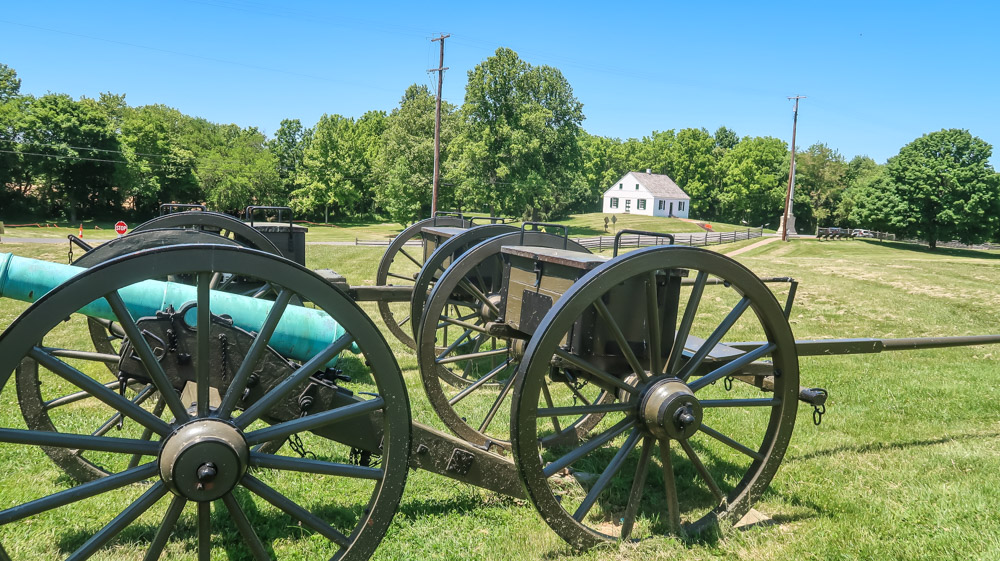
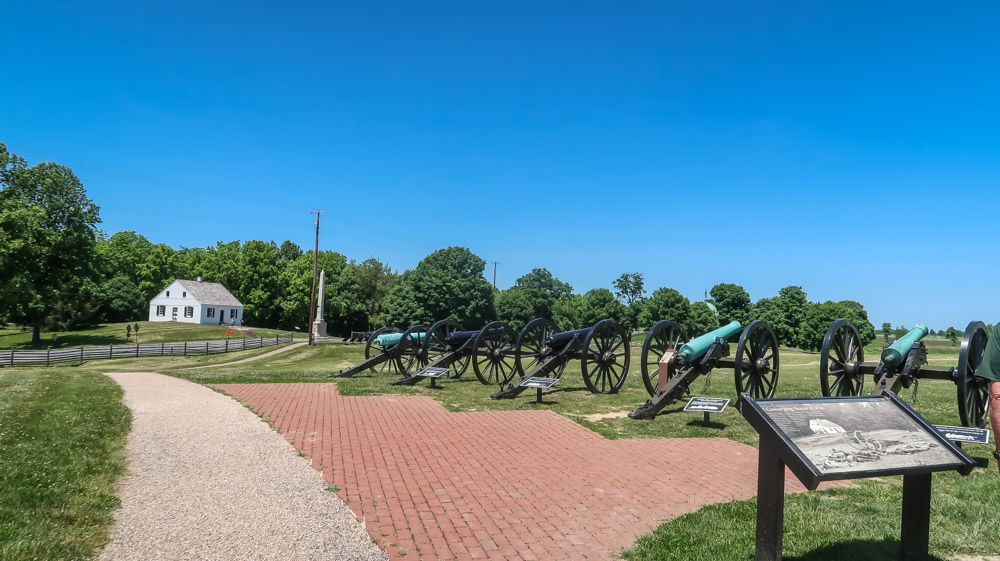
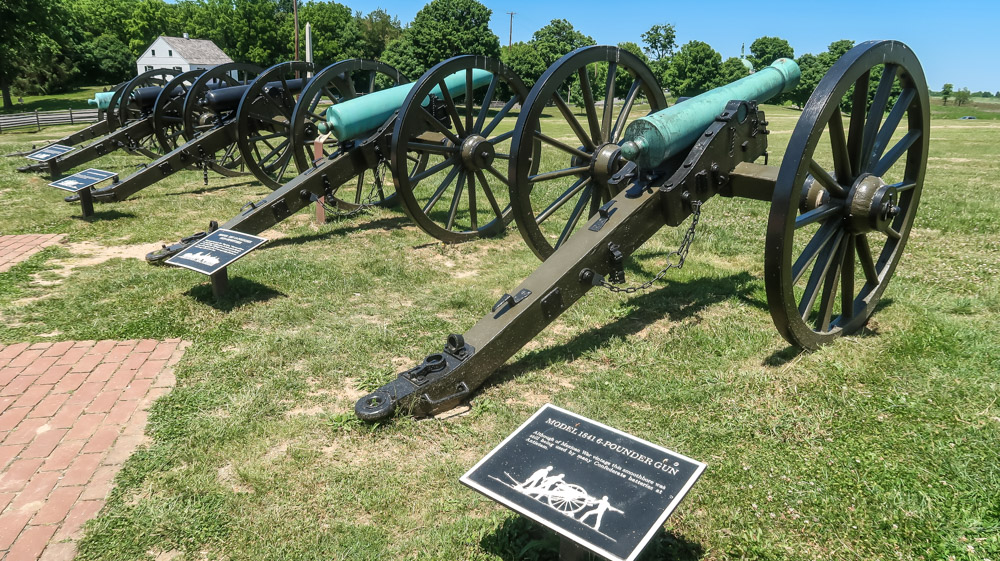
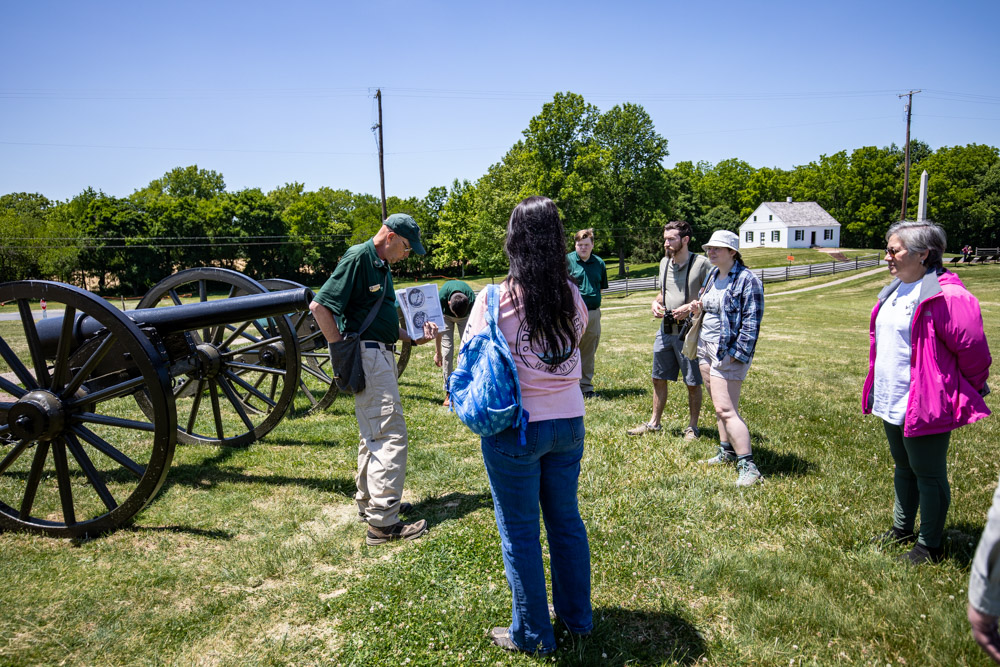
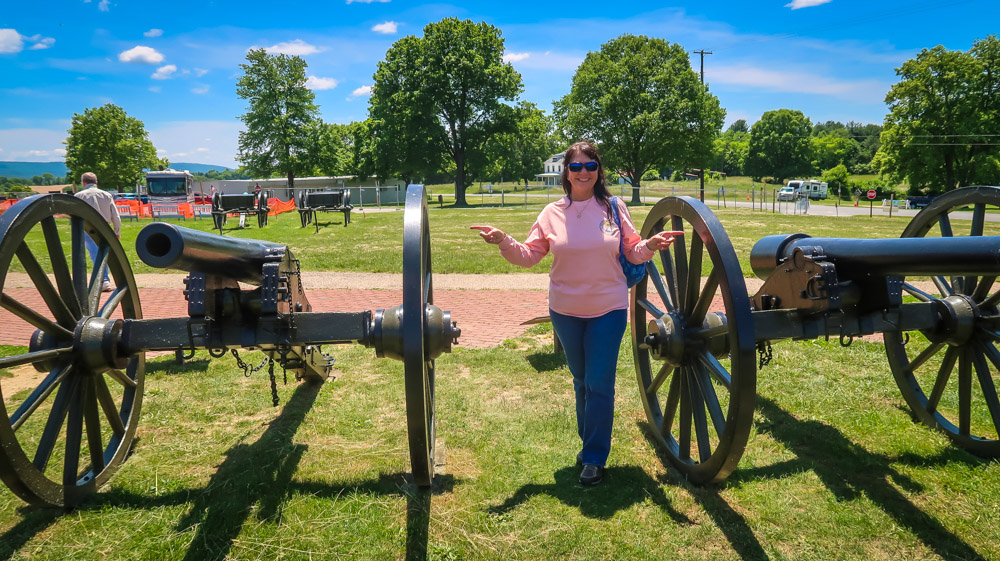
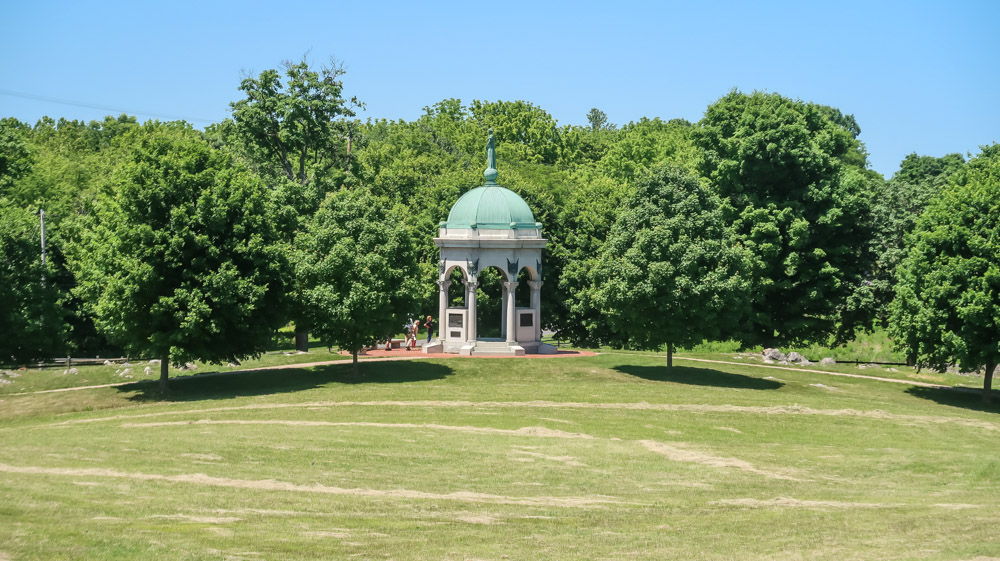
12:38pm now in Maryland. 12:49 Arrived at our 2nd stop! Antietam National Battlefield. Most difficult place to park, especially with an RV due to construction of the entrance road and building a new visitor center! 🤦🏻♀️ Ranger told us about a talk up the hill that a volunteer was doing …all about cannons so you know we’re going! Learned so much from him and then we toured the exhibits in the building, watched the movie then walked around the Battlefield. There was an auto trail but not recommended with an RV. So we left at 2pm after we had our lunch in the truck. 😋 Uncrustables and bananas and we’re on the way!
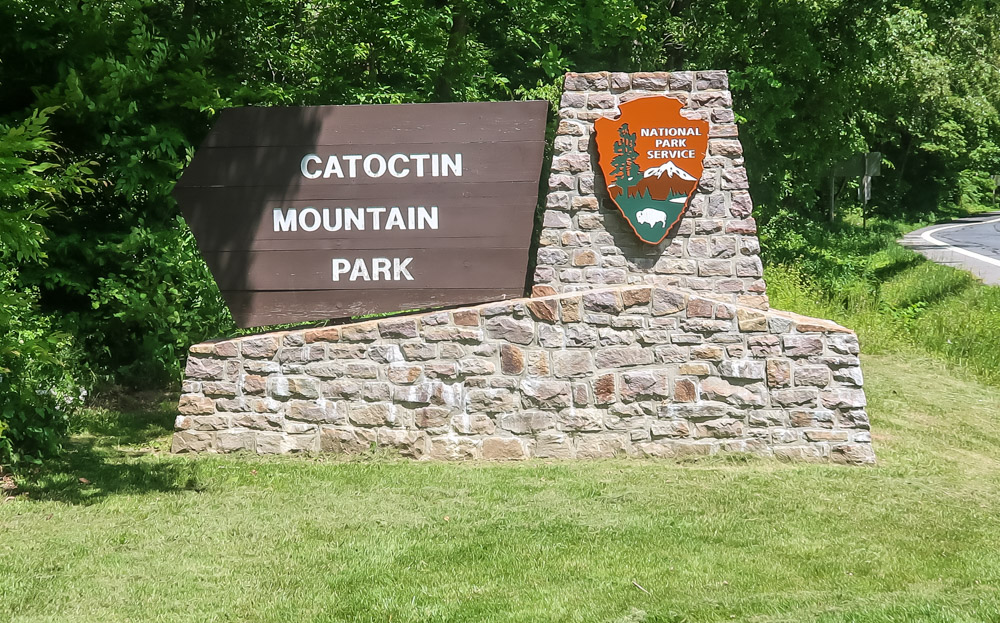
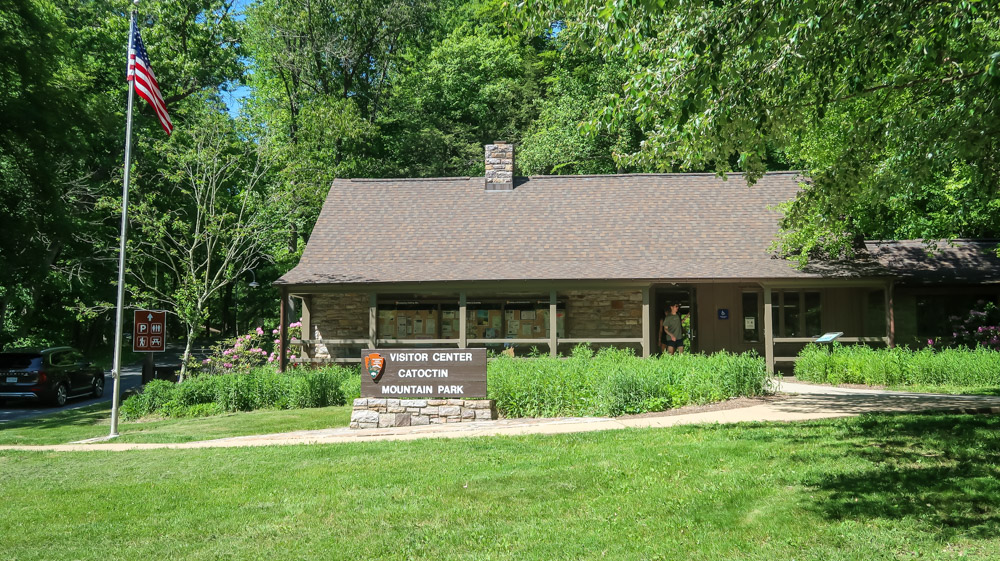
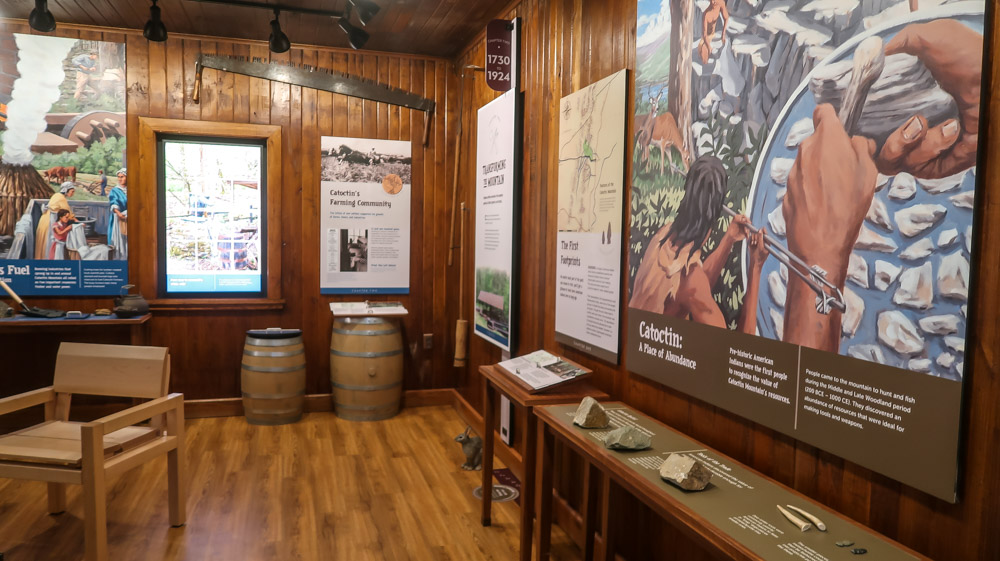
2:30pm 3rd stop of the day was even more challenging! Catoctin Mountain Park. Pulled in and no parking in front of the visitor center so we proceeded into the park thinking we’d find another parking lot! NOPE! Drove to the back of the park where it took 10-15 minutes of backing up and maneuvering to turn around. Finally a ranger asked where we were trying to go and told us we might be able to find a spot now up front. In the parking lot there had been a tree that came down on someone’s car and that area was all blocked off so once again with little area to turn around, Tim got us situated. We toured the exhibits in the visitor station and talked with 2 of the rangers for awhile. 😔 Sad to learn that the areas around Cunningham Falls SP were not passable with RV’s. So we had to pass on these adventures!
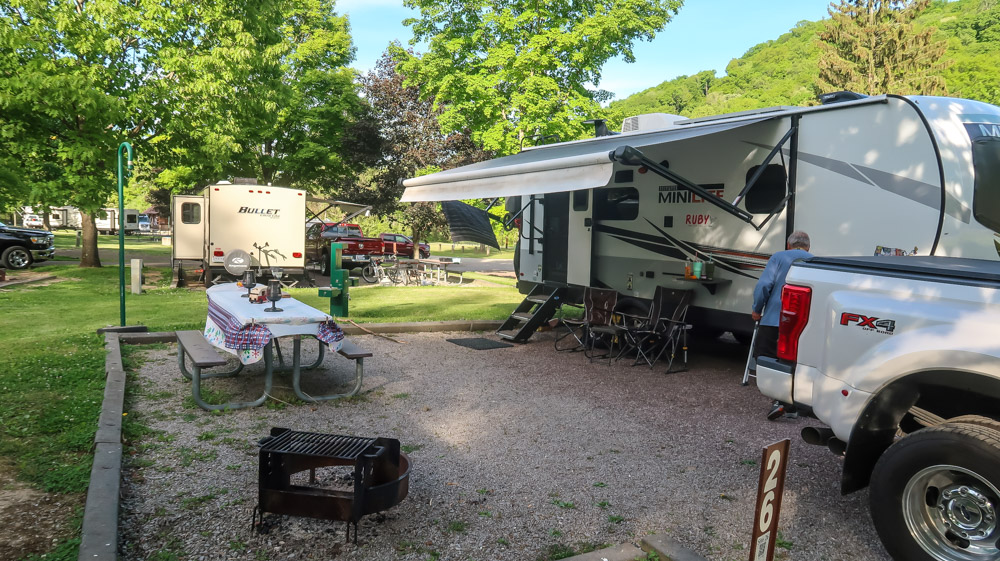
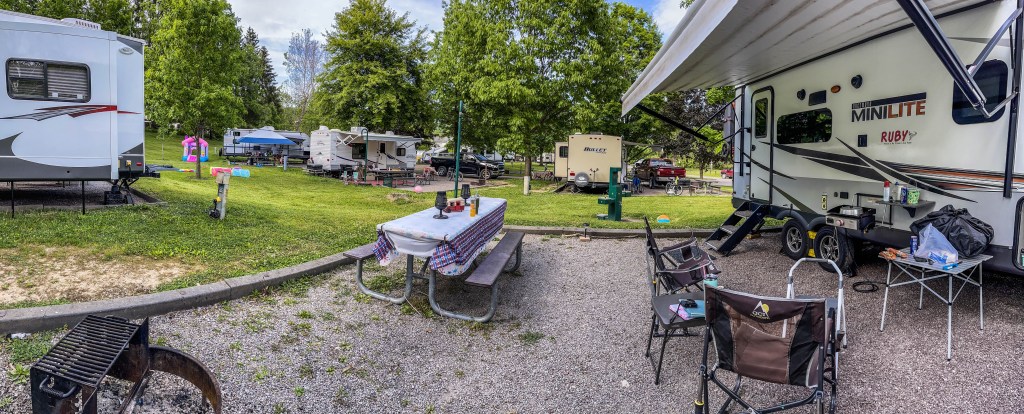
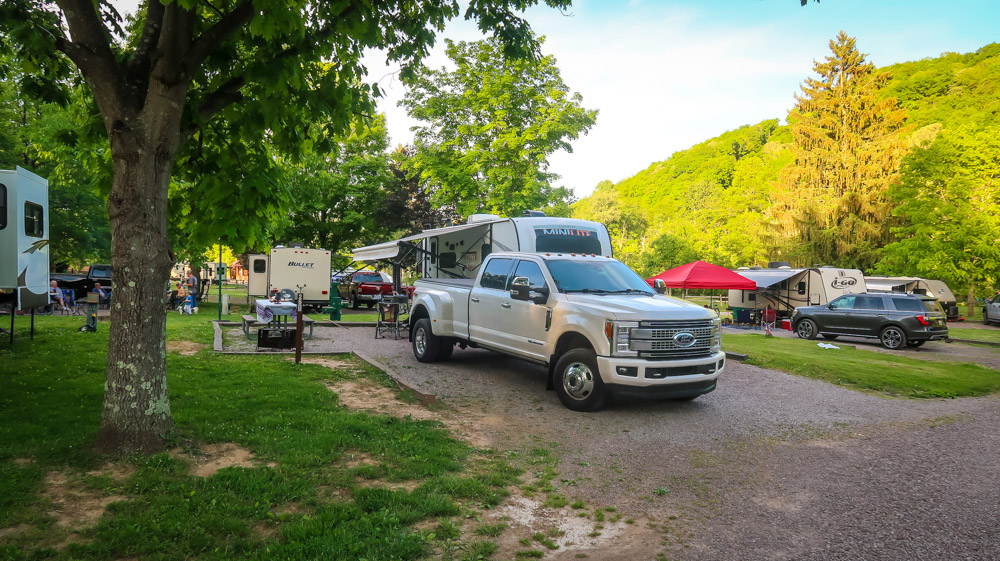
Headed to our COE Park now. Crossed over into Pa at 5:18pm. Arrived at Outflow COE Campground at 5:45pm Oh my…. Properly named because it was overflowing with people…..doesn’t help it was a holiday weekend too! And right by the community water faucet too! 💦 We set up the RV…..took a walk all around the campground, over by the hydro power plant then we drank too much as we relaxed for the night! Oops 😬 🤣🤦🏻♀️ Good night all. Till tomorrow’s adventures! 🛌 💤. 237 miles for today
Harpers Ferry, West Virginia – at the confluence of the Shenandoah & the Potomac Rivers, is a historic town with a population of 285 at the 2020 census. Here Maryland, Virginia, West Virginia meet at the easternmost town in West Virginia. During the American Civil War, it was the northernmost point of Confederate controlled territory.
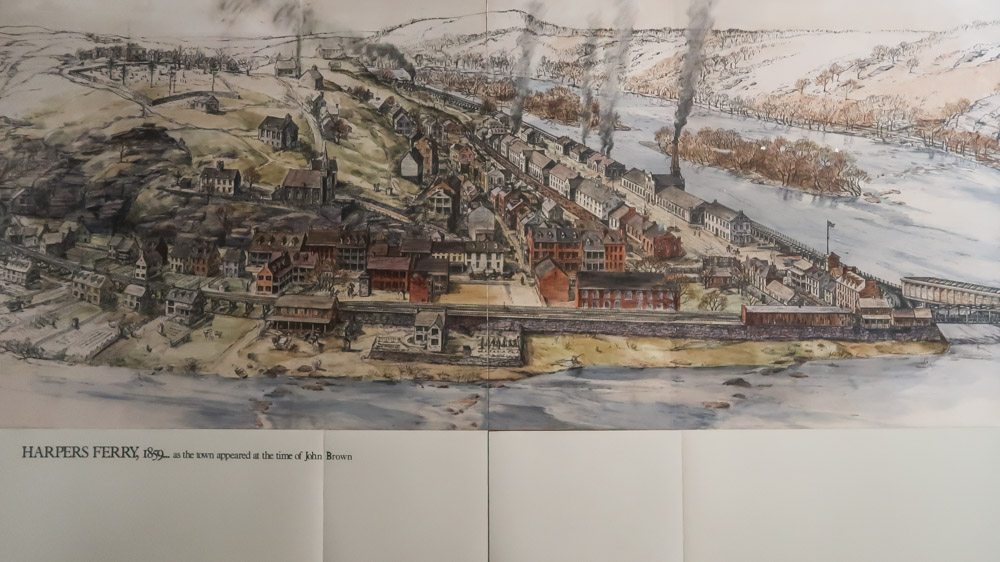
The town was formerly spelled Harper’s Ferry with an apostrophe, so named because in the 18th century it was the site of a ferry service owned and operated by Robert Harper. By far, the most important event in the town’s history was John Brown’s raid on the Harper’s Ferry Armory in 1859.
Prior to the Civil War, Harpers Ferry was a manufacturing town as well as a major transportation hub. The main economic activity in the town in the 20th and 21st centuries is tourism. John Brown’s Fort is the most visited tourist site in the state of West Virginia. The headquarters of the Appalachians Trail are here….not the midpoint, but close to it, and easily accessible—and the buildings of the former Storer College are used by the National Park Service for one of its four national training centers. The National Park Service is Harpers Ferry’s largest employer in the 21st century.
The lower town has been reconstructed by the National Park Service. It was in ruins by the end of the American Civil War, not helped by later river flooding. “The fact that Harpers Ferry was first and foremost an industrial village during the 19th century is not apparent in the sights, sounds, or smells of the town today.”
In 1733 – the ferry was established. Thomas Jefferson visited the area in 1783 and said the town was his favorite retreats and later on the County was named after him in 1801.
George Washington as President of the Patowmack Company, traveled to Harper’s Ferry in 1785 to determine the need for bypass canals. Following Washington’s familiarity with the area led him to propose the site in 1794 for a new U.S.armory & arsenal.
Industrialization continued in 1833 when the Chesapeake & Ohio Canal reached Harpers Ferry, linking it with Washington, DC on the canal’s western expansion to Ohio that was never completed. A year later, after a protracted dispute with the Baltimore & Ohio Railroad began service from Harpers Ferry via Wager Bridge, named for the same family that later built the Wager Hotel across from Harpers Ferry’s train station. The bridge connected the town across the Potomac with Sandy Hook, Maryland which for a few years in the 1830s was the railroad’s western terminus. In 1837, the railroad crossed the Potomac into Harpers Ferry with the opening of the B & O Railroad Potomac River Company.
The first railroad junction in the country began service in 1836. CXS freight trains daily pass through Harpers Ferry and over the bridge spanning the Potomac. The history of Harpers Ferry has few parallels in the American drama. It is more than one event, one date, or one individual. It is multi-layered – involving a diverse number of people and events that influenced the course of our nation’s history. Harpers Ferry witnessed the first successful application of interchangeable manufacture, the arrival of the first successful American railroad, John Brown’s attack on slavery, the largest surrender of Federal troops during the Civil War, and the education of formerly enslaved people in one of the earliest integrated schools in the United States.
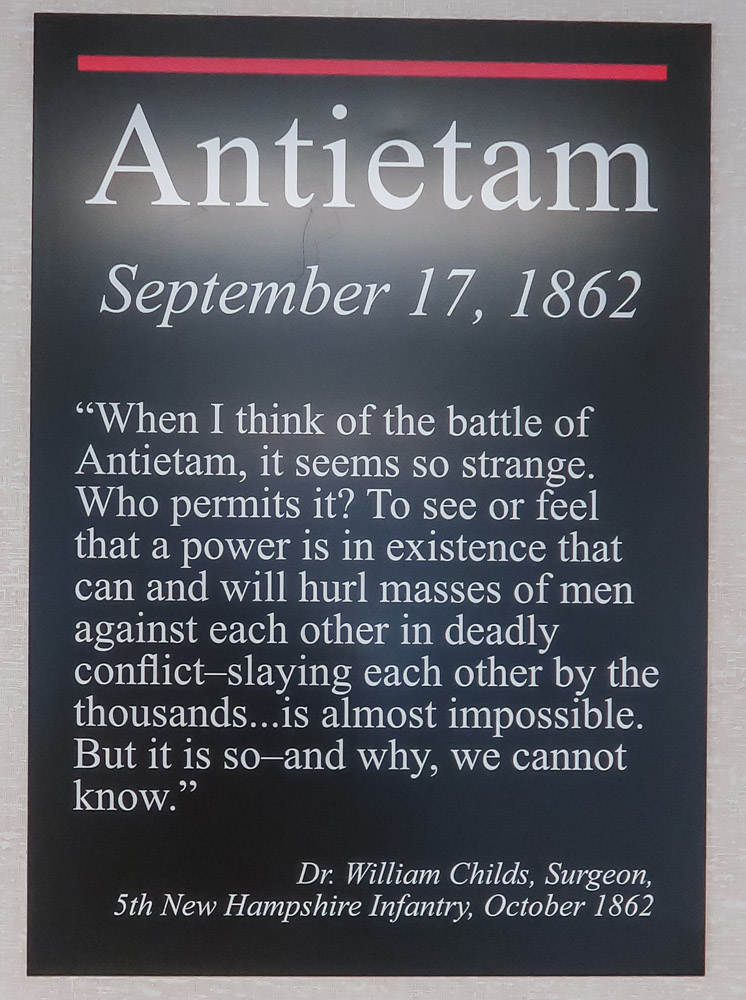
The Battle of Antietam was a battle of the Civil War fought on September 17, 1862, between Confederate Gen. Robert E Lee’s and Union Gen. George B McCleilan’s Army of the Potomac. It remains the bloodiest day in American history, the 12 hour battle, with a combined tally of 23,000 dead, wounded, or missing. Although the Union army suffered heavier casualties than the Confederates, the battle was a major turning point in the Union’s favor.
After pursuing Confederate Gen. Robert E. Lee into Maryland Major Gen. George B. McClellan of the Union Army, launched attacks against Lee’s army who were in defensive positions behind Antietam Creek. At dawn on At a crucial moment, Confederate Maj. Gen. A.P. Hill’s division arrived from Harpers Ferry and launched a surprise counterattack, driving back Burnside and ending the battle. Although outnumbered two-to-one, Lee committed his entire force, while McClellan sent in less than three-quarters of his army, enabling Lee to fight the Federals to a standstill. During the night, both armies consolidated their lines. In spite of crippling casualties, Lee continued to skirmish with McClellan throughout September 18, while removing his battered army south of the Potomac River.
McClellan successfully turned Lee’s invasion back, making the battle a Union victory, but President Abraham Lincoln, unhappy with McClellan’s general pattern of overcaution and his failure to pursue the retreating Lee, relieved McClellan of command in November. From a tacticle standpoint, the battle was somewhat inconclusive; the Union army successfully repelled the Confederate invasion but suffered heavier casualties and failed to defeat Lee’s army outright. However, it was a significant turning point in the war in favor of the Union due in large part to its political ramifications: the battle’s result gave Lincoln the political confidence to issue the Emancipation Proclamation, declaring all “persons held as slaves within any State, or designated part of a State, the people whereof shall then be in rebellion,” as of the first of the following year, shall be “forever free.” This effectively discouraged the British and French governments from recognizing the Confederacy, as neither power wished to give the appearance of supporting slavery.
Catoctin Mountain Park – 5120 acres, the park features sparkling streams and panoramic vistas of the Monocacy Valley. In the 1930s, after years of making charcoal to fuel nearby iron furnaces, mountain farming, and harvesting of trees for timber, land was purchased to be transformed into a productive recreation area, helping to put people back to work during the Great Depression. The northern portion of the park was transferred to the National Park Service on November 14, 1936, and renamed and reorganized on July 12, 1954, with the southern 5,000 acres transferred to Maryland as Cunningham Falls State Park.
Cunningham Falls at Catoctin Mountain ParkOriginally planned to provide recreational camps for federal employees, one of the camps eventually became the home of the Presidential retreat, Camp David. The Presidential retreat is not open or accessible to the public; however, the eastern hardwood forest of Catoctin Mountain Park does have 25 miles of hiking trails, camping and scenic mountain vistas.
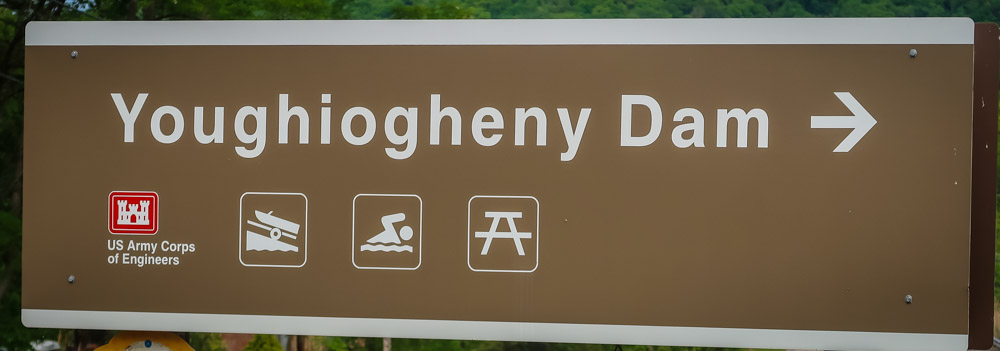
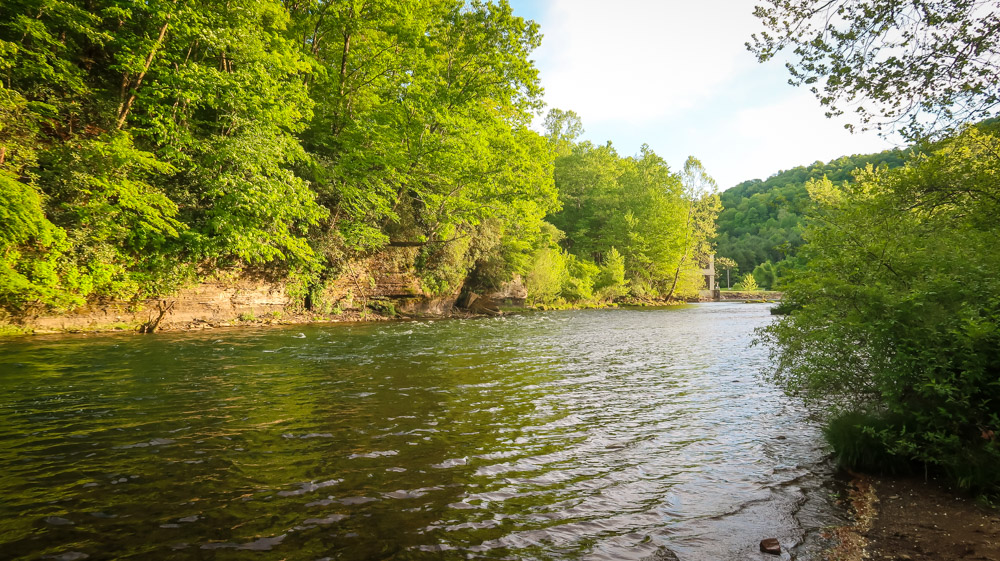
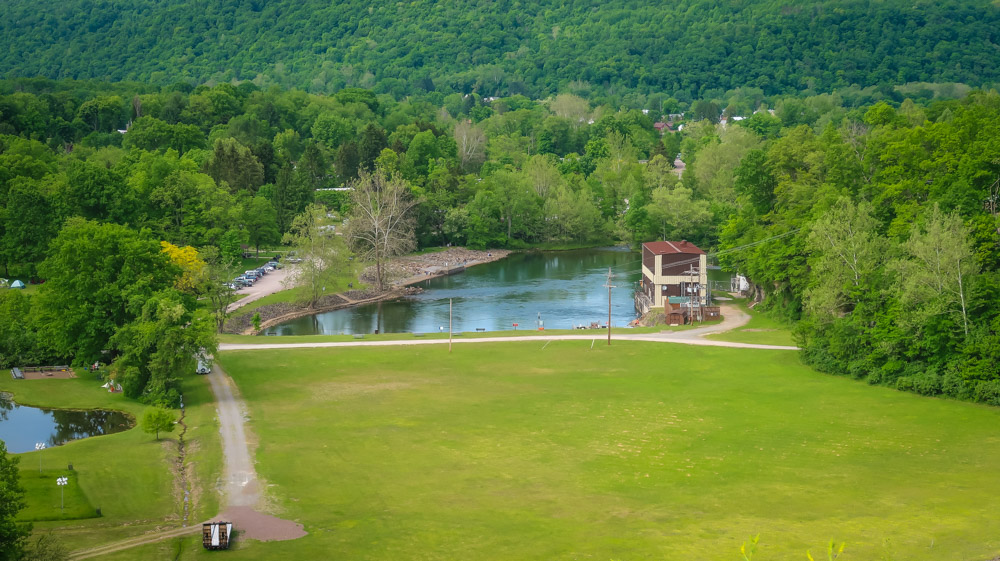
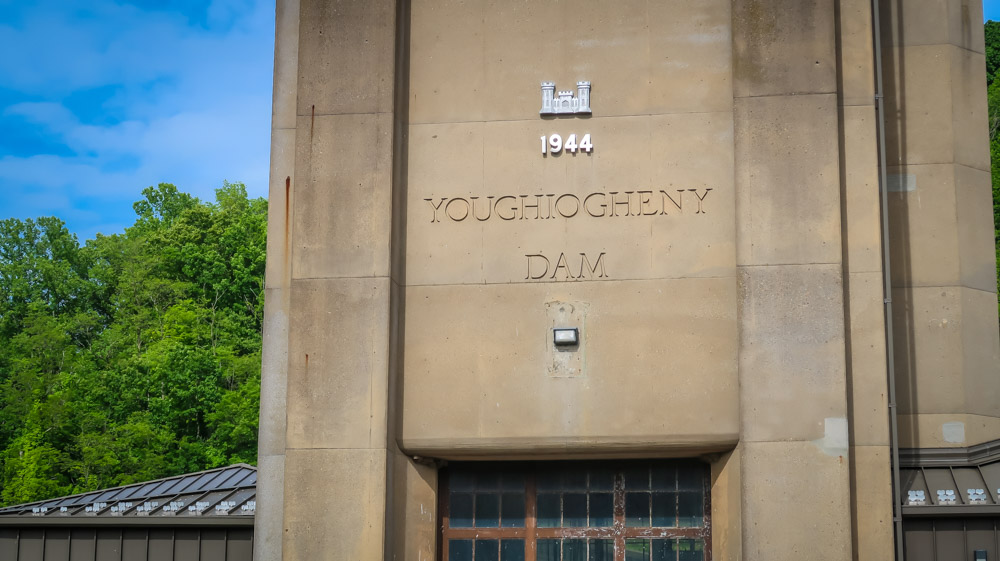
Near Confluence and just a few hundred feet from the Great Allegheny Passage lies Outflow Campground, a public, reservable, fee-based campground at the base of the dam that forms Youghiogheny River Lake. It features 63 sites. The campground is managed by the U.S. Army Corps of Engineers.















 Follow Tim & Sandy's Adventures