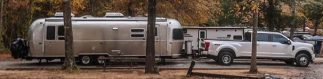

Friday-8am 61* windy and raining! Packed and pulled out at 10am! Now only 63*Said goodbye to Cape Hatteras. Stopped right away at the local 7-11 for our diet cokes. By noon we were crossing into VA.
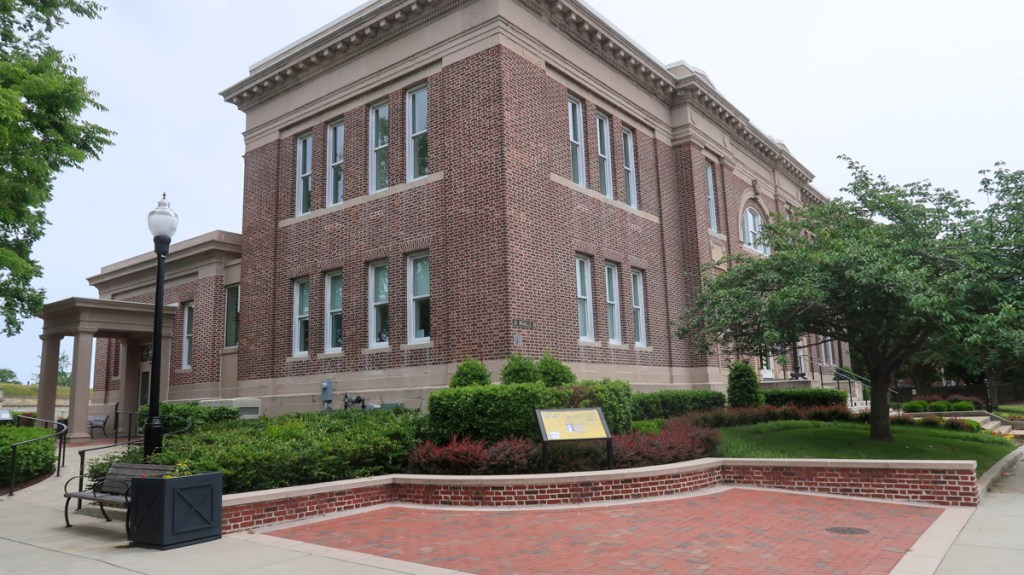
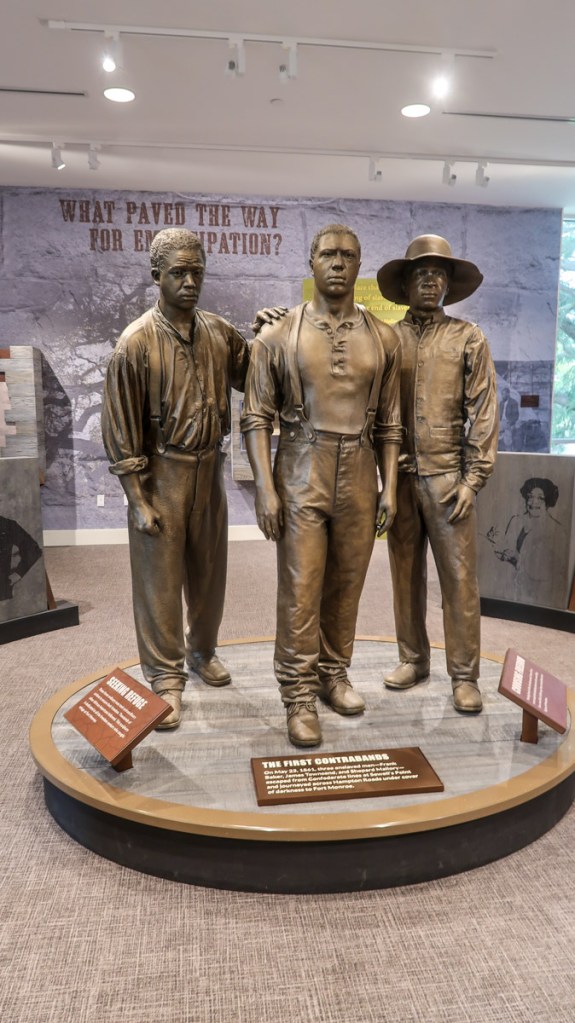
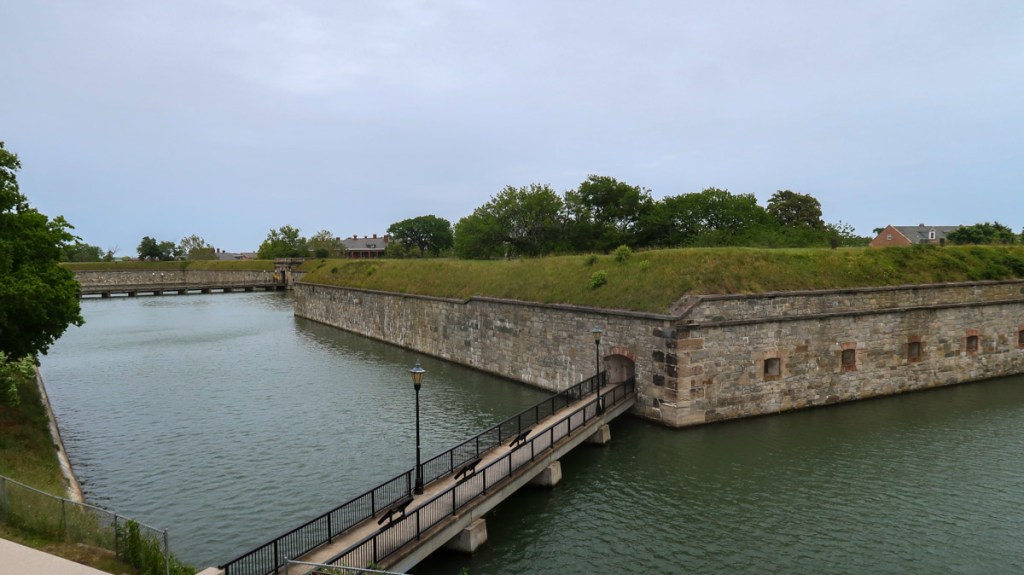
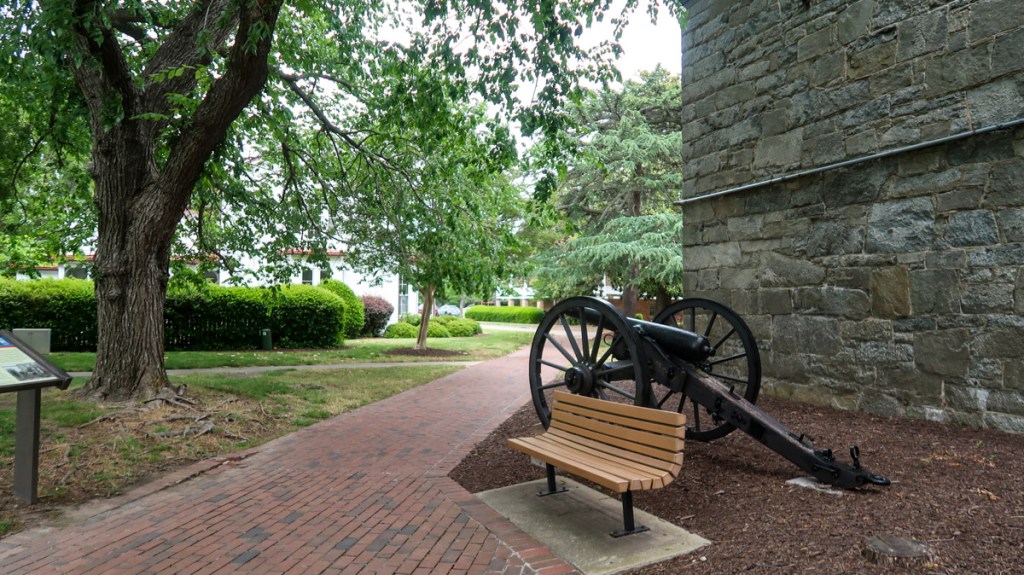
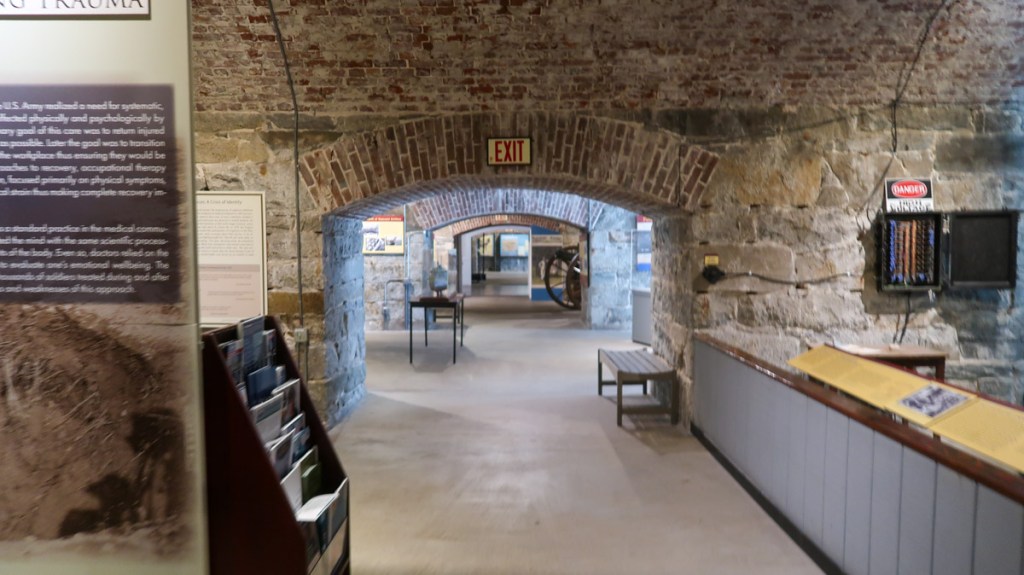
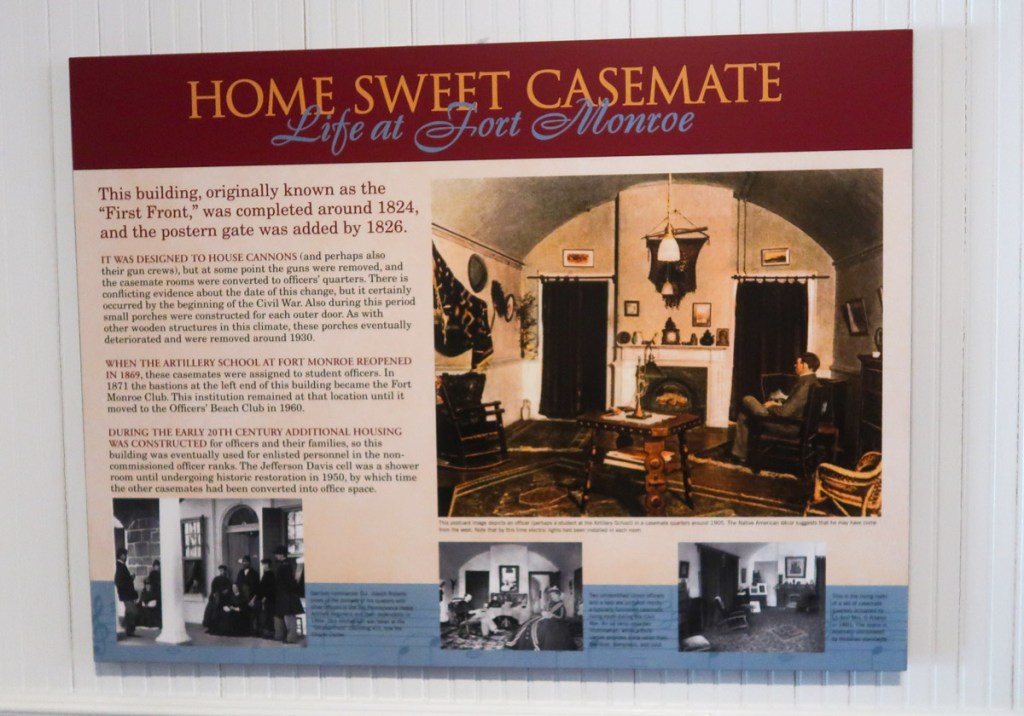
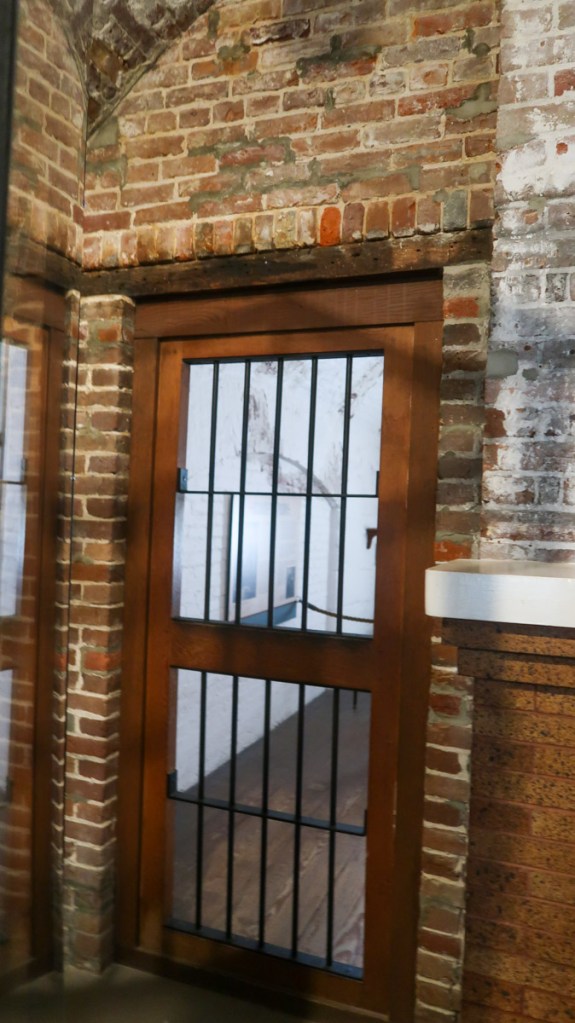
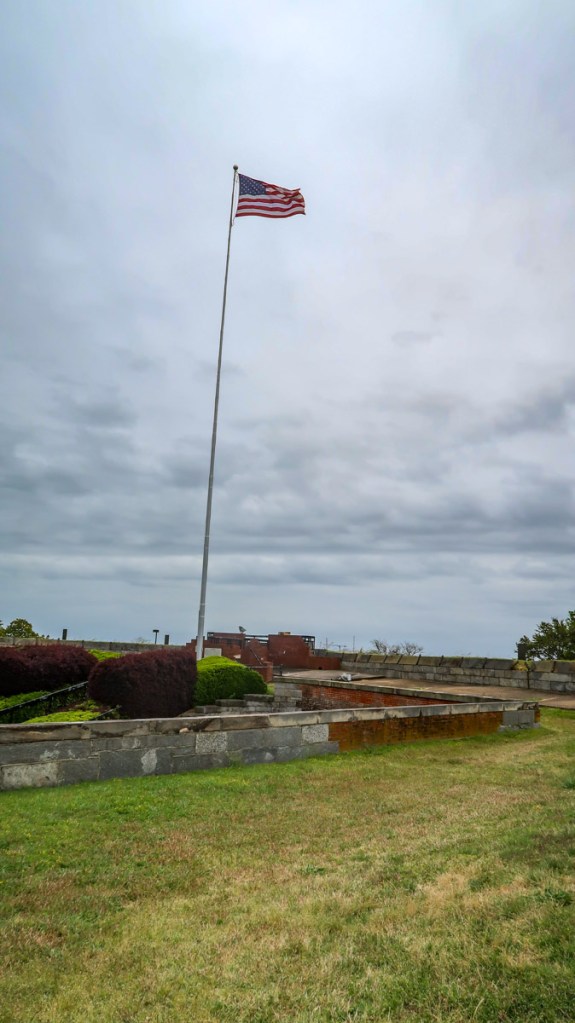
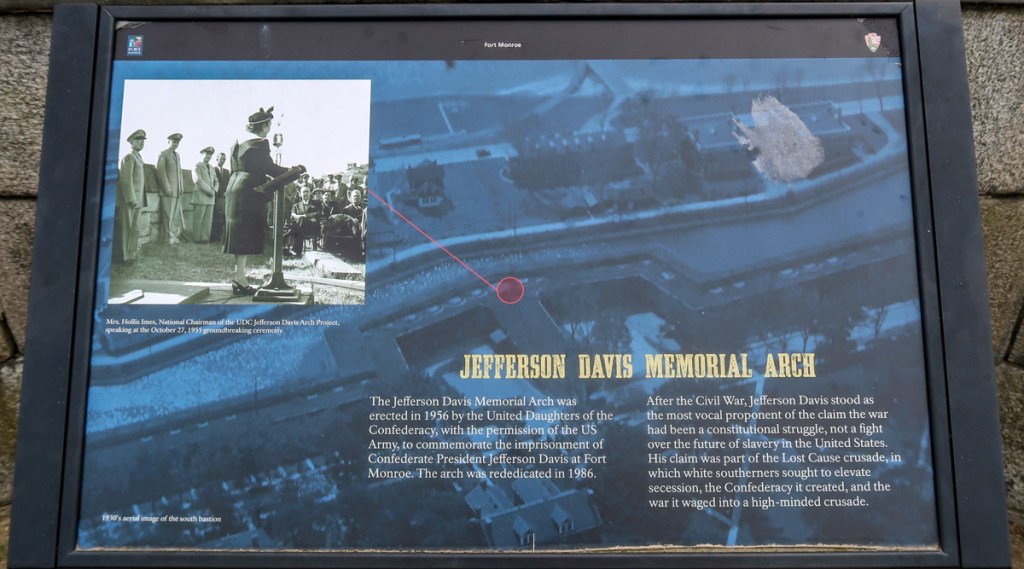
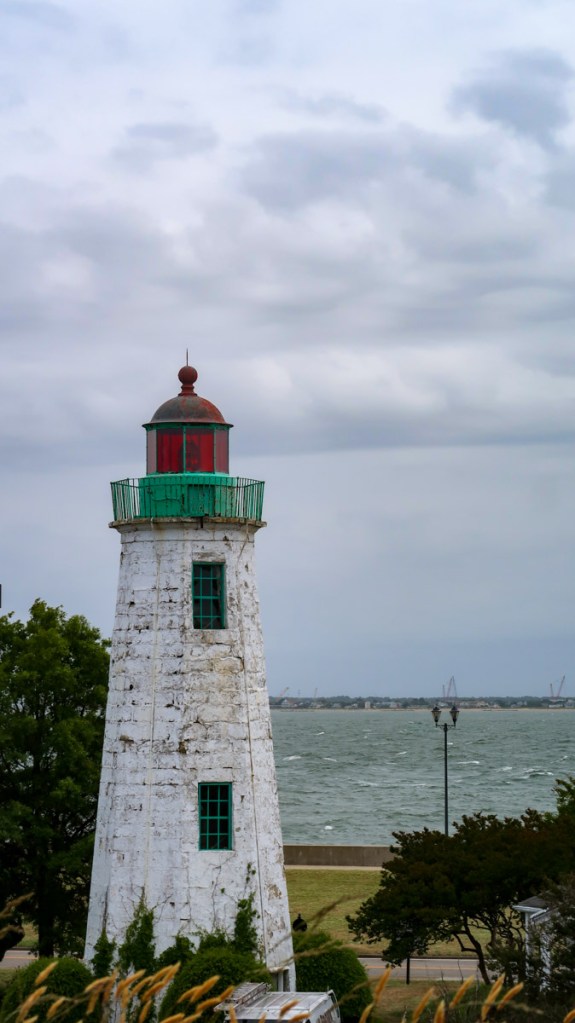
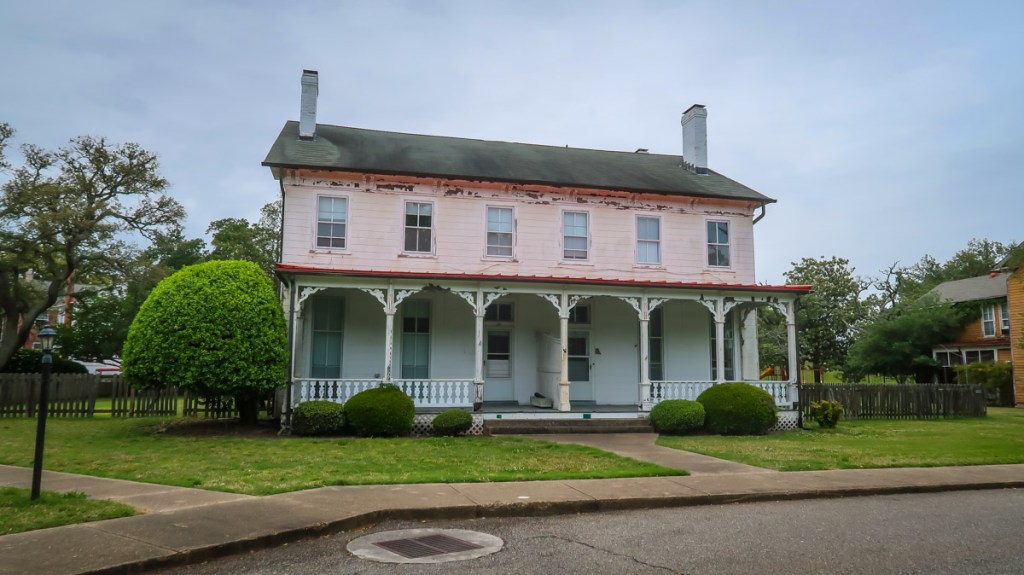
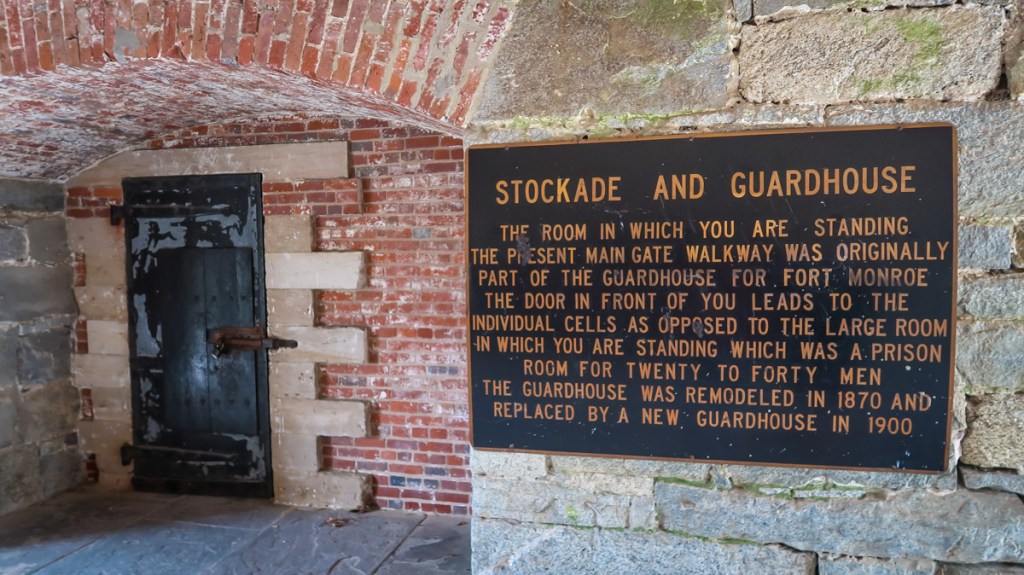
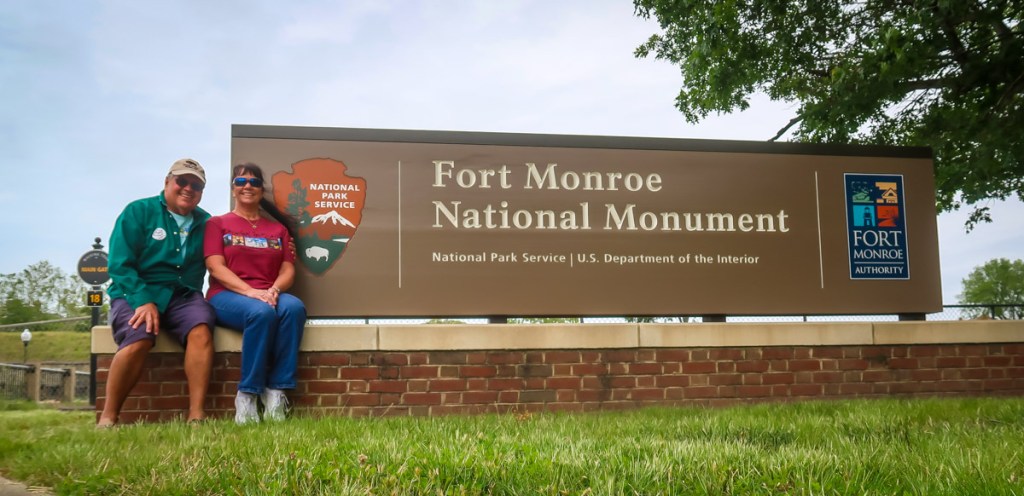
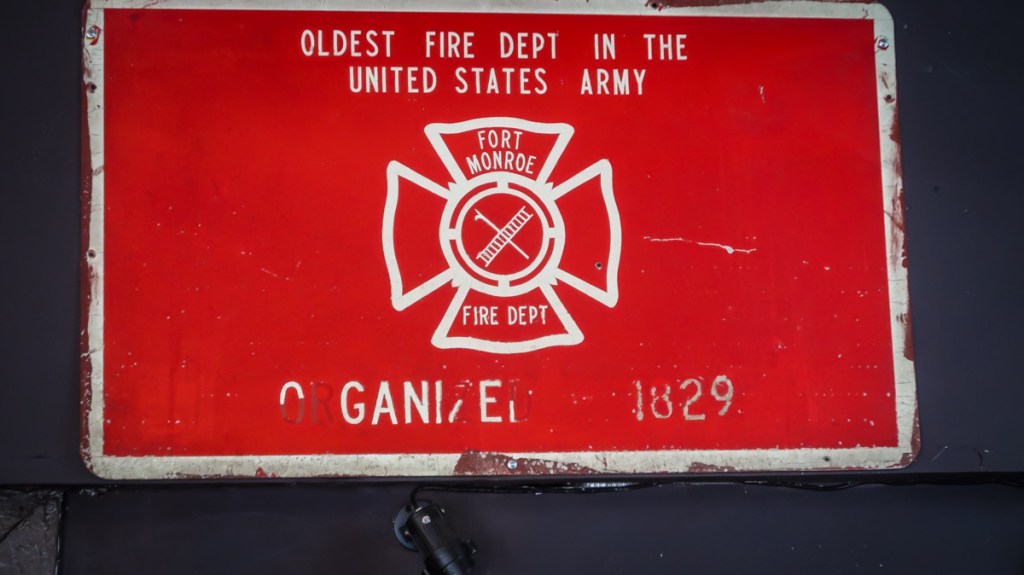
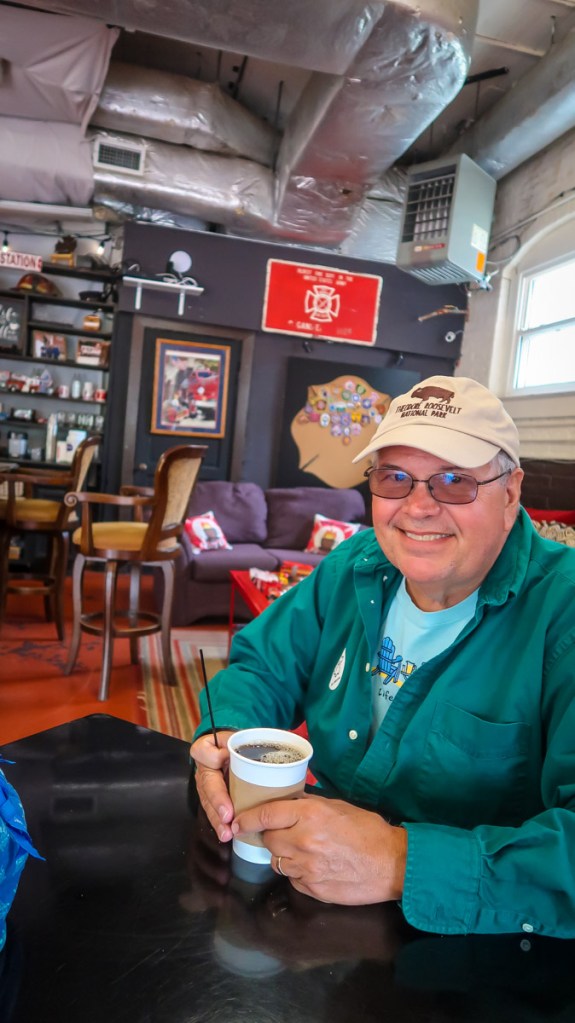
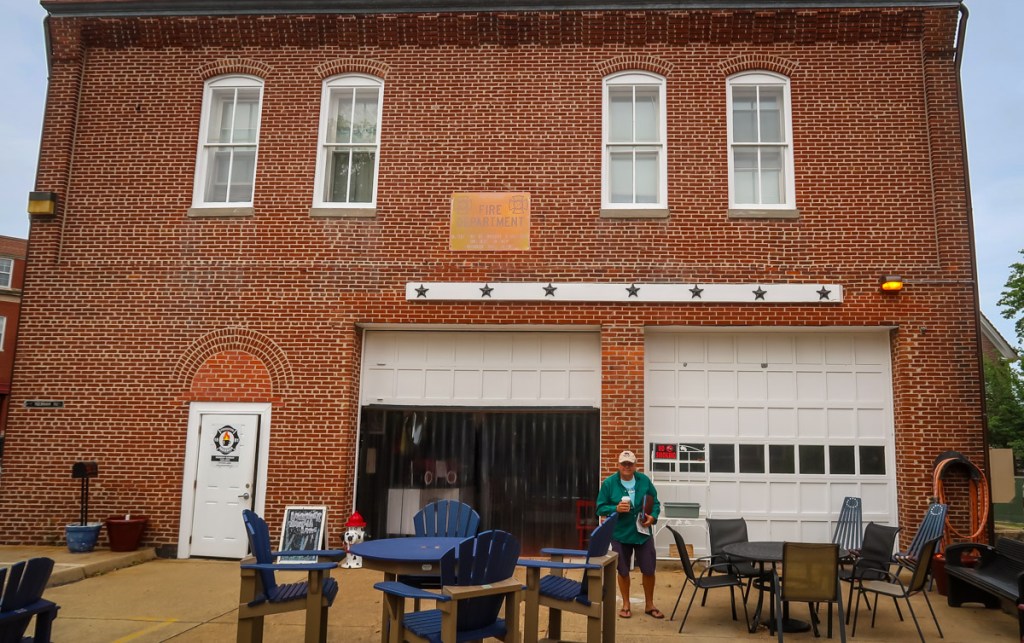
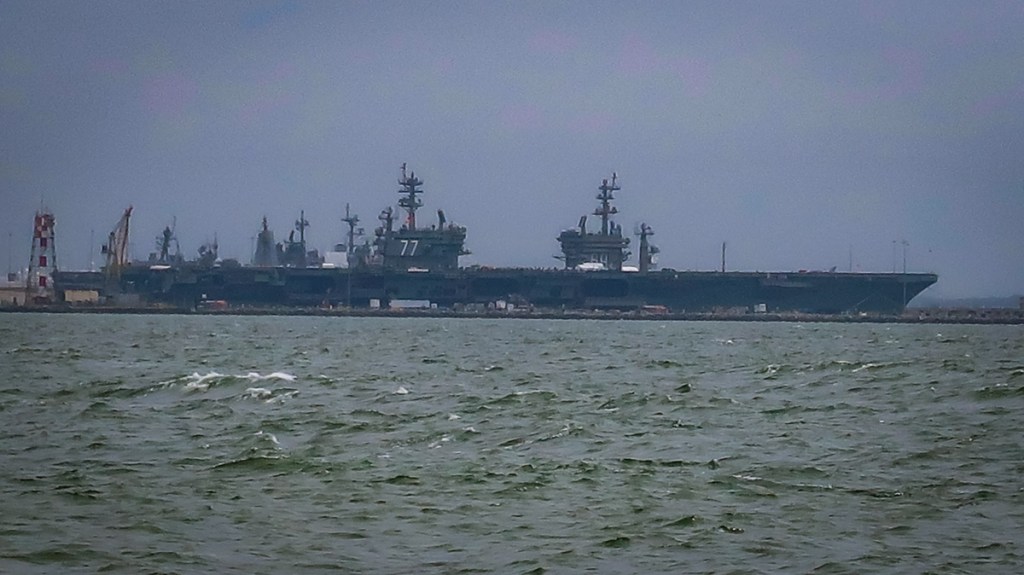
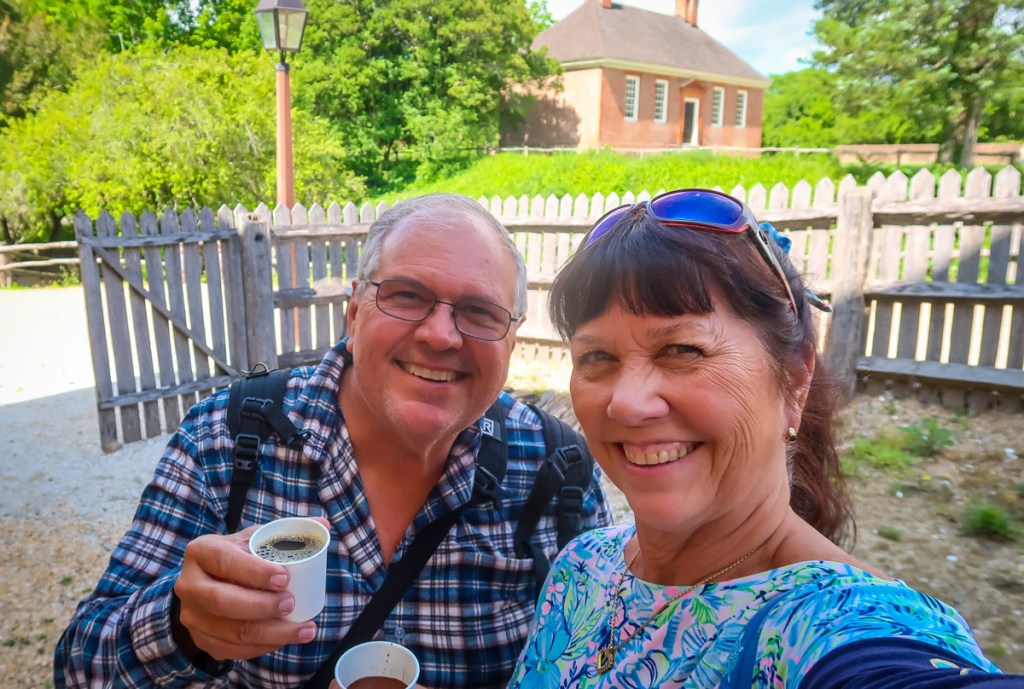
1pm we arrived at Fort Monroe National Monument. Toured the visitor center,movies and displays then headed over to the Oldest Fort in the US. Walked through the Bomb proof casements, saw the jail where President Jefferson Davis was for 2 years. Walked around the 1 1/2 mile top of the fort to the Flagstaff Bastion to the Old Point Comfort lighthouse, the Chapel of the Centurion (dedicated in 1858), the quarters where 2nd Lt.Robert E. Lee and his wife Mary lived and grounds. Went through the main gates which were constructed in 1820. It was cool out so we found the Firehouse Coffee Station…the Oldest US Army Fire Station in est. in 1881. Continued walking around the grounds and were just so amazed with this fort! Walked down to the water and across the harbor saw the George H W Bush, supercarrier.
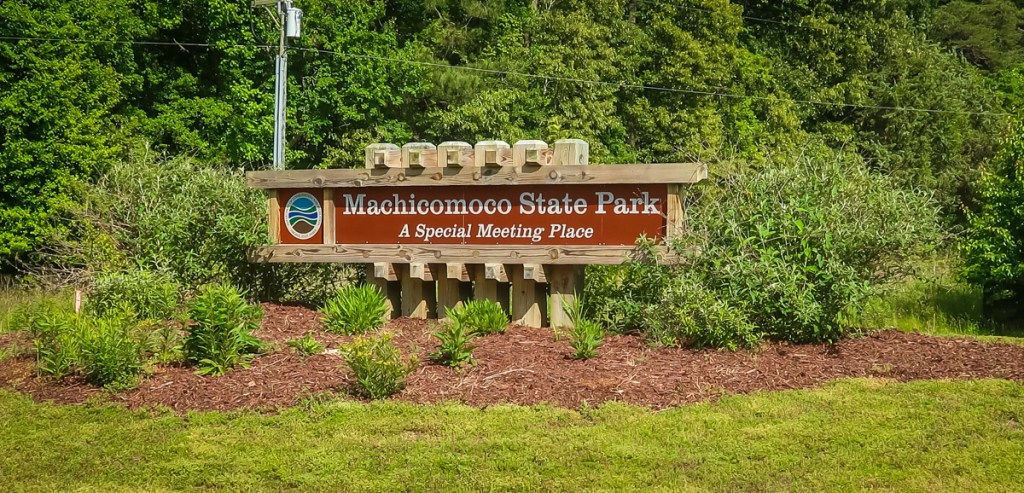
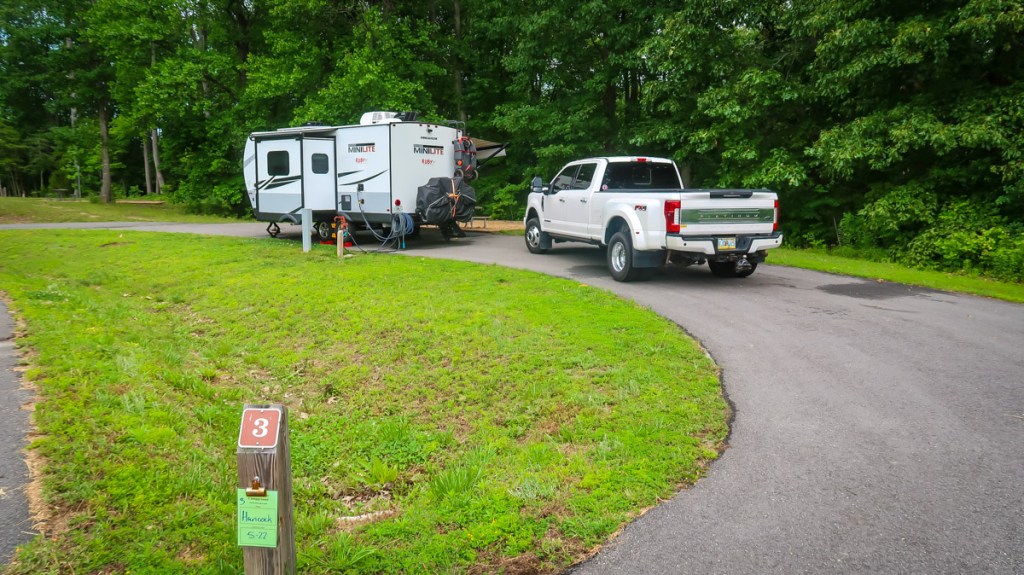
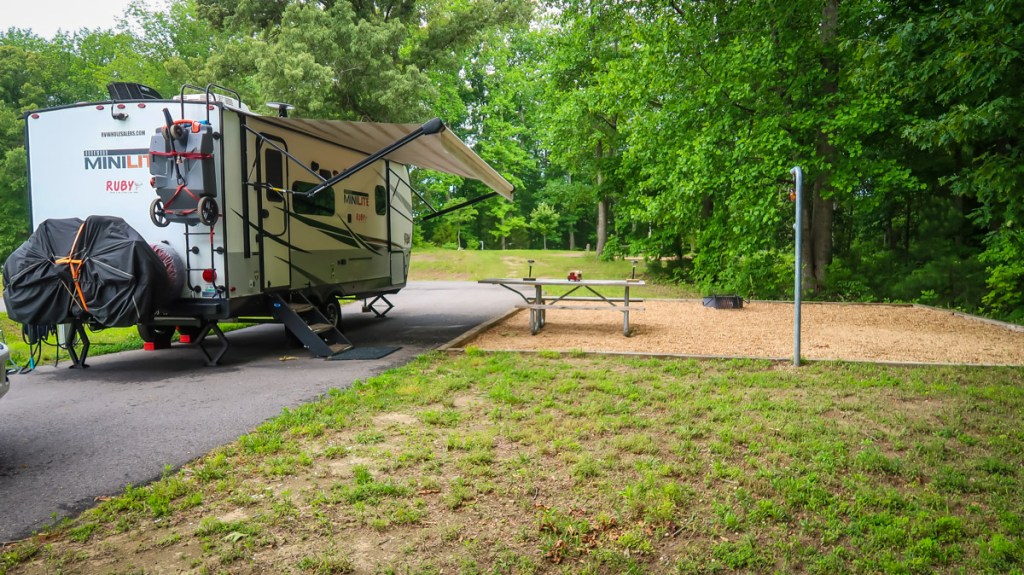
4:35pm We arrived at Machicomoco State Park. Set up at site #3, big beautiful pull-thru site. What a mess when we open the door of the RV!!!! Water was all over the floor, carpet wet and in the drawers under the kitchen sink. Apparently the water got knocked on.. due to the very bumpy roads and filled the sink which then trickled into and behind the drawers. Everything came out, cleaned and then fan placed inside to dry the rug. Then an Error 2 came up on our power management system and of course it’s after 5 and the office is closed, the camp host is gone so Tim called the ranger. Well he arrived and he’s not only the park ranger but also the policeman for the park. He said he gets to live for free having the dual title. He’d come back in am to replace the plug.
We so needed a drink at that point, so we sipped and walk around the campground. Tonight for inner pulled chicken made in the insta-pot, salad and steamed carrots. To finish off the night I decided to shower and wash my hair in the bath house since it was new and beautiful. MISTAKE to complete the day…water never got hot and I sooo don’t like cold showers! Urrrr
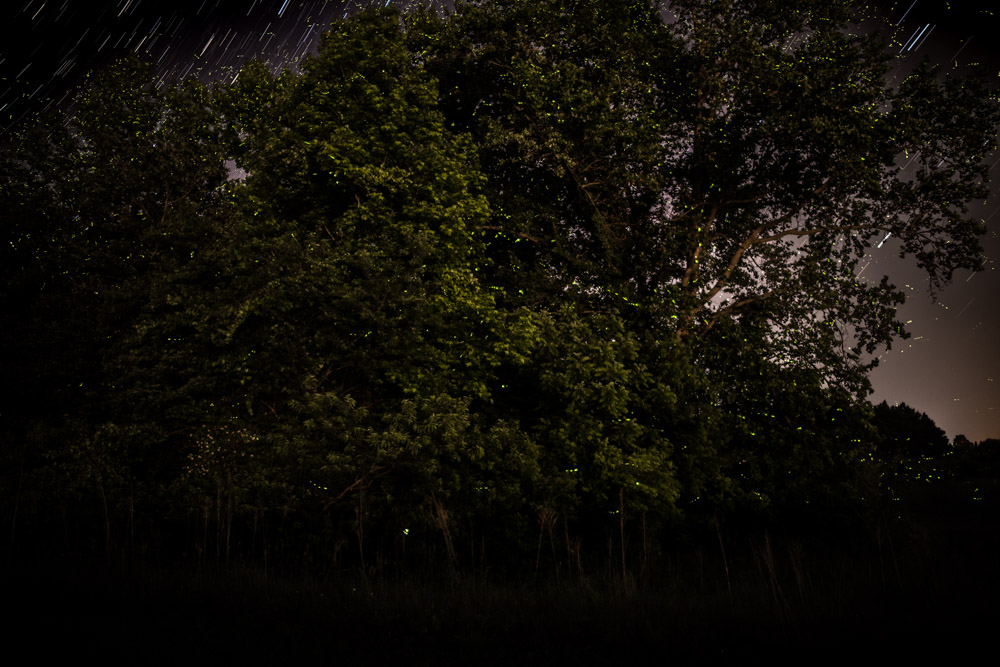
11;30pm 64*, cloudy but lots of fireflies out. Traveled 143 miles today
Saturday, May 20th – Up at 7:45am & 63* Oatmeal, coffee & tea. Ranger arrived. Dressed and out the door by 9:45
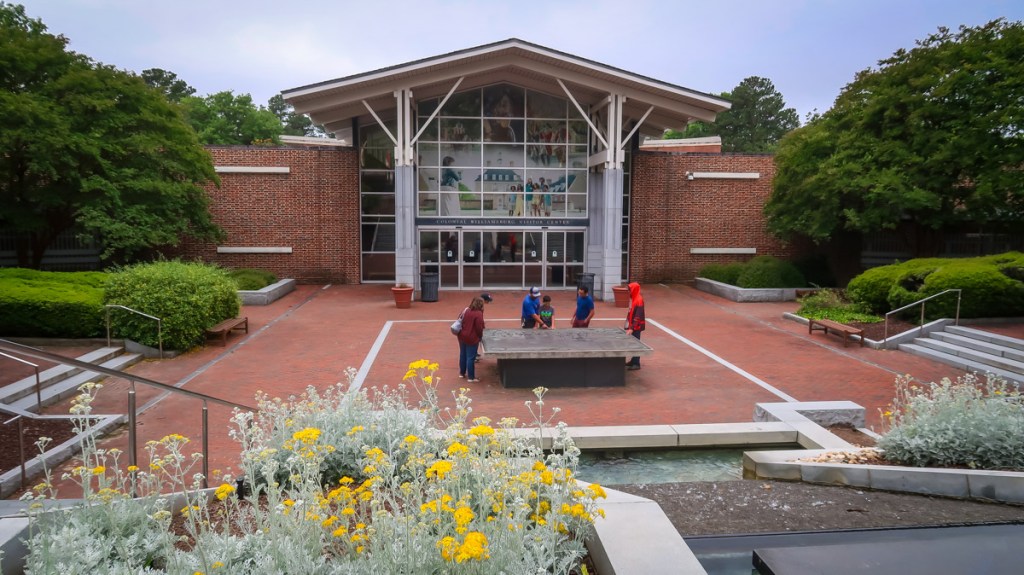
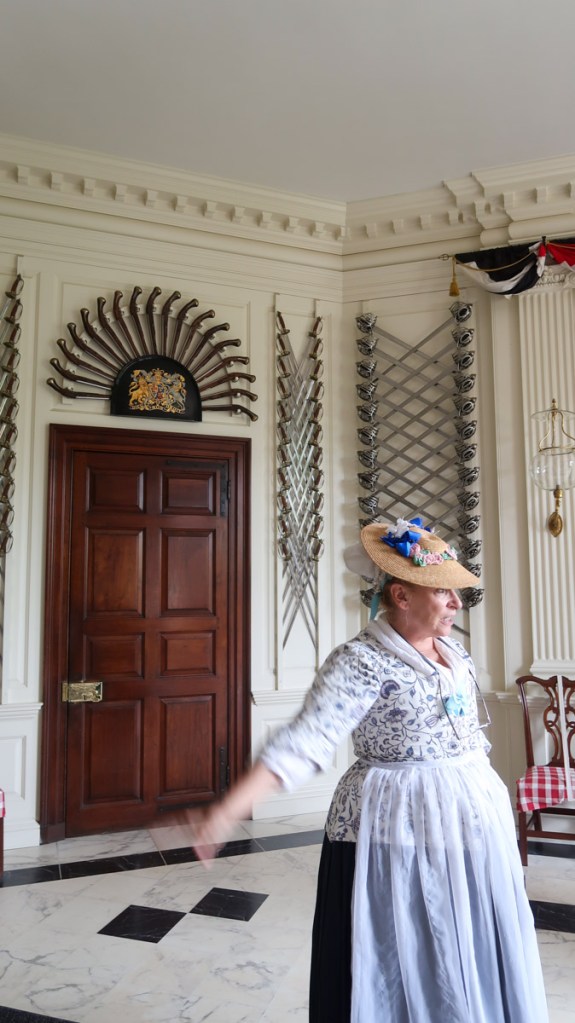
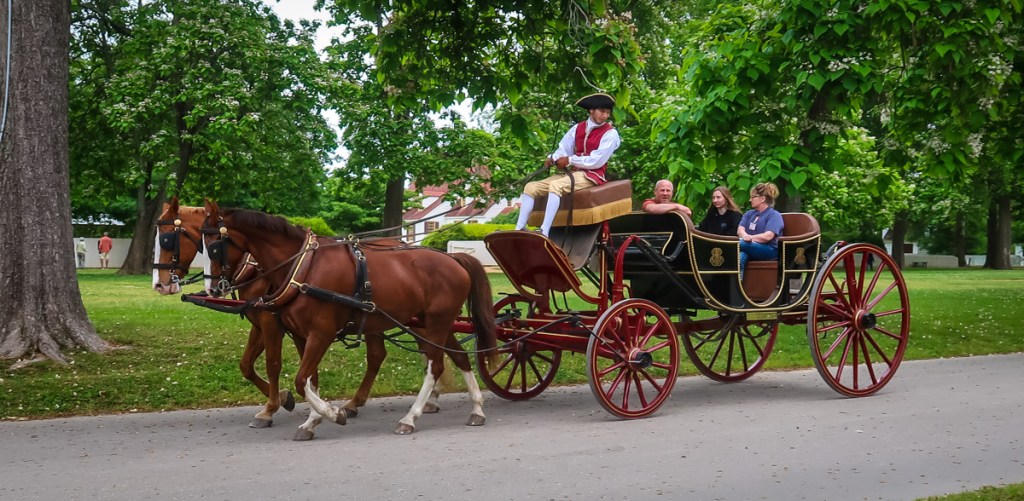
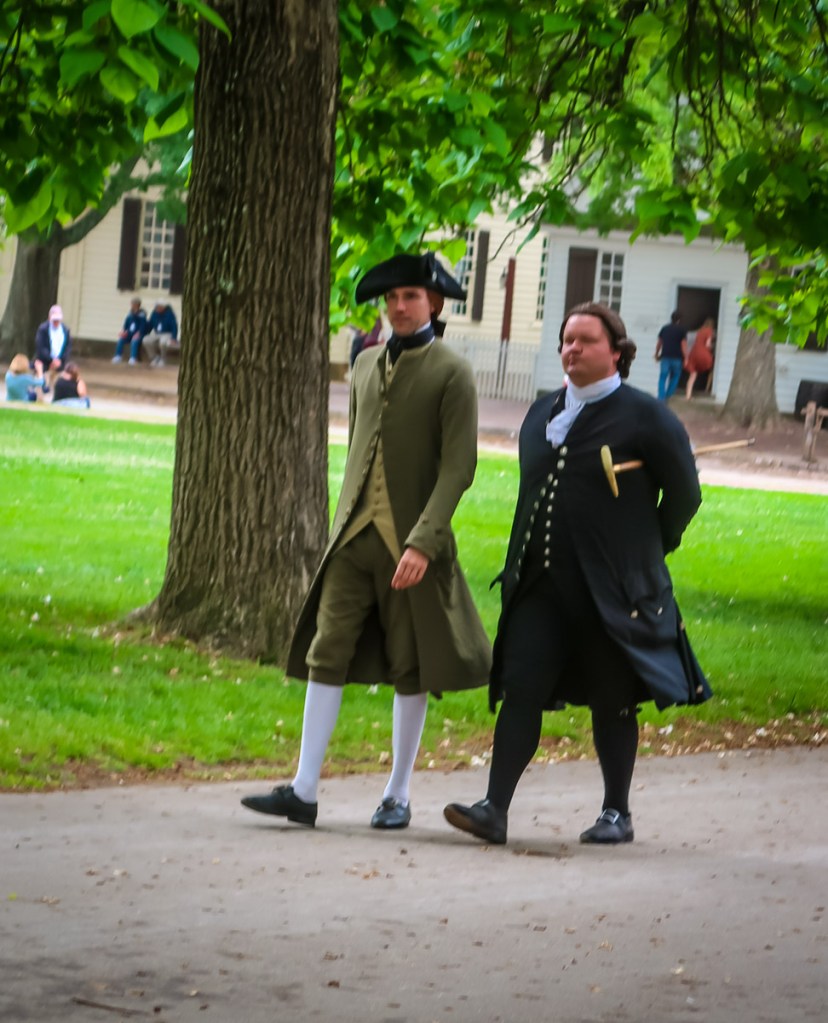
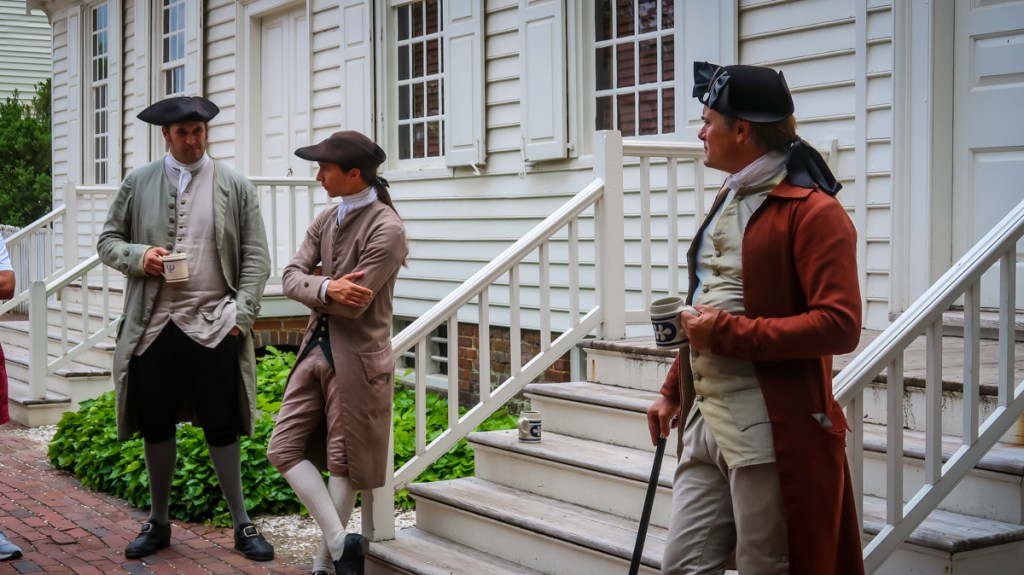
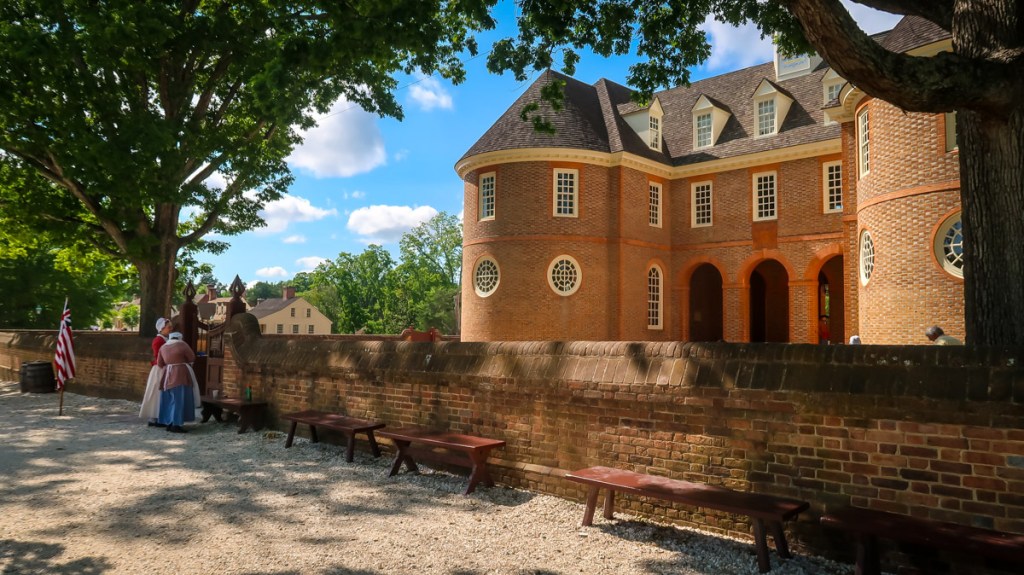
Colonial Williamsburg here we come! We encountered costumed interpreters throughout the day…on the street and in the different buildings who portrayed people who lived in Williamsburg during the American Revolution time, 1765-1785. The day was especially busy here because this same weekend we’re in town is the graduation of the College of William & Mary.
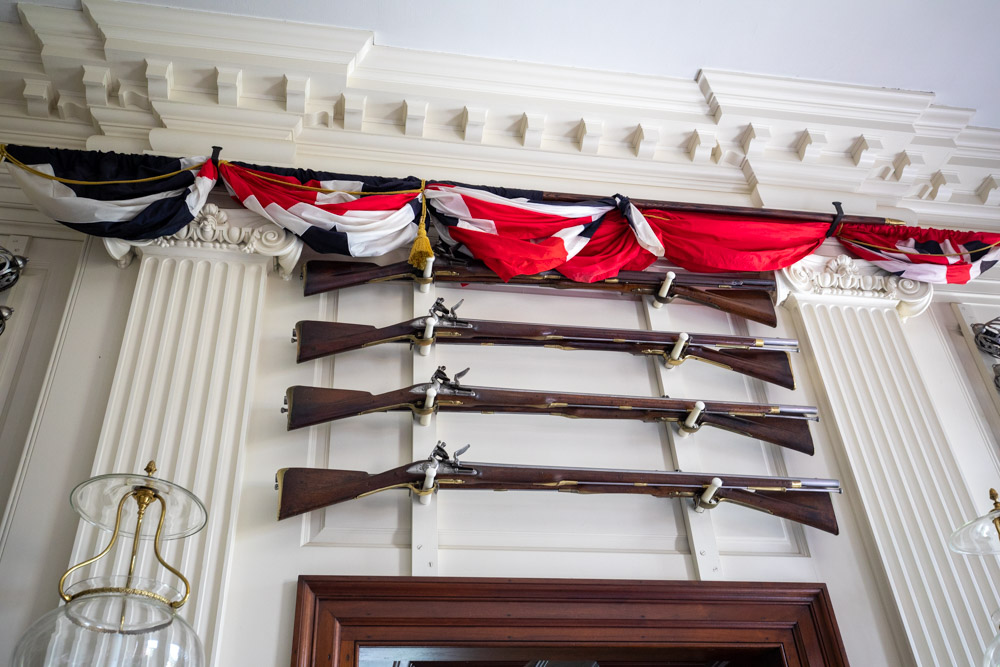
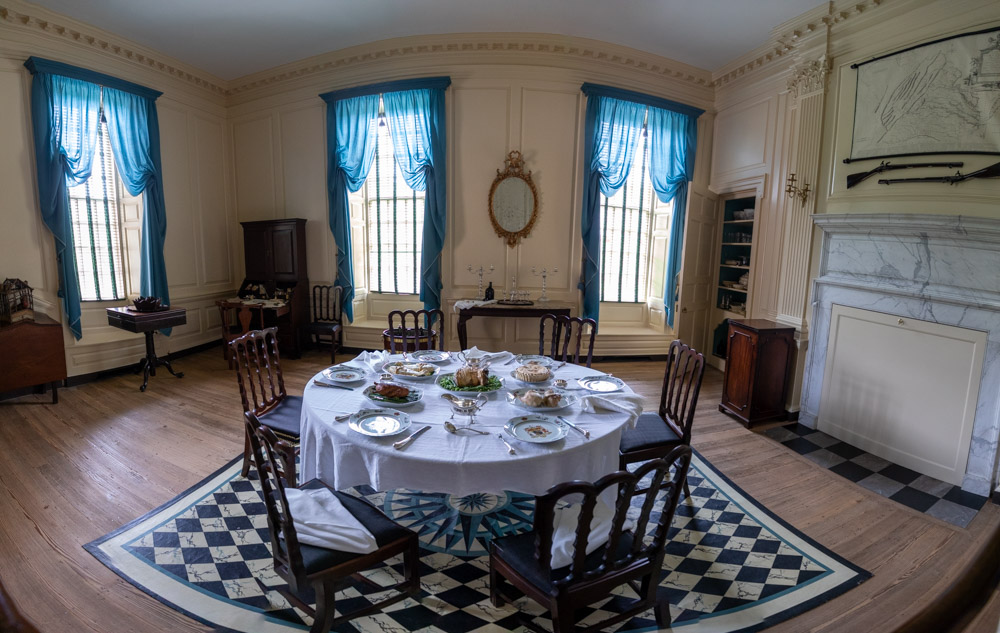
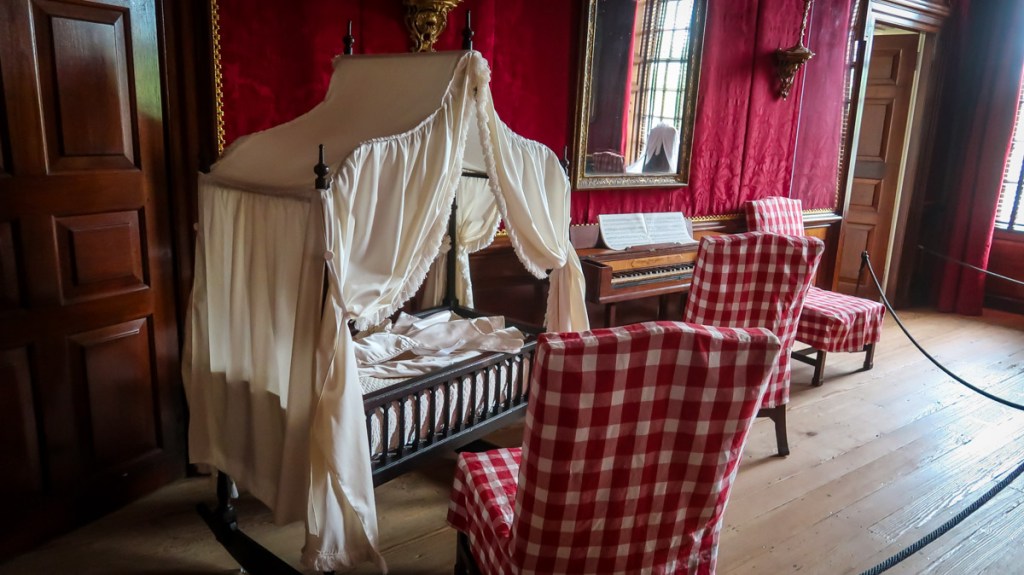
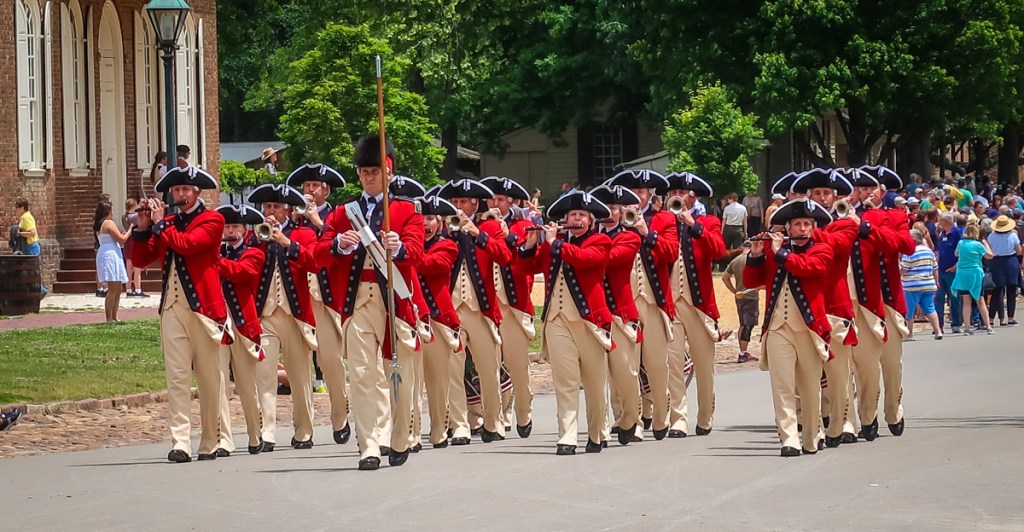
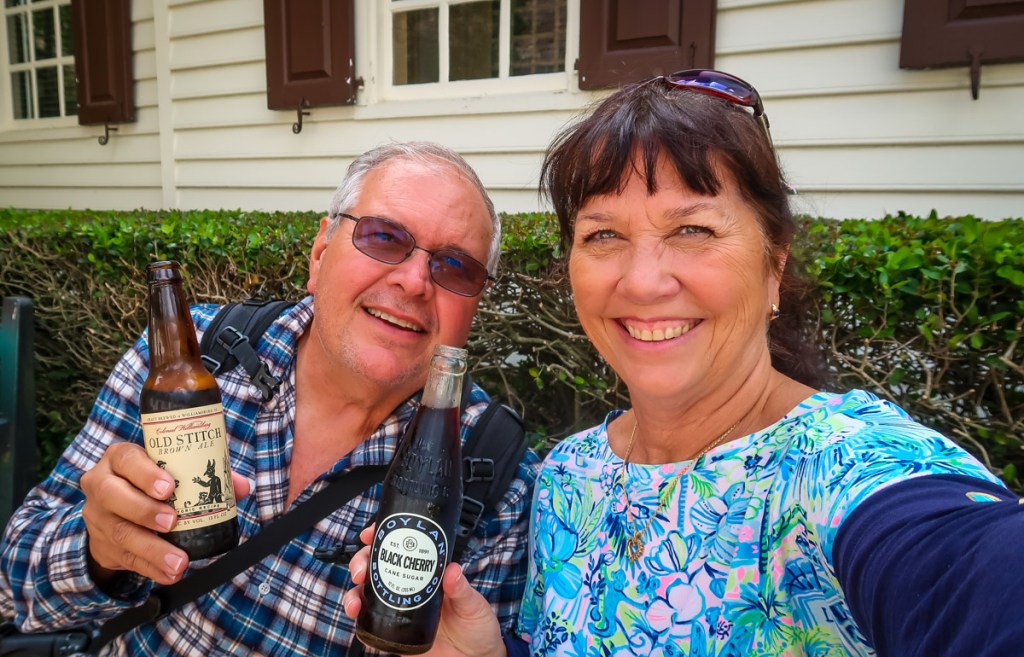
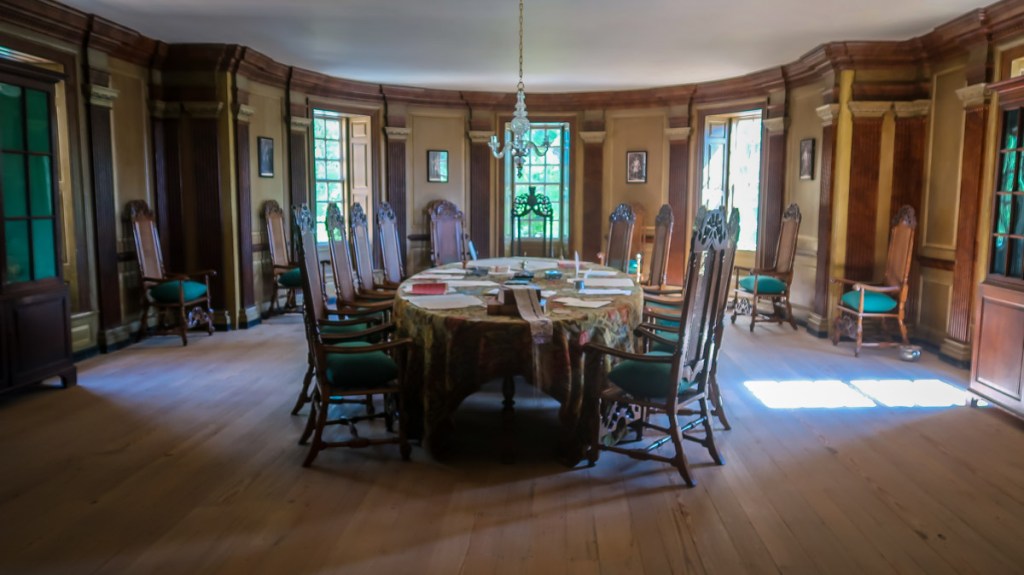
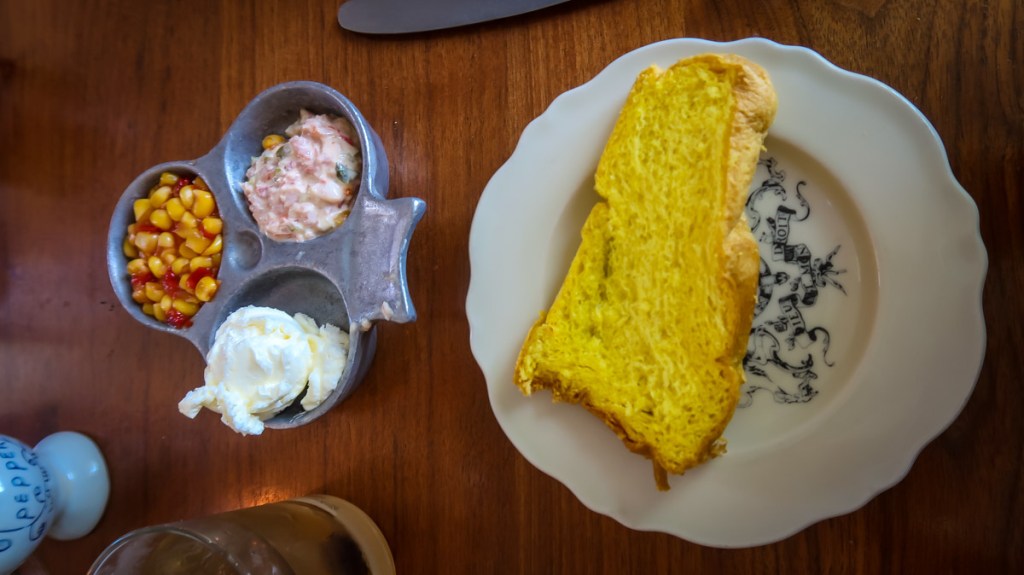
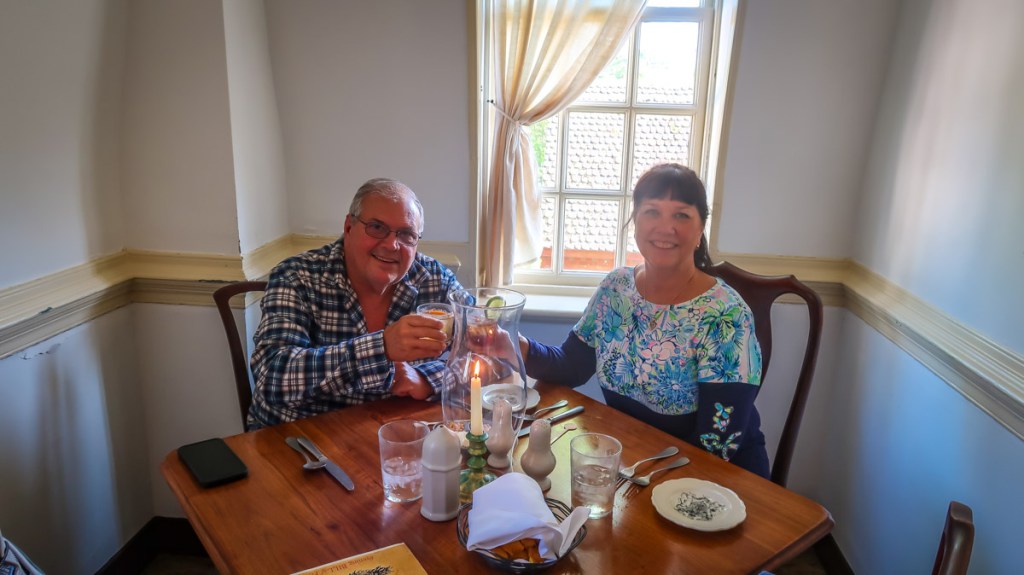
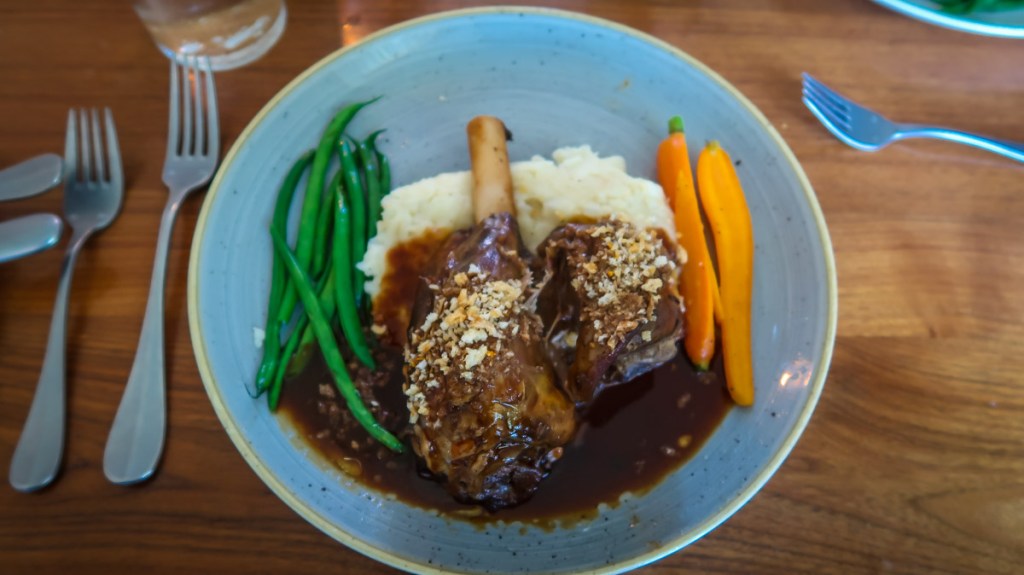
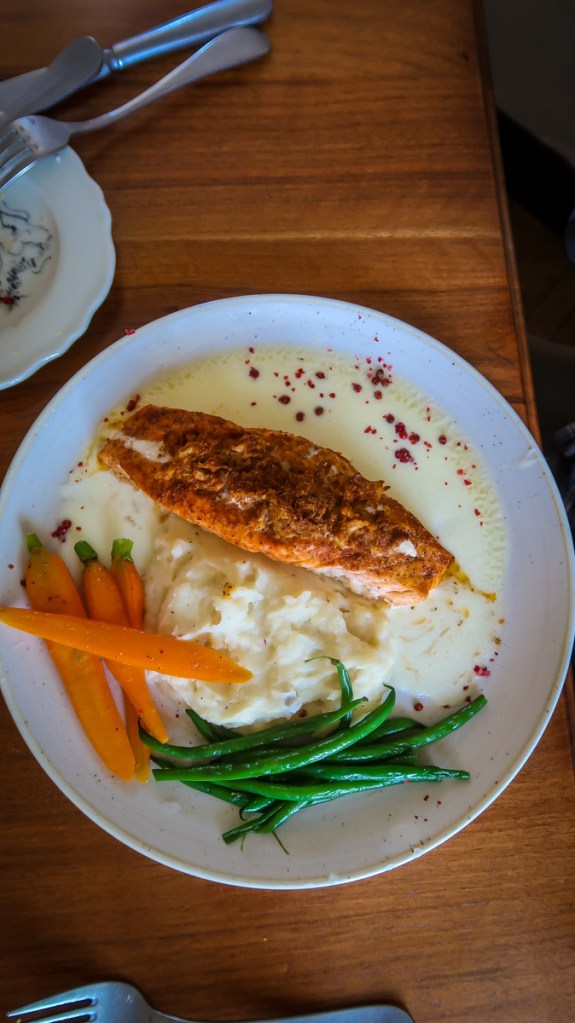
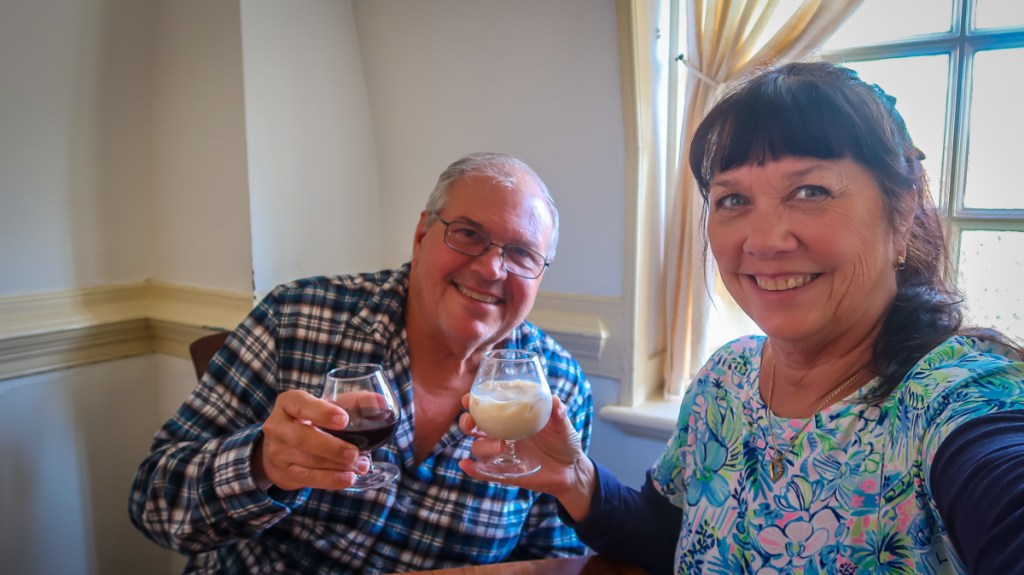
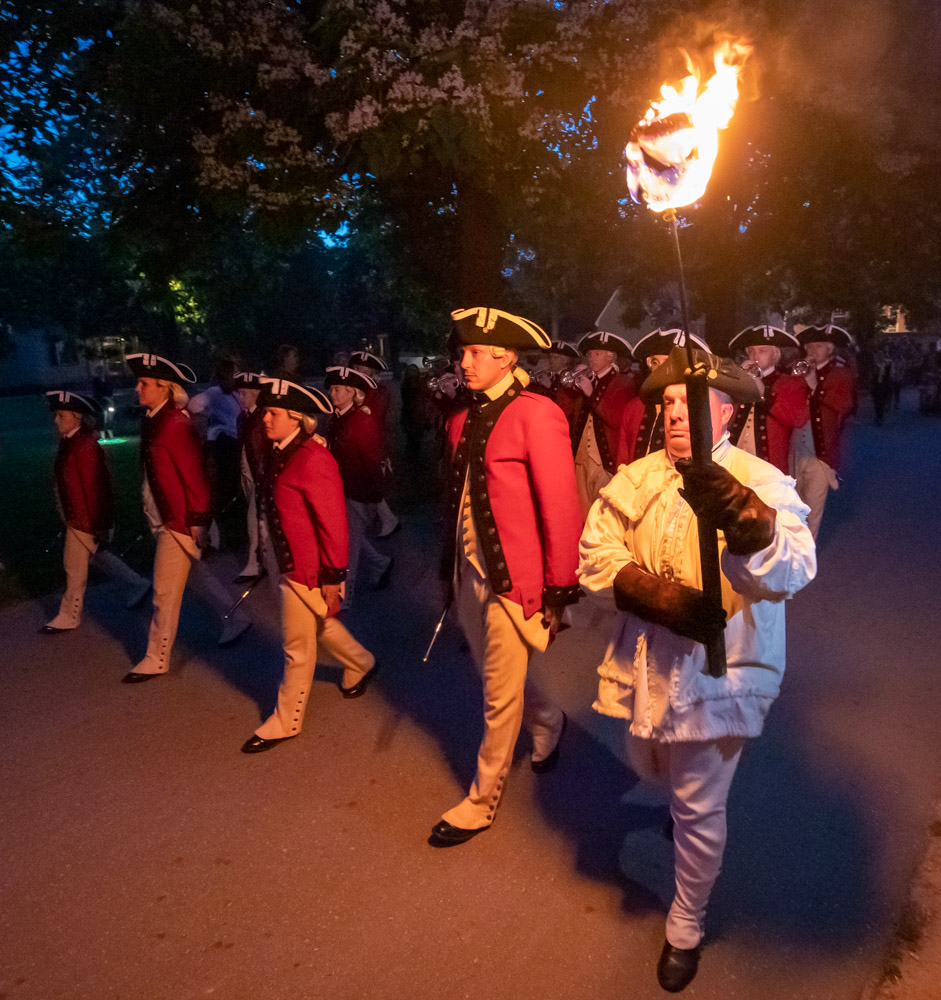
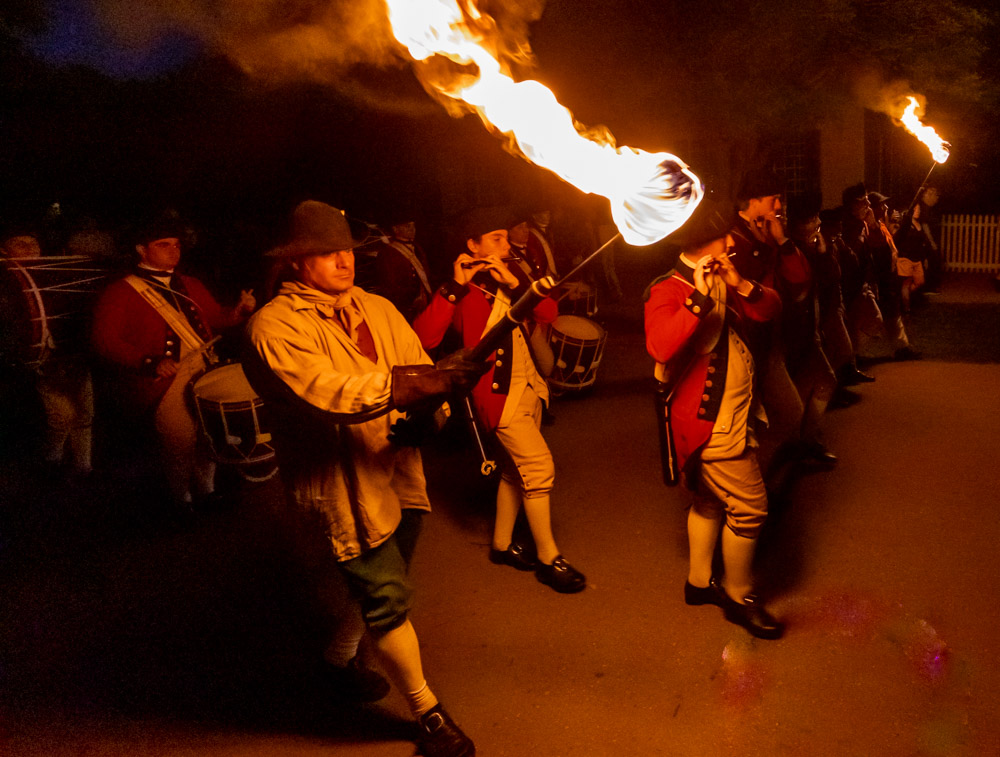
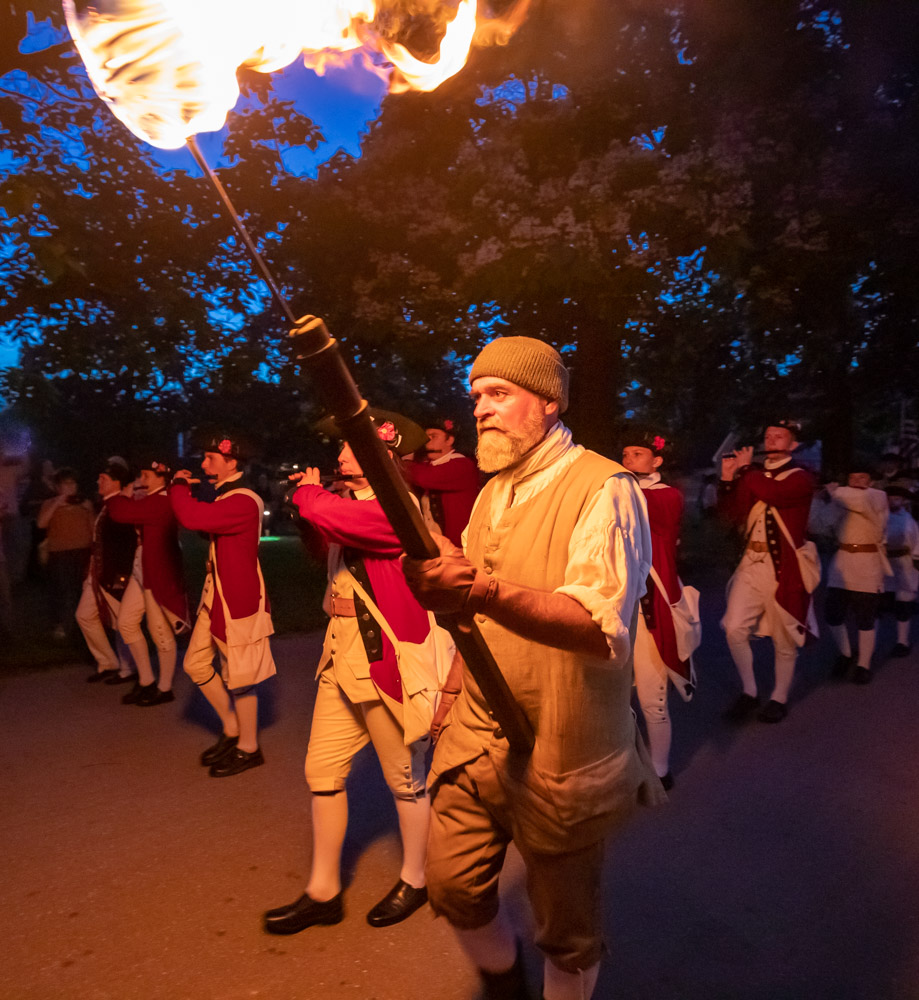
12:30-3pm we watched the Grand March of Fife & Drum 🥁 🪈 groups from all over the US for a once a year performance. Each group marched down Capital Circle to Market Square then each took turns performing 3 songs on the Palace Green. Then we watched a presentation “Order in the Court” in the Courthouse, toured the Governor’s Manson and all the open houses we could tour. We tried some Queen’s bread (lemon cake with currents) a beer and a black cheery soda. Yummy! At 5pm we stopped touring and headed over to 🛡️ The Kings Arms Tavern for our dinner reservation. We were greeted outside then walked up to the Blue room on the 2nd floor. Beautiful table setting with pewter candlesticks on the table and the dishes all had the coat of arms on them. We enjoyed a cocktail, with warm bread served with 3 spreads…corn/ham relish, ham salad & whipped butter. Shared a corn chowder soup which was amazing. For our entrees, Tim had crab stuffed Salmon and I tried the lamb. 😱 The waitress was surprised I ate it all but I purposely didn’t eat since breakfast because I knew this was going to be amazing. On top of that, something we never do …we ordered an after dinner drink and split a bread pudding.
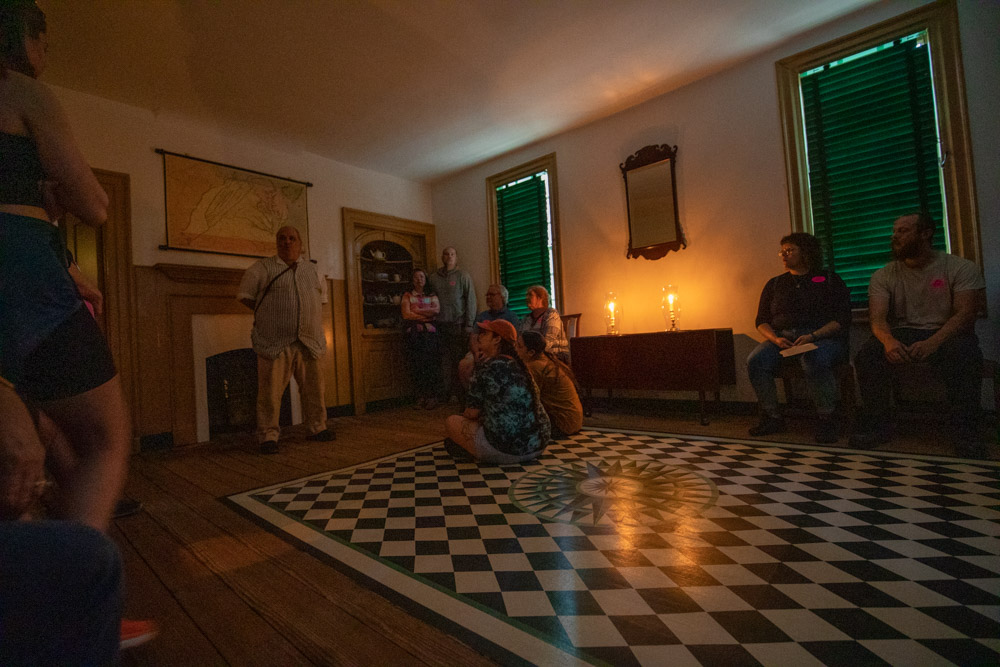
👻Time for our next adventure…our first ever walking Ghost Tour. 👻Appropriately for Williamsburg, right? The tour took us through some of the old houses, as we entered lights were out and only candles lite and were told stories that happened in them and of all the ghost sightings! We Didn’t see any ghosts! 👻
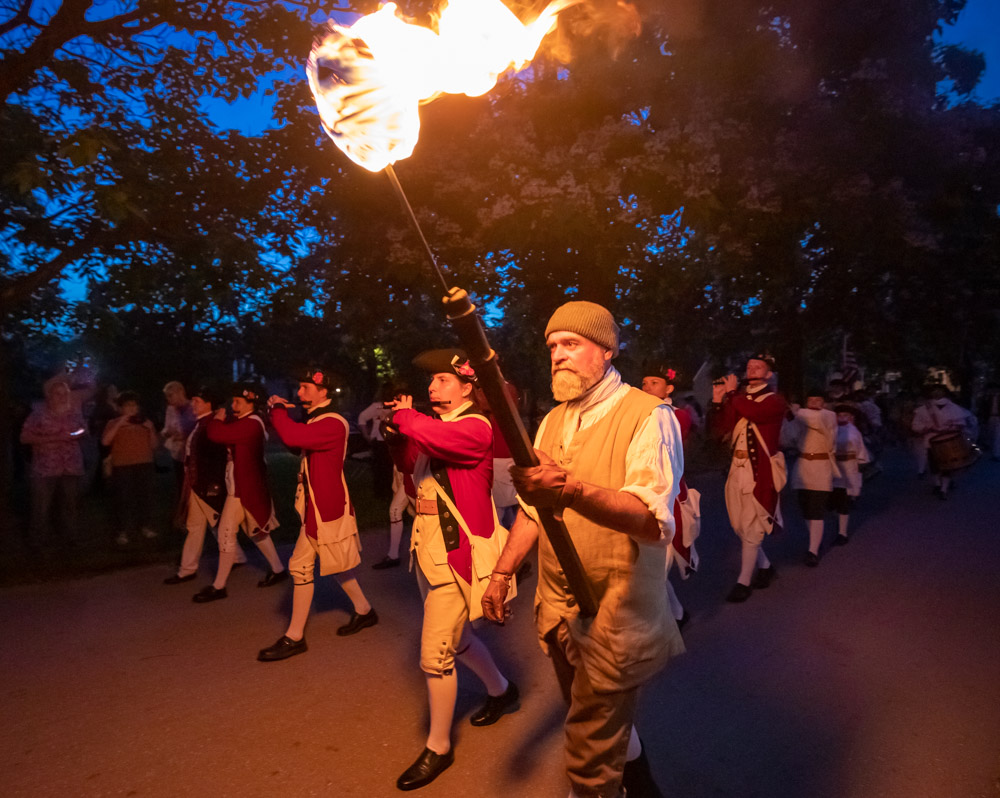
Next – found a place on the Palace Green to watch the night time parade with all the Fife & Drummer Group. This was amazing for each group was led by someone with a torch. What a grand event to end our day. 🥁🪈🥁
As we arrived back to the campground we saw deer but much to our surprise 2 big skunks! 🦌 🦨
We traveled only 43 miles today but it was a 12 hour day! We’re spent so till tomorrow…good night campers! 😴
Sunday May 21st 8:30am 63*. Ahhh 😌 it felt so good to sleep in. Had a big breakfast of egg/turkey sausage sandwiches, coffee & tea. ☕️ 🍵
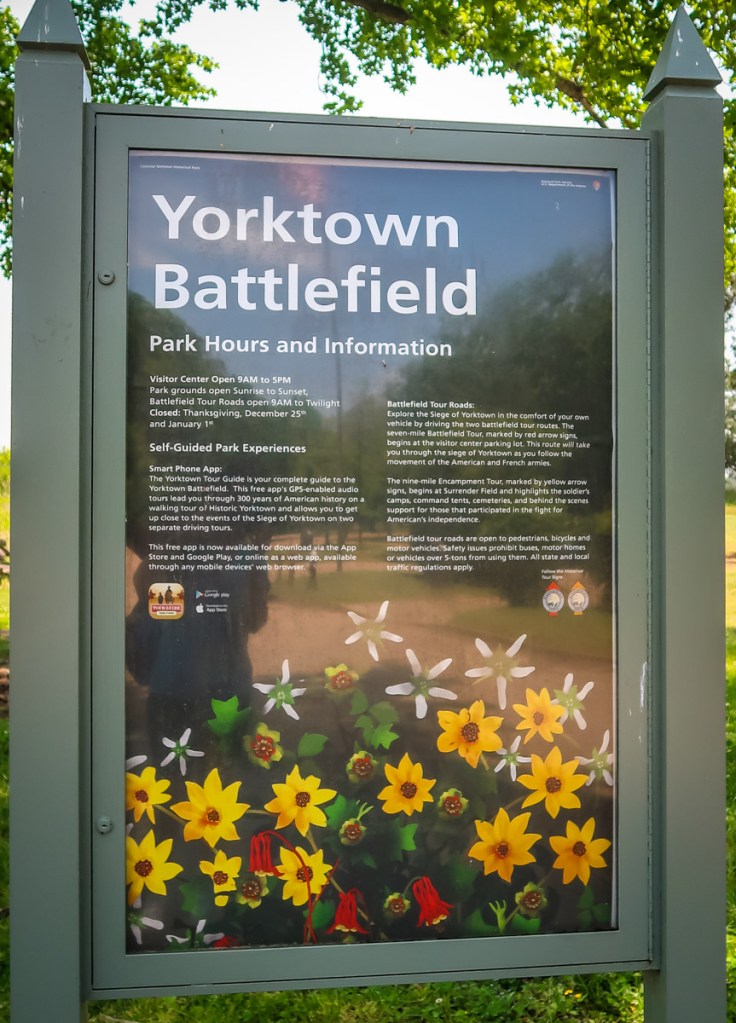
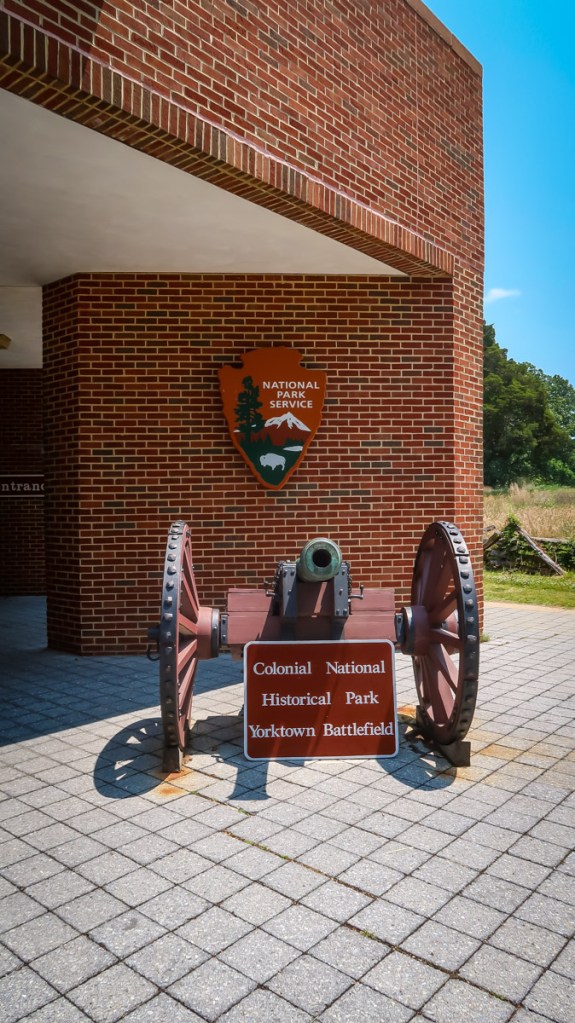
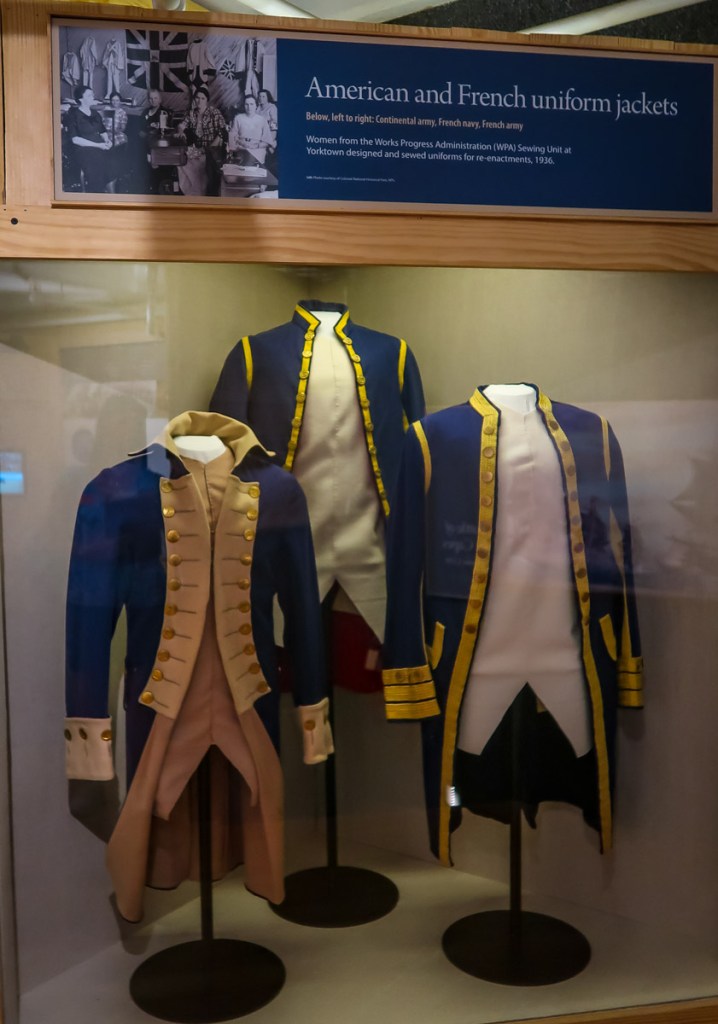
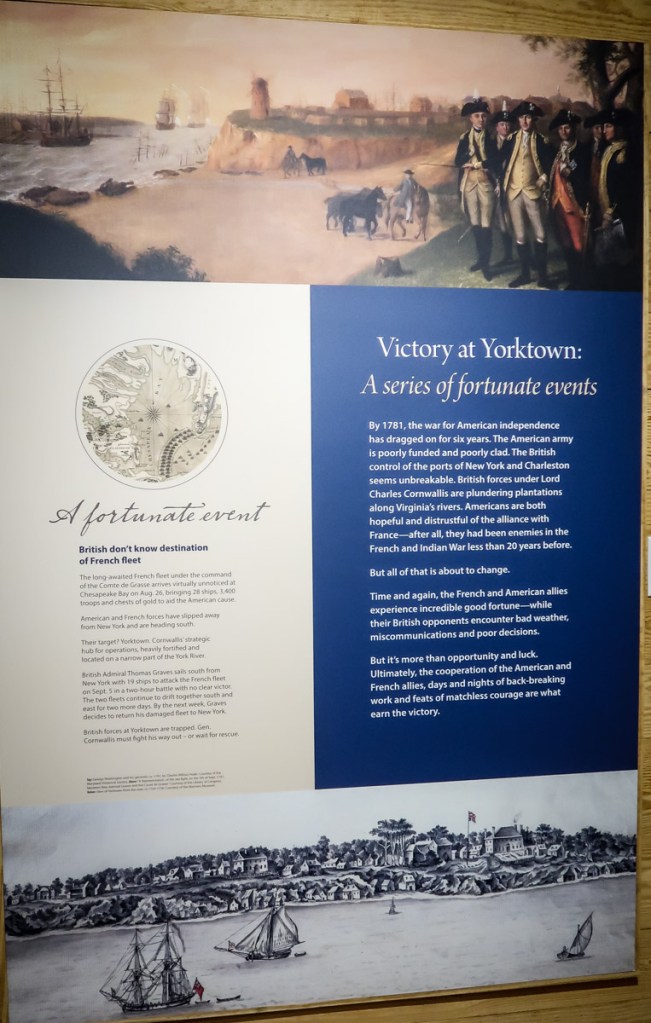
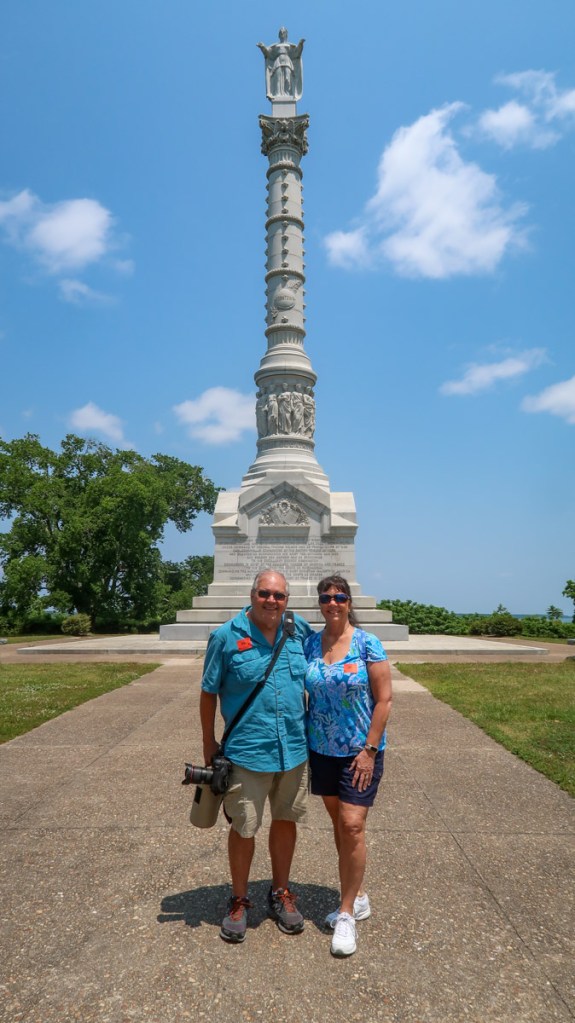
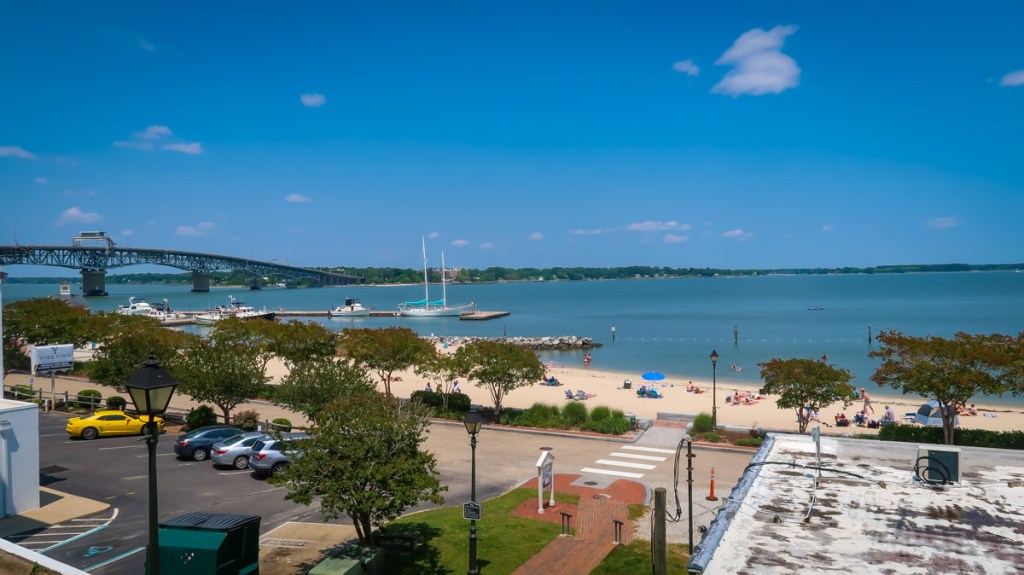
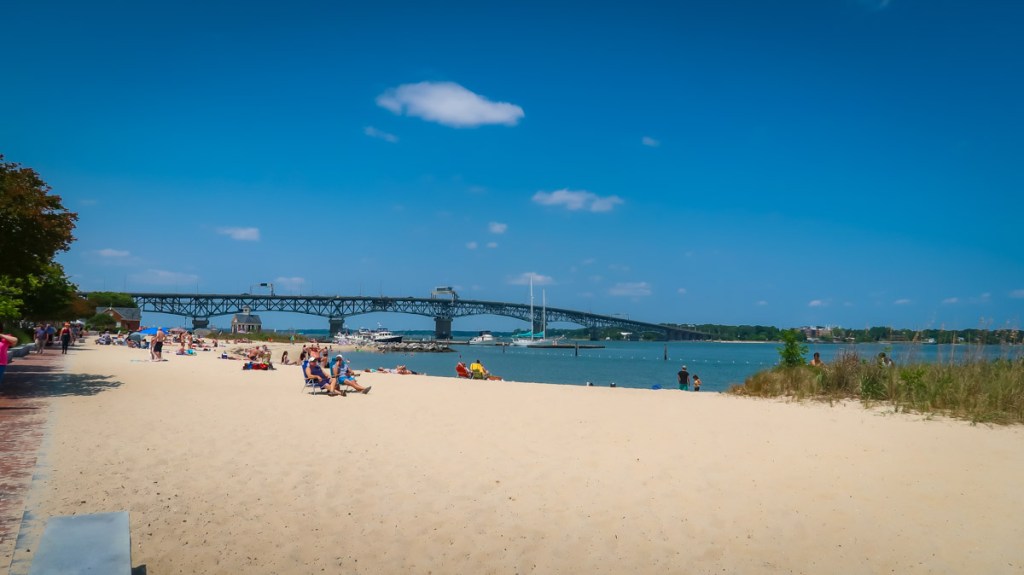
Next adventure Yorktown Battlefield and Village. What an awesome visitor center with an informative movie, presentations and displays…even I enjoyed it! Lol We then did the audio tour of the battlefield and then did the walking tour of the village in and out of homes and shops. It ended up at a beach area and yes people were swimming and enjoying this little block of a beach. Shocked!
On our way to Jamestown, we stopped at a New Balance store for I was in great need of new sneakers and we both got paddle socks.
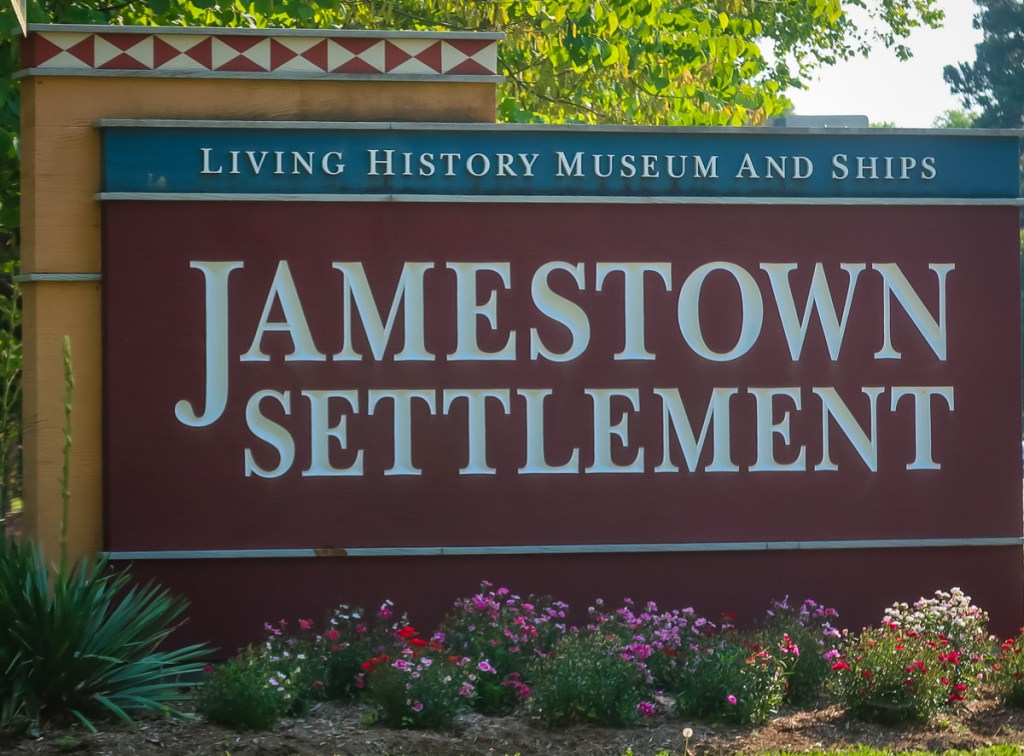
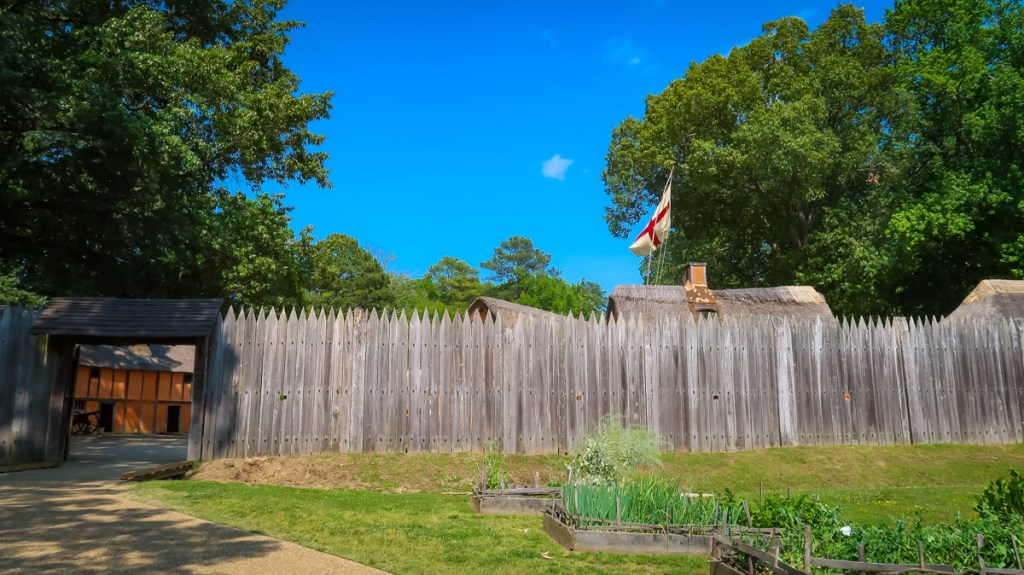
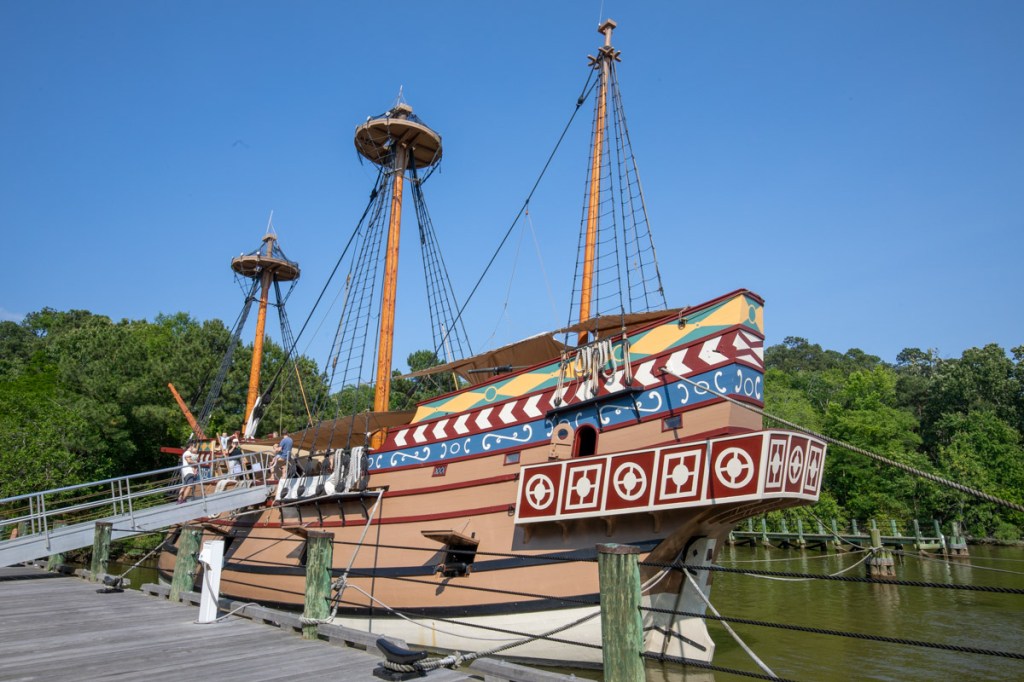
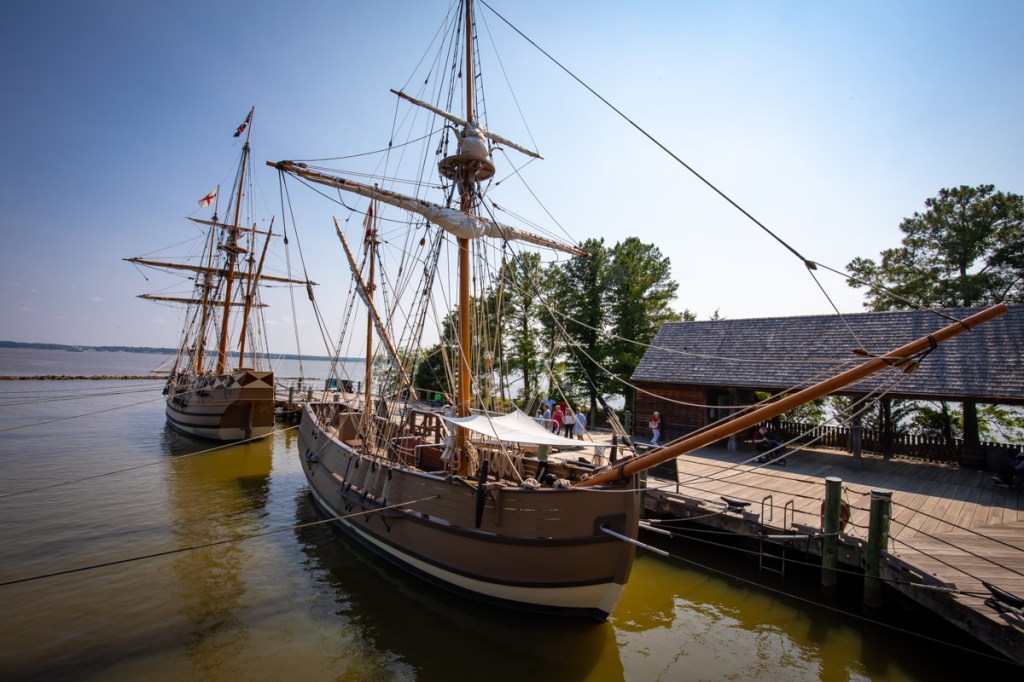
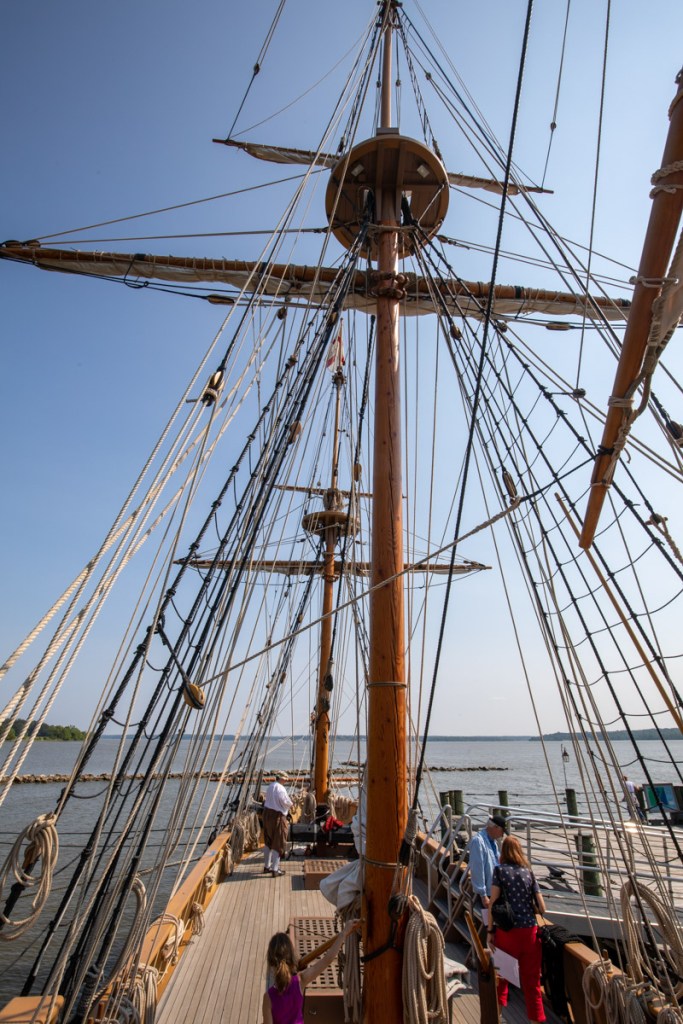
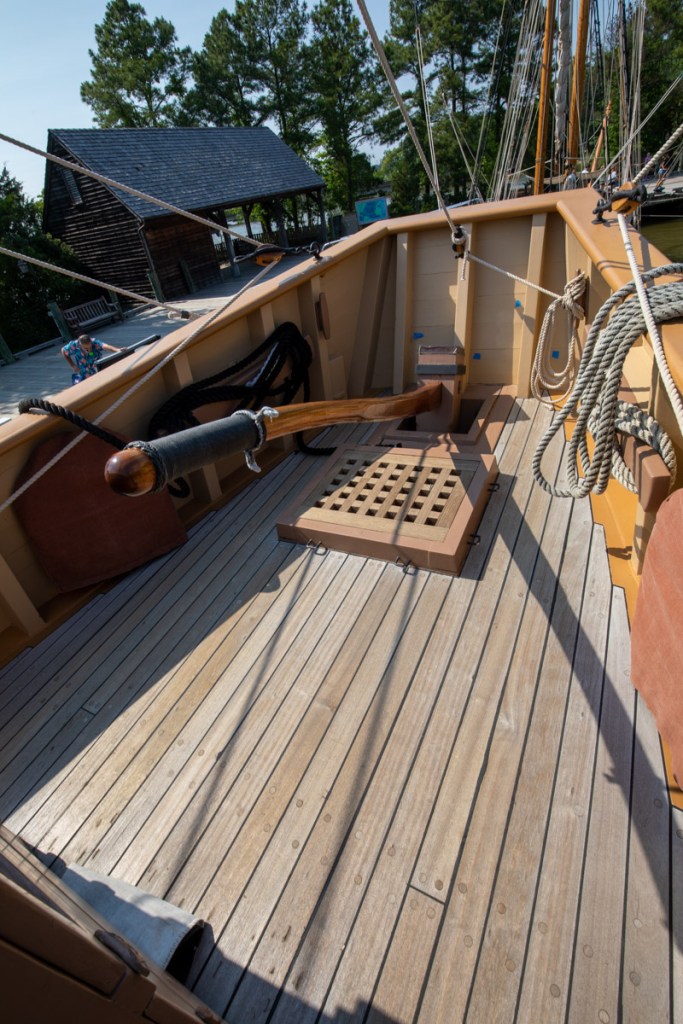
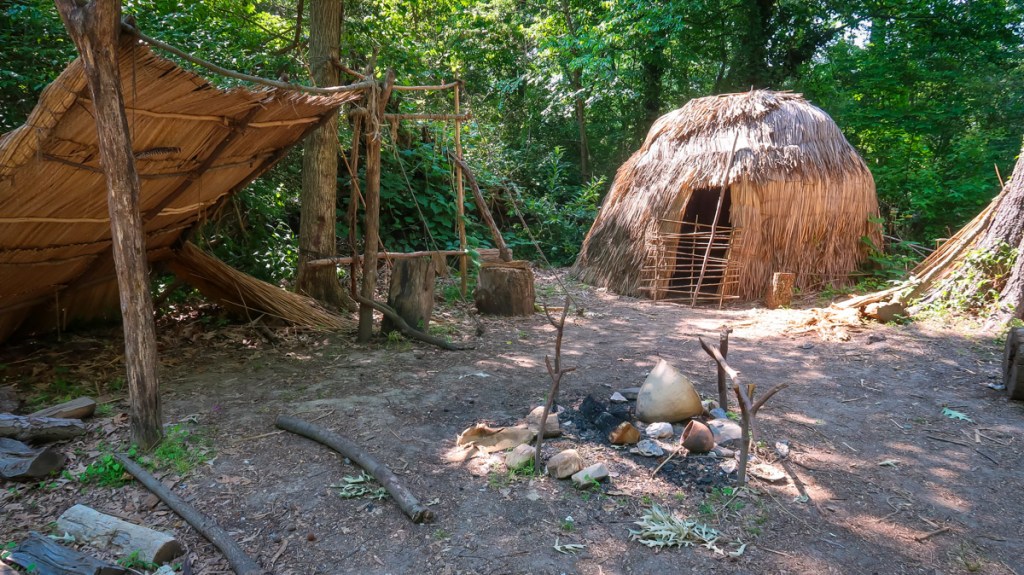
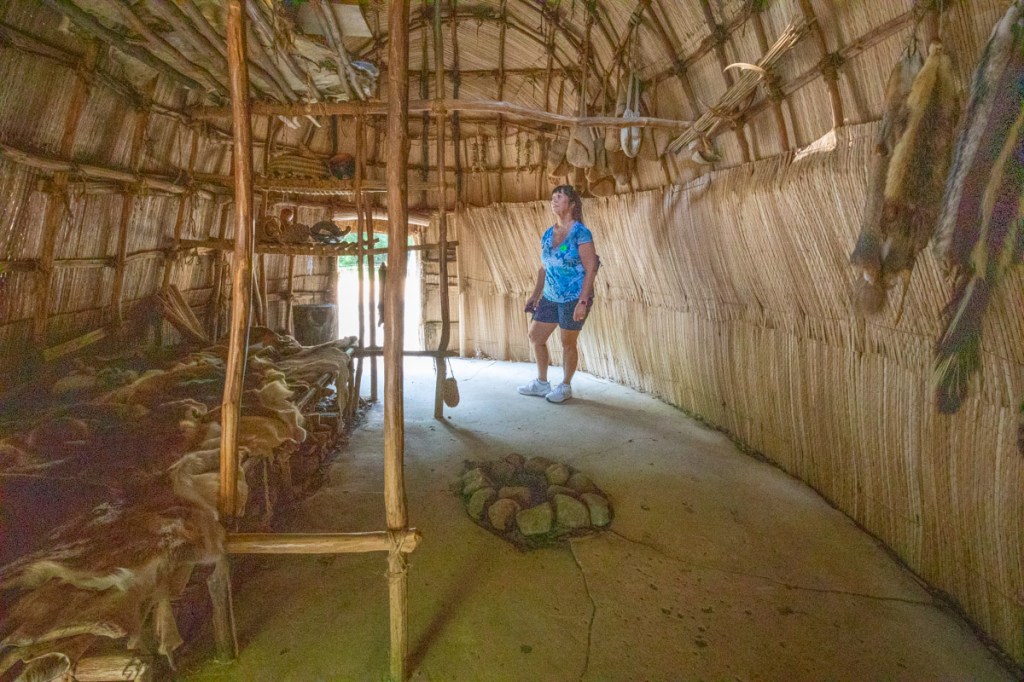
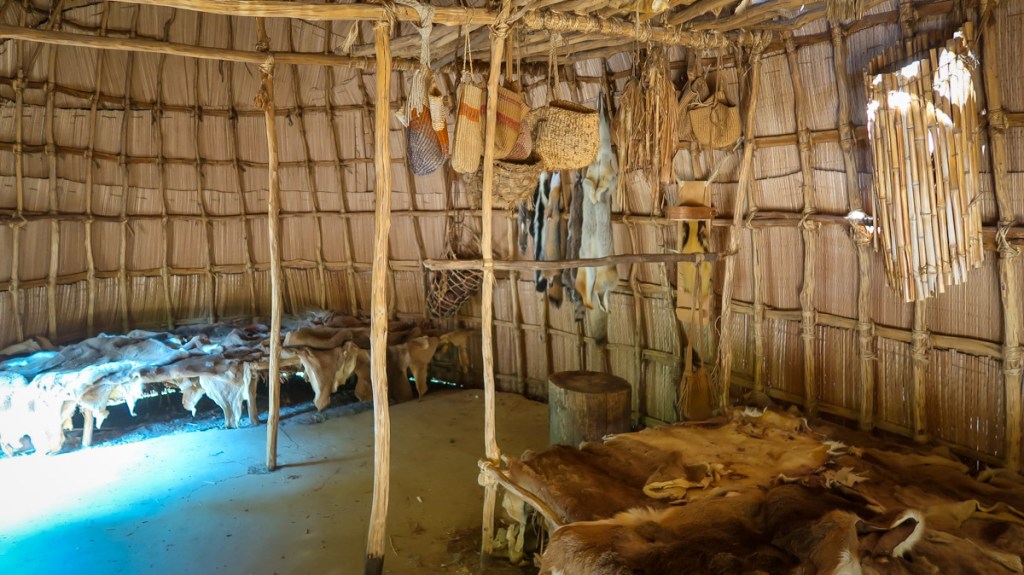
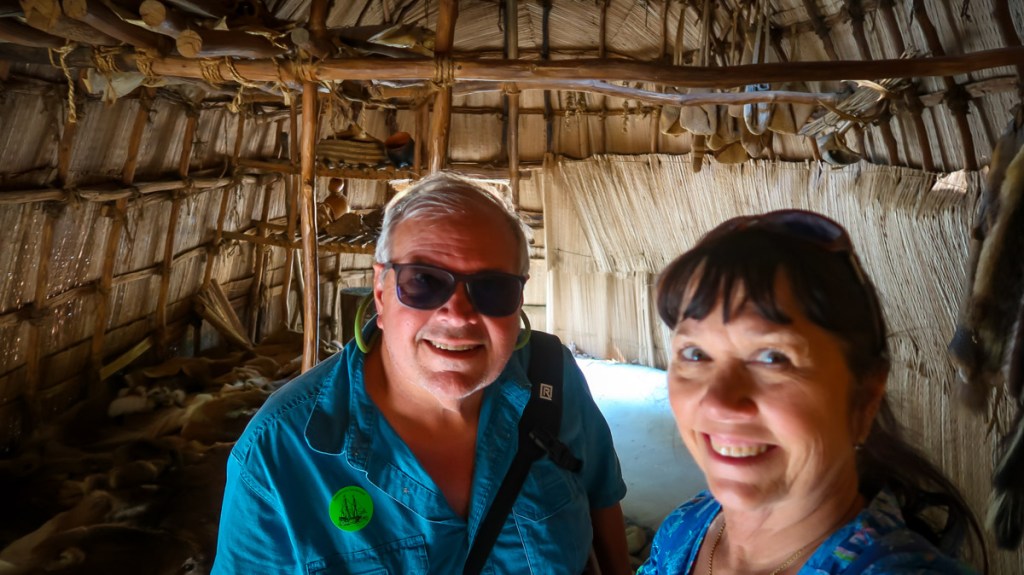
Jamestown had a massive visitor center with full site displays. We then ventured to James Fort, the pier a toured 2 of the 3 ships, and finished up at the Powhatan village. They were all authentically dressed, recreating history and sharing their story with us. Up in a tree was a large Bad Eagle nest with an eaglet in it! 🦅
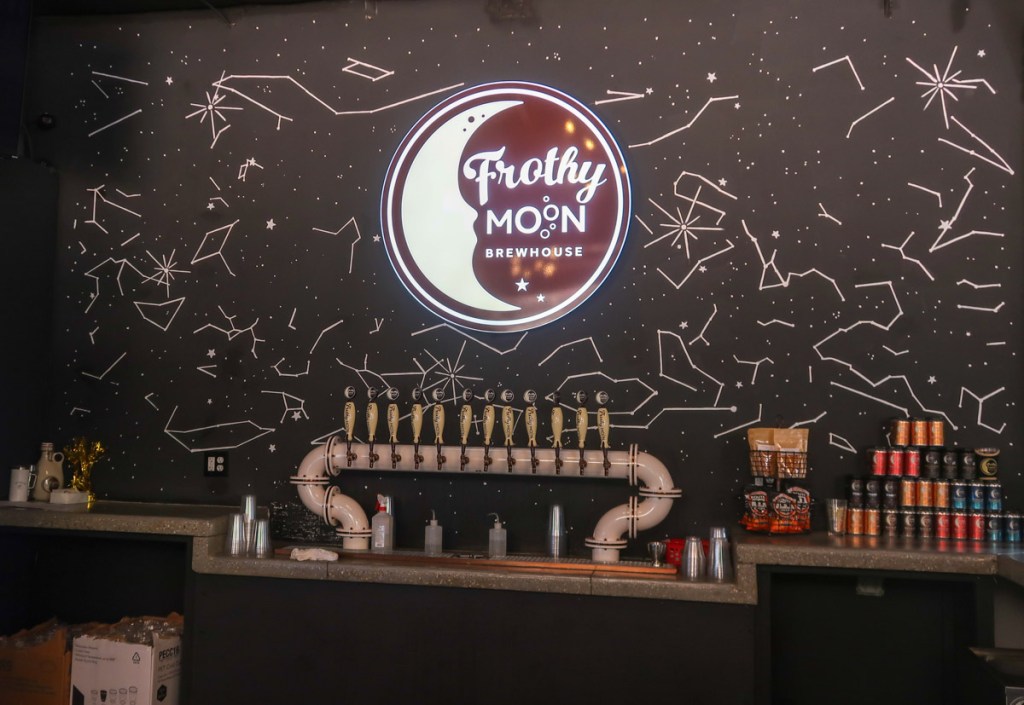
Another long day of mind blowing history lessons and I was fried! We passed a brewery and I asked Tim if he needed a beer and he did a quick u-turn and we stopped at Frothy Moon Brewery! 🍻 Enjoyed the inside , then out to the really cool Bier Garden and all their “Space Decor”. When we got back to the park, we decided to check out the interpretive center, the trail and then back to the RV to make dinner. Packed up a little for tomorrow is a travel day! Traveled 77 miles today
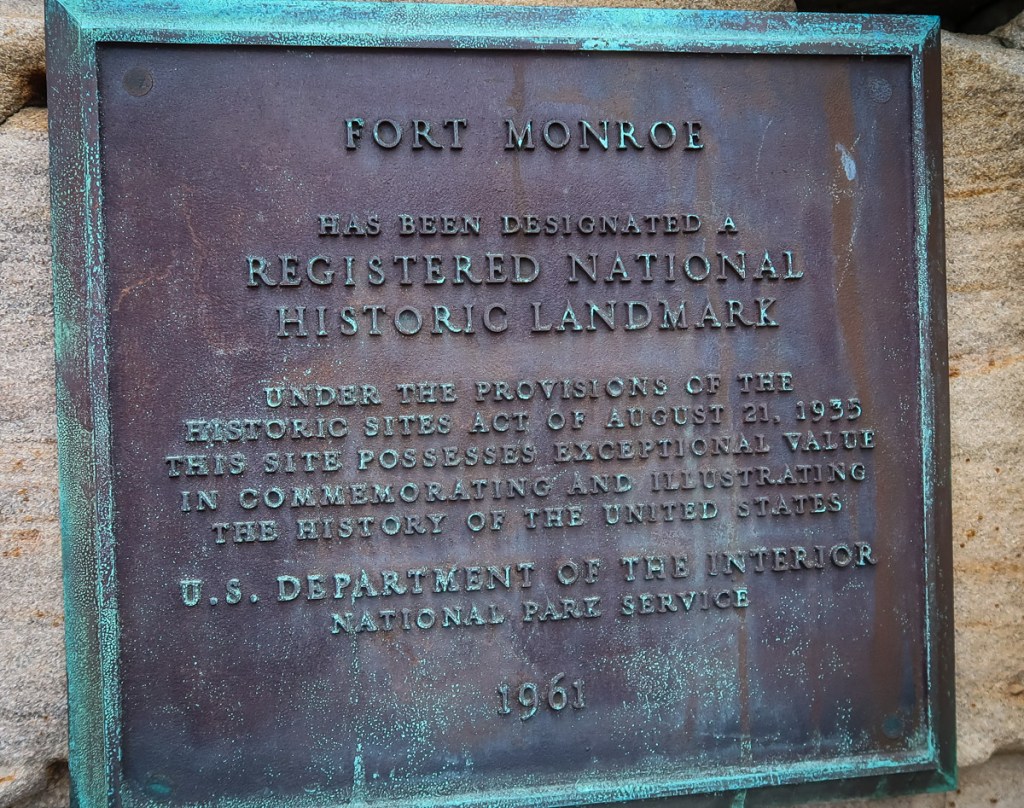
Fort Monroe National Monument is a former military installation at the southern tip of the VA peninsula. 565 acres……170 historic buildings and nearly 200 acres of natural resources. Along with Fort Wool, Fort Monroe originally guarded the navigation channel between the Chesapeake Bay and Hampton Roads.
Until disarmament in 1946, the areas protected by the fort were the entire Chesapeake Bay and Potomac River regions, including the water approaches to the cities of Washington, D.C. and Baltimore, Maryland, along with important shipyards and naval bases in the Hampton Roads area. Surrounded by a moat, the six-sided bastion fort is the largest fort by area ever built in the United States.
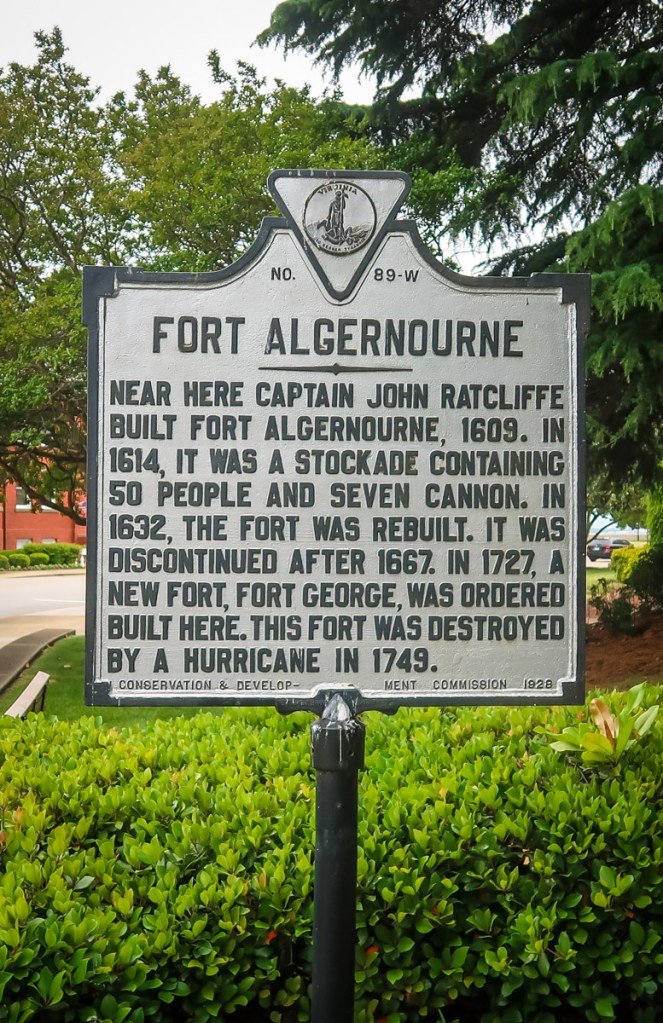
During the initial exploration by a mission headed by Captain Christopher Newport in the early 1600s, the earliest days of the Colony of Virginia, the site was identified as a strategic defensive location. Beginning by 1609, defensive fortifications were built at Old Point Comfort during Virginia’s first two centuries. The first was a wooden stockade named Fort Algernourne, followed by other small forts. However, the much more substantial facility of stone that became known as Fort Monroe (and adjacent Fort Wool on an artificial island across the channel) were completed in 1834. The principal fort was named in honor of US President James Monroe.
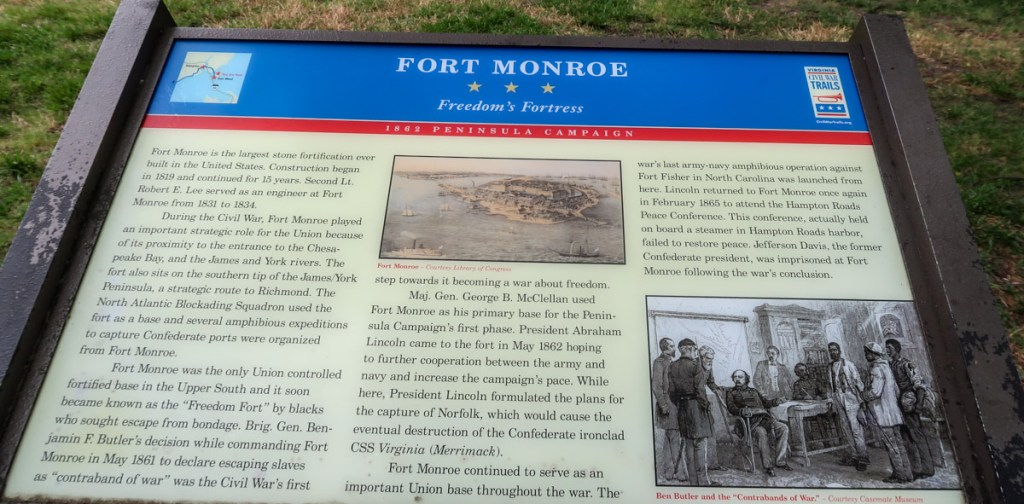
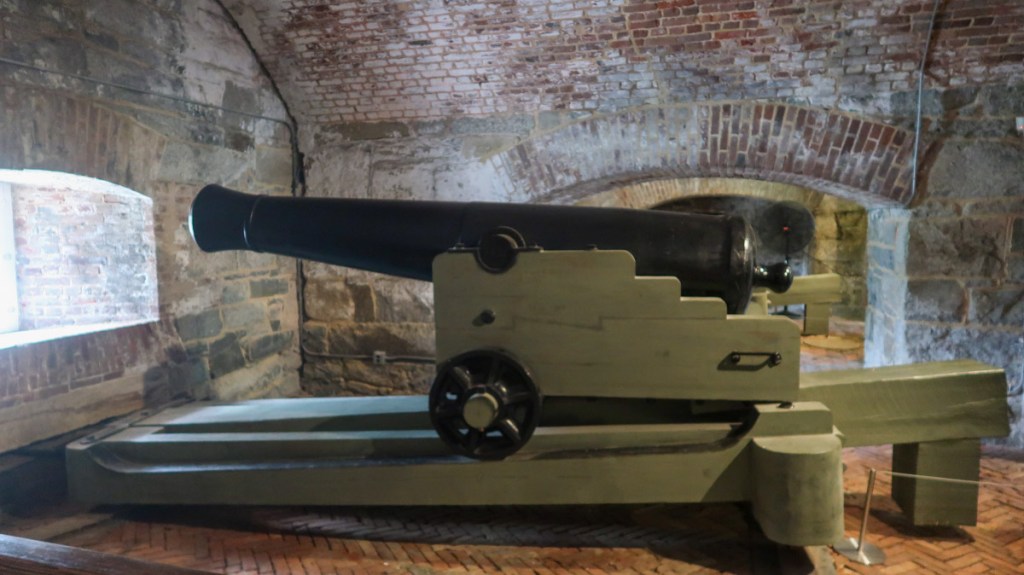
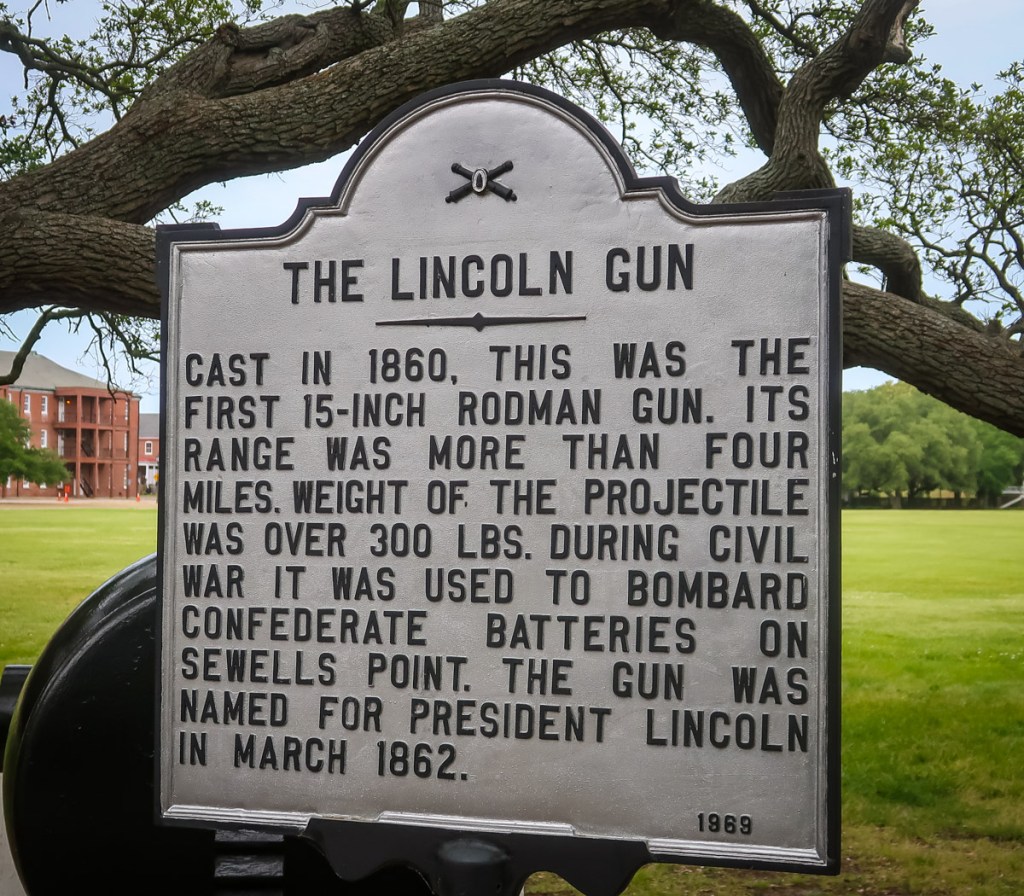
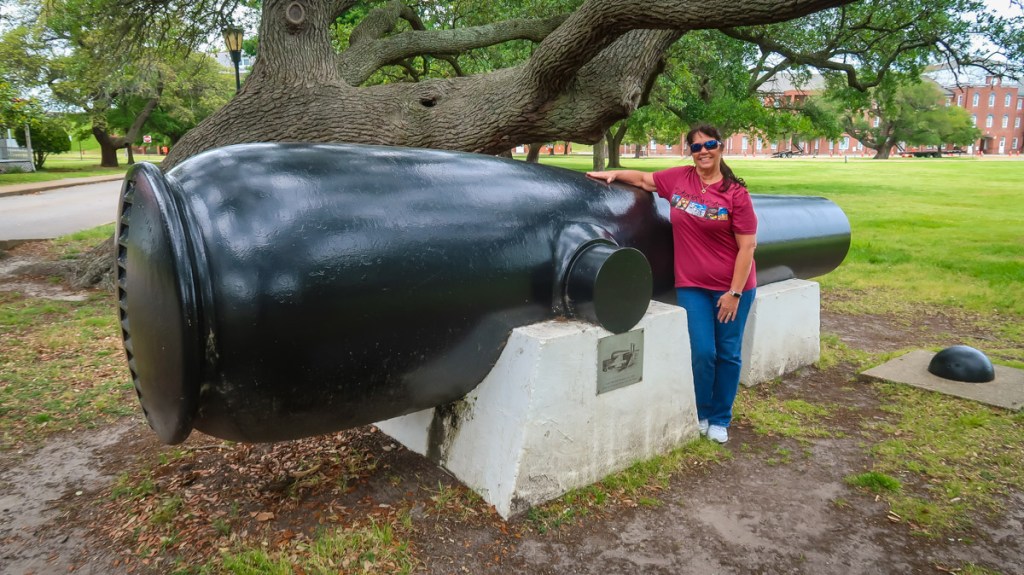
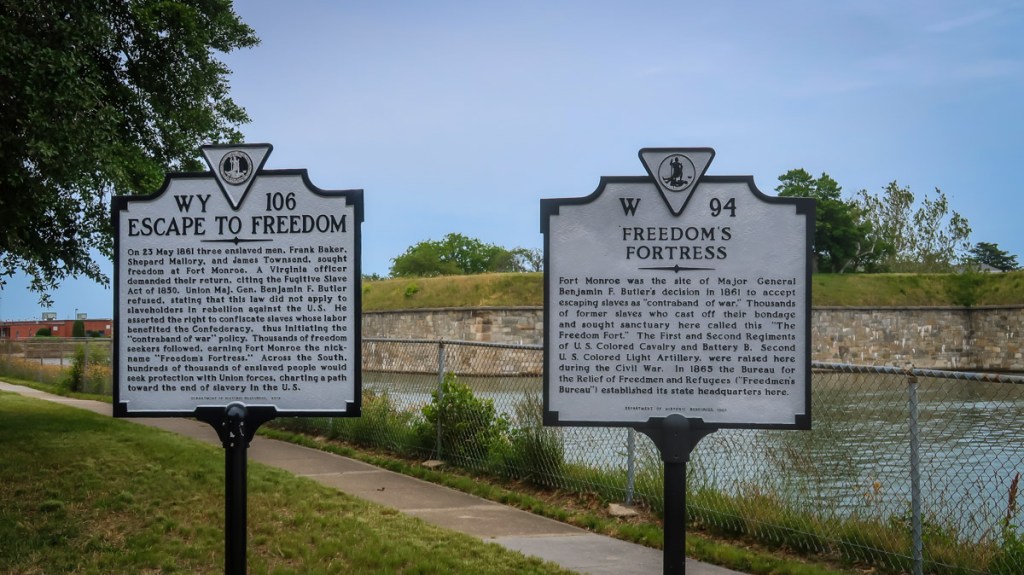
Although Virginia became part of the Confederate State of America, Fort Monroe remained in Union hands throughout the American Civil War (1861–1865). President Abraham Lincoln had Fort Monroe quickly reinforced so that it would not fall to Confederate forces. It was held by Union forces throughout the Civil War, which launched several sea and land expeditions from there. In 1861 the prototype 15-inch Rodman gun was delivered to Fort Monroe and was subsequently fired 350 times in testing. This weapon (Fort Pitt Foundry No. 1 of 1861) is displayed at the fort as of 2018; a plaque states that it was test fired for President Lincoln and was nicknamed the “Lincoln gun”. This type of weapon was deployed for coastal defense during the war (an 1862 map shows an external battery of them at Fort Monroe) and more widely deployed following the war. The fort was notable as a historic and symbolic site of early freedom for former slaves under the provisions of contraband policies.
For two years following the war, the former Confederate President, Jefferson Davis, was imprisoned at the fort. His first months of confinement were spent in a cell of the casemated fort walls that is now part of its Casemate Museum.
Around the turn of the 20th century, numerous gun batteries were added in and near Fort Monroe and became the largest fort and headquarters of the Harbor Defenses of Chesapeake Bay. In the 19th and 20th centuries it housed artillery schools, including the Coast Artillery School (1907–1946). The US Army had its headquarters and Training facilities at Ft Monroe from 1955-2011.
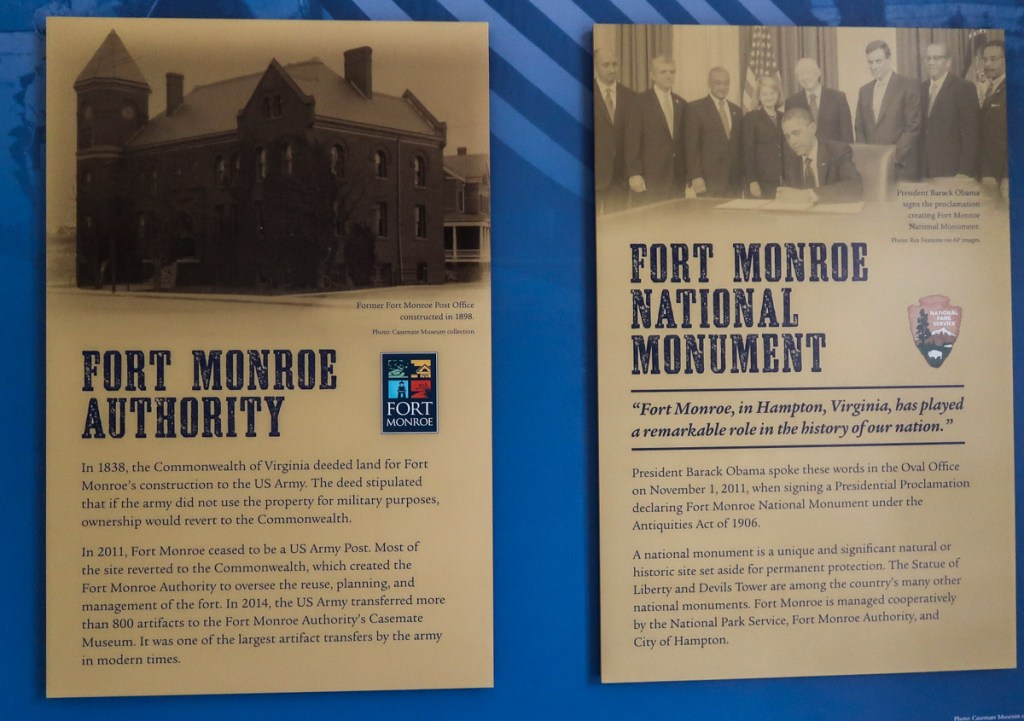
Fort Monroe was deactivated September 15, 2011, and many of its functions were transferred to nearby Fort Eustis. Several re-use plans for Fort Monroe are under development in the Hampton community. On November 1, 2011, President Barack Obama signed a proclamation to designate portions of Fort Monroe as a national monument. This was the first time that President Obama exercised his authority under the Antiquities Act, a 1906 law to protect sites deemed to have natural, historical or scientific significance.
The Old Point Comfort Lighthouse-1802 lighthouse was a British observation post during the War of 1812 and is the oldest operating lighthouse on the Chesapeake Bay.
Machicomoco State Park – in Hayes, Va. – 3 Yurts, 14 water & electric sites & 13 tent sites. Located in the southern part of Gloucester County along the York River, Machicomoco State Park is approximately 10 miles downriver from Werowocomoco. The landscape of Timberneck was most certainly associated with Tsenacommacah and Powhatan’s extensive Chiefdom.
The eastern Algonquian language is the main language of the Algonquian Powhatan Confederacy. There are 11 federally/state recognized tribes in Eastern Virginia and they all lived in this area at one time.
Northern Bobwhites, skunks and lots of fireflies around our site!
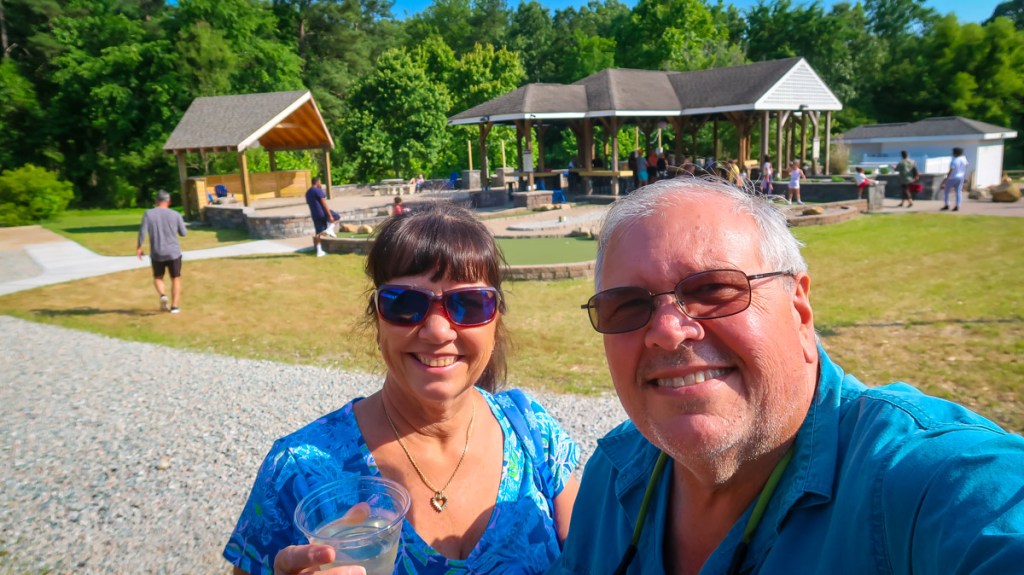
An open-air interpretive pavilion provides information on the culture, landscape and movement of Virginia Indians through displays and a walking path in the landscape. A paved trail follows along the main park road for walking or bike riding. The surrounding land provides diverse wildlife habitats, from open fields to woodlands and waterfront/marsh areas supporting deer, turkey, and many species of songbirds and birds of prey.
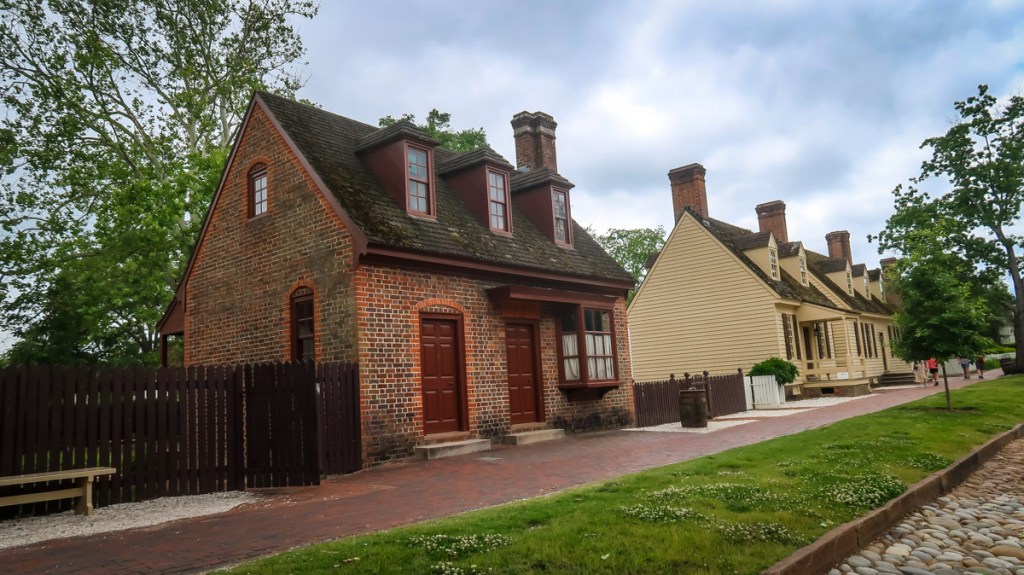
Colonial Williamsburg – Built in 1699, Over 300 acres of iconic sites, historical taverns, art museums, & where history comes to life at the world’s largest living history area! It has several hundred restored or recreated buildings from the 18th century when the city was the capital of the Colony of Virginia, 17th century, 19th century and Colonial Revival structure.
It is part of the Historic Triangle of Virginia, along with Jamestown & Yorktown and the Colonial Parkway. Conferences by world leaders and heads of states were held here and was designated a National Historical Landmark District in 1960.
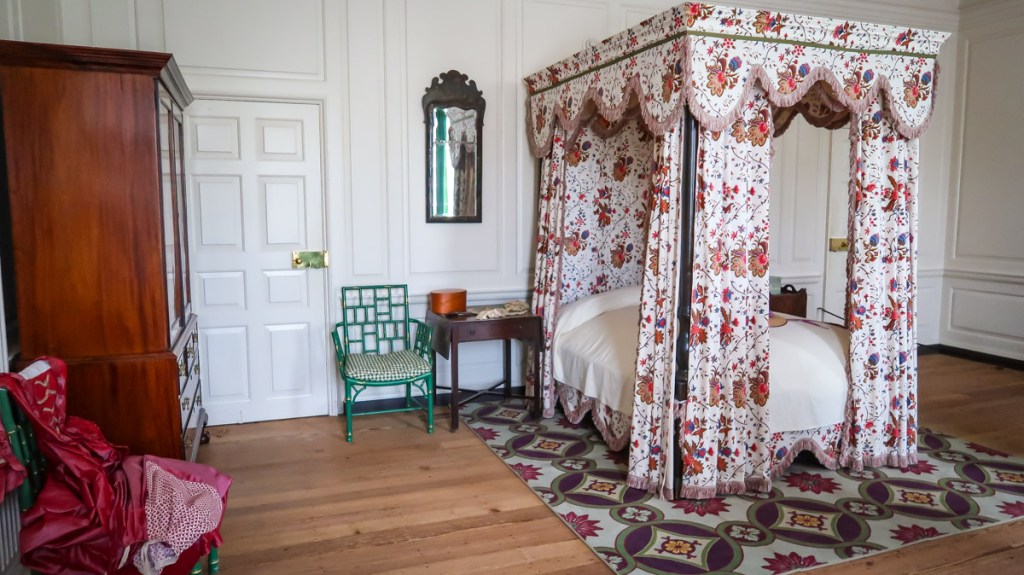
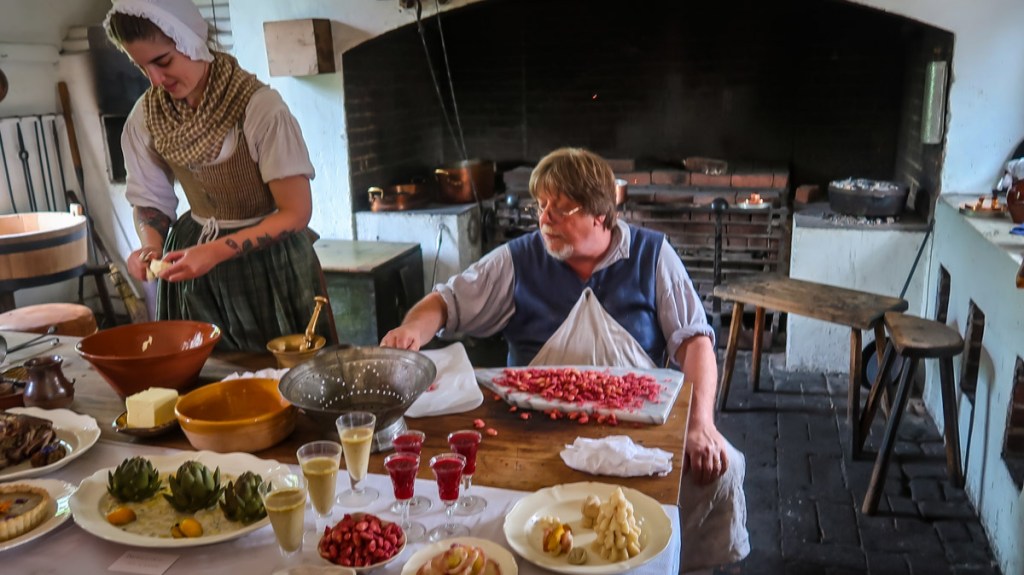
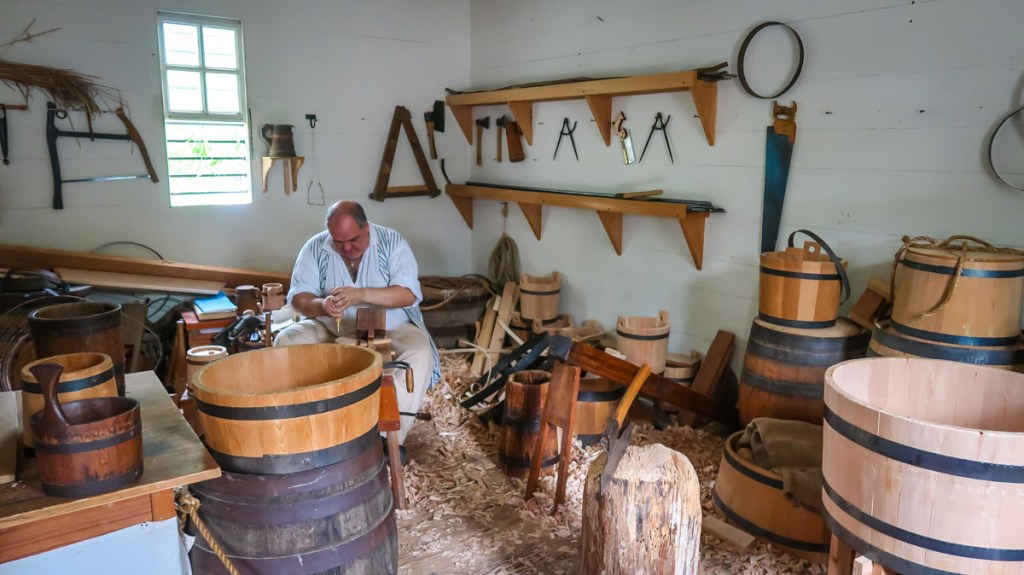
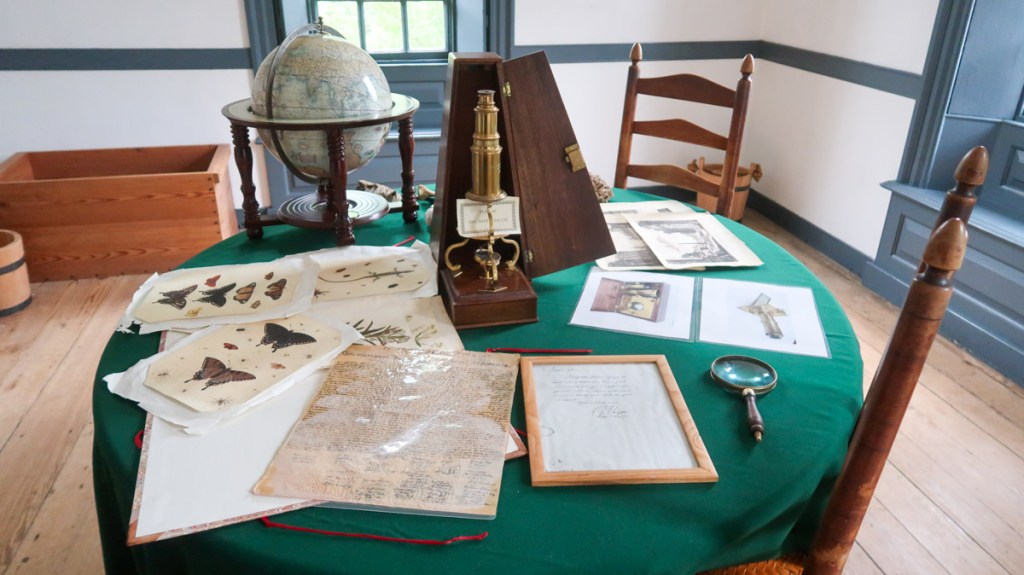
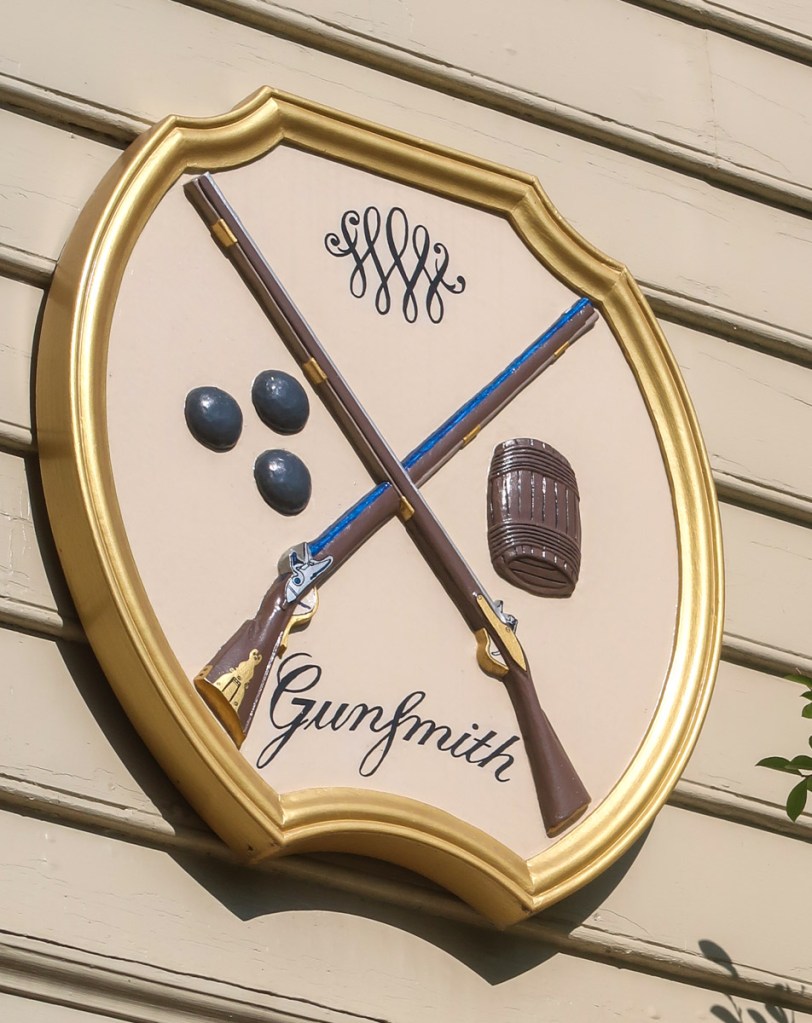
We visited the Raleigh Tavern, the Capital, the Governor’s Palace, Courthouse, the Wythe House, Peyton Randolph House, the Magazine and the Burton Parish Church. Also we saw in action the different craftsmen’s workshops….printing shop, shoemaker, blacksmith, cabinetmaker, gunsmith, wigmaker, and silversmith.
King’s Arms Tavern –Originally opened by Jane Vobe in 1772, authentic reproduction public house serves up a transporting experience for the senses in Colonial Williamsburg. Everything is true to the time period at King’s Arms Tavern, from the fashion sported by servers to the pewter candlesticks—all adding to an air of colonial elegance. Inspired by 18th-century recipes, but with updates to suit 21st-century tastes, tuck into a chophouse menu featuring prime rib, pork chops, and more.
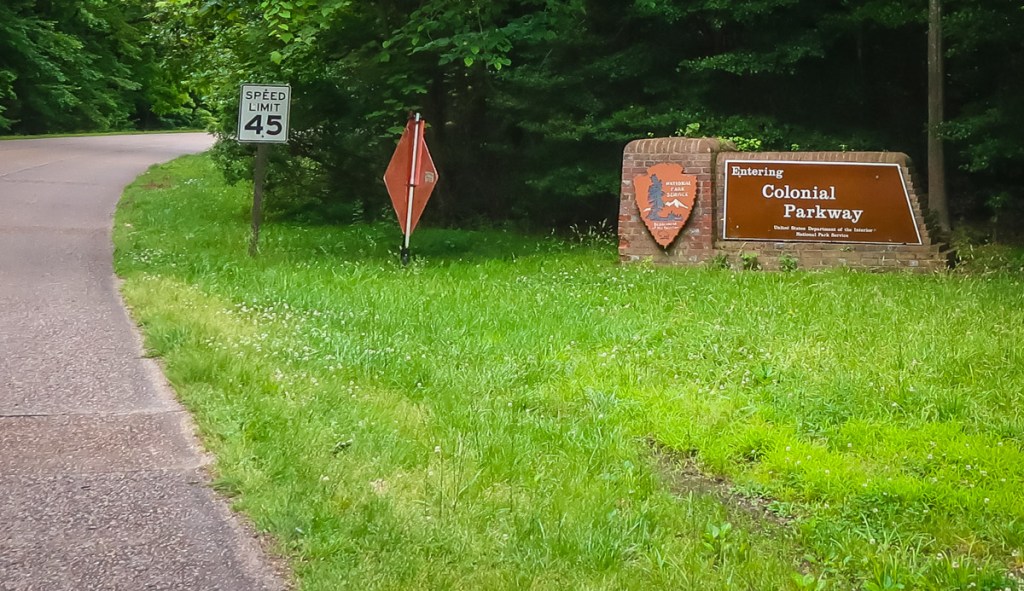
The Colonial Parkway is a 23 mile road known as “All American Road” and links all 3 National Parks.
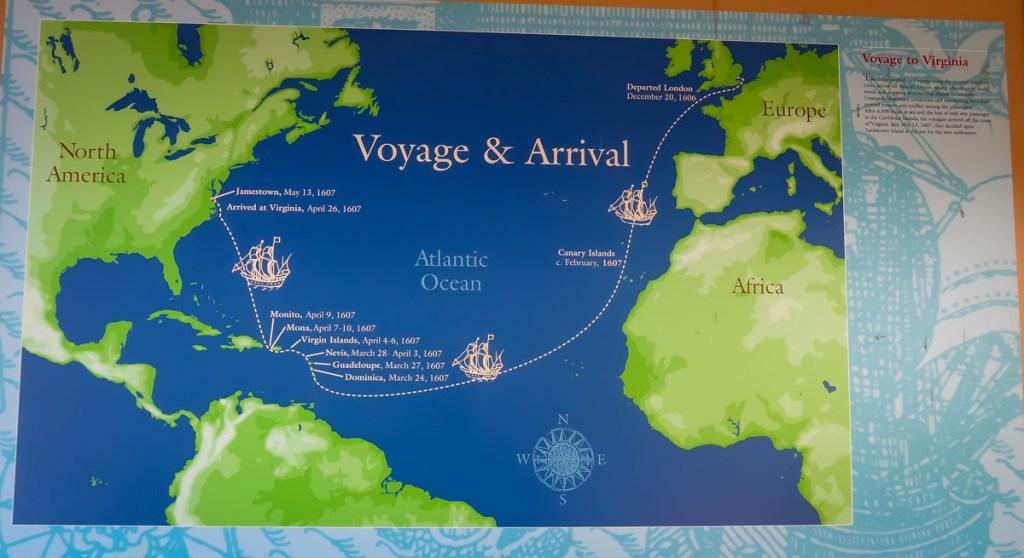
Jamestown –settlement in the Colony of Virginia was the first permanent English settlement in the Americas. May 1607. It was located on the northeast bank of the James River, about 2.5 mi southwest of the center of modern Williamsburg. It was established as “James Fort” on May 4, 1607 and was considered permanent after a brief abandonment in 1610. Jamestown served as the colonial capital from 1616 until 1699.
It is known for its historical significance as the site of the first permanent English settlement in America. The town is home to several museums and historical sites, including the Jamestown Settlement and the American Revolution Museum at Yorktown, which showcase the rich history of the area.
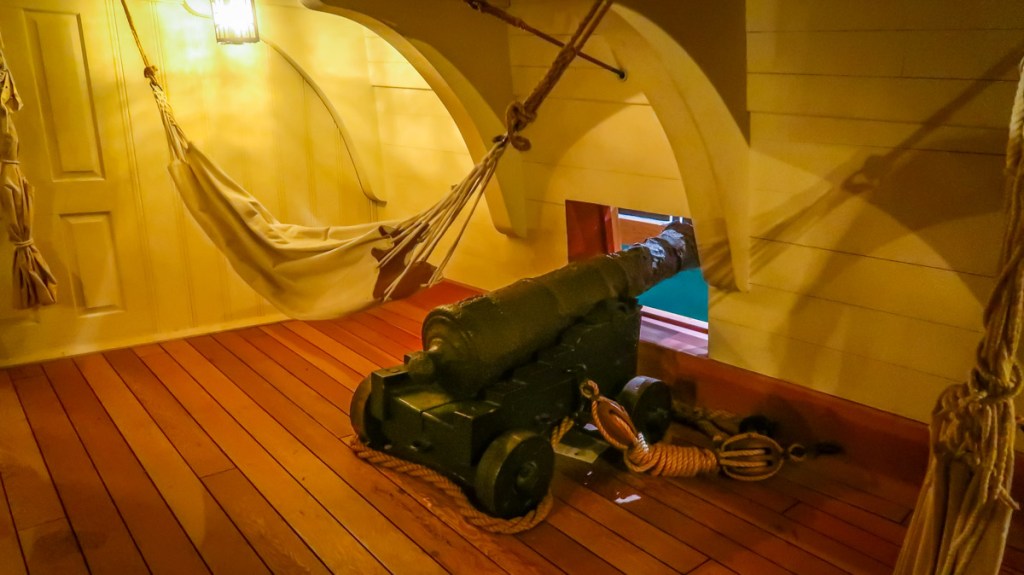
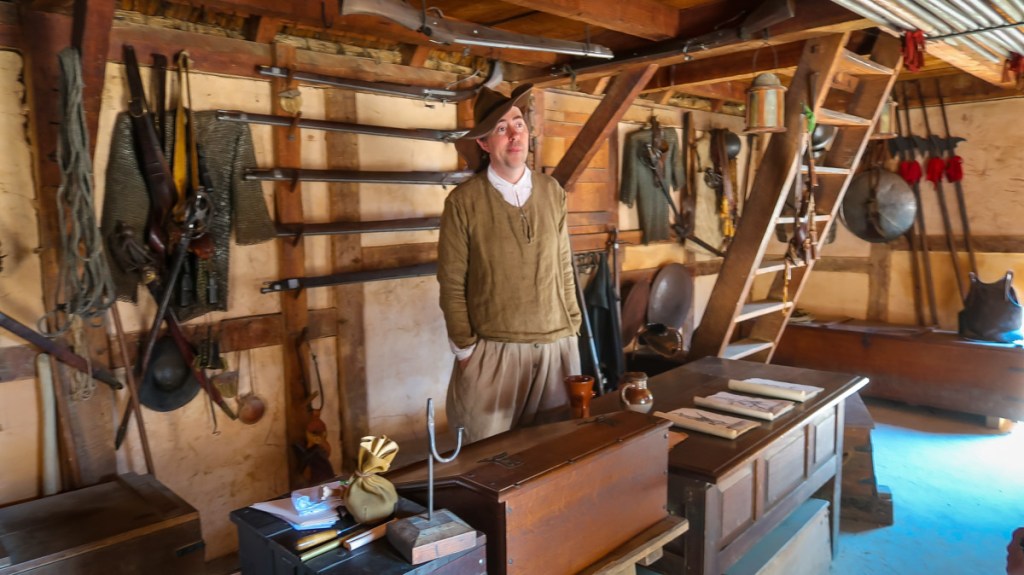
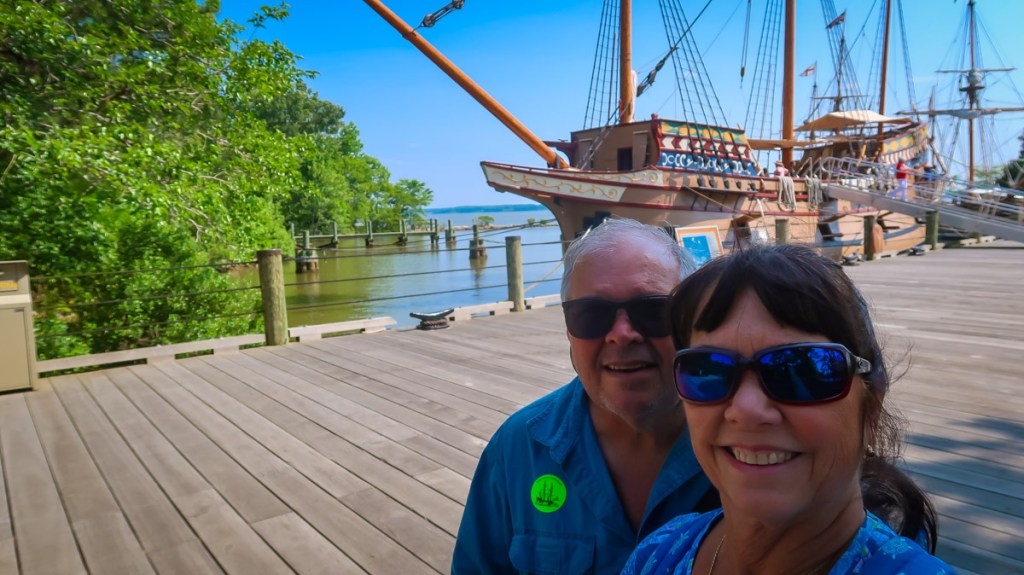
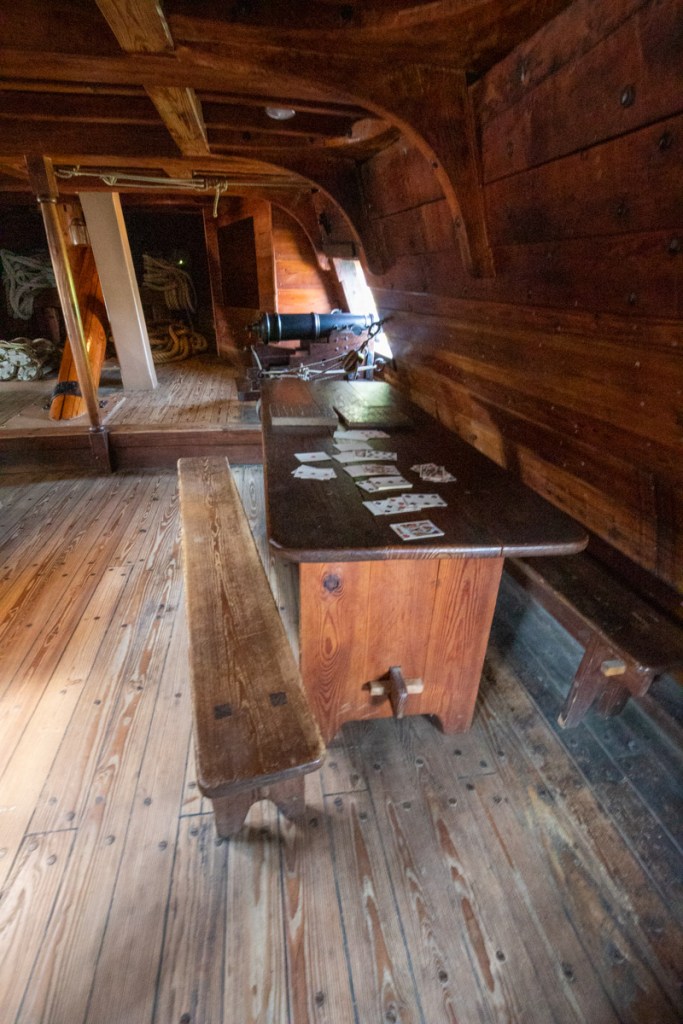
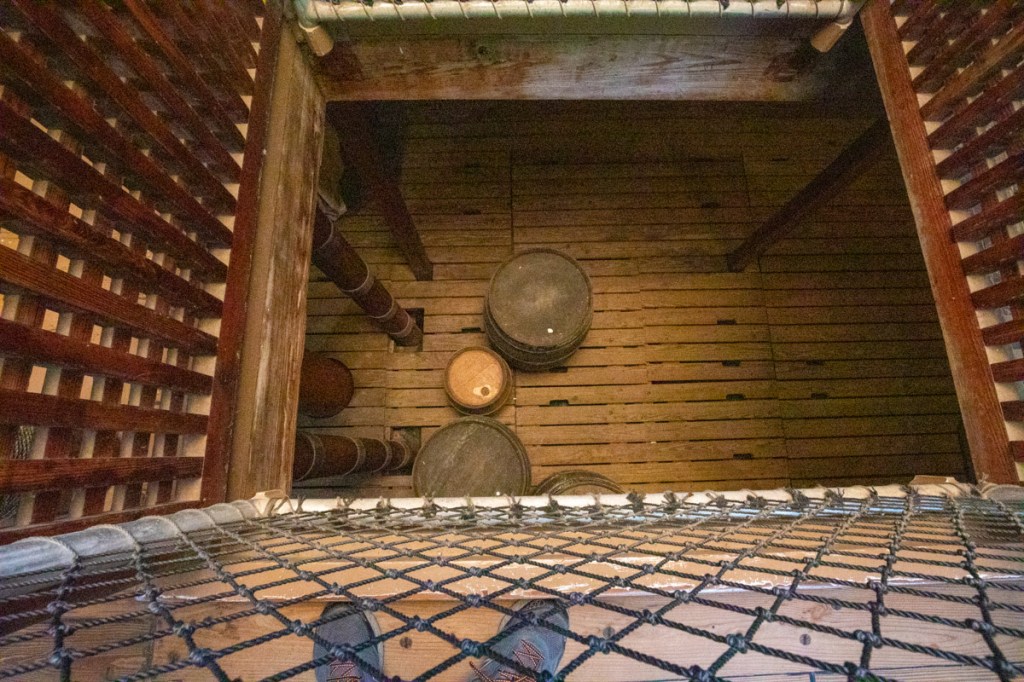
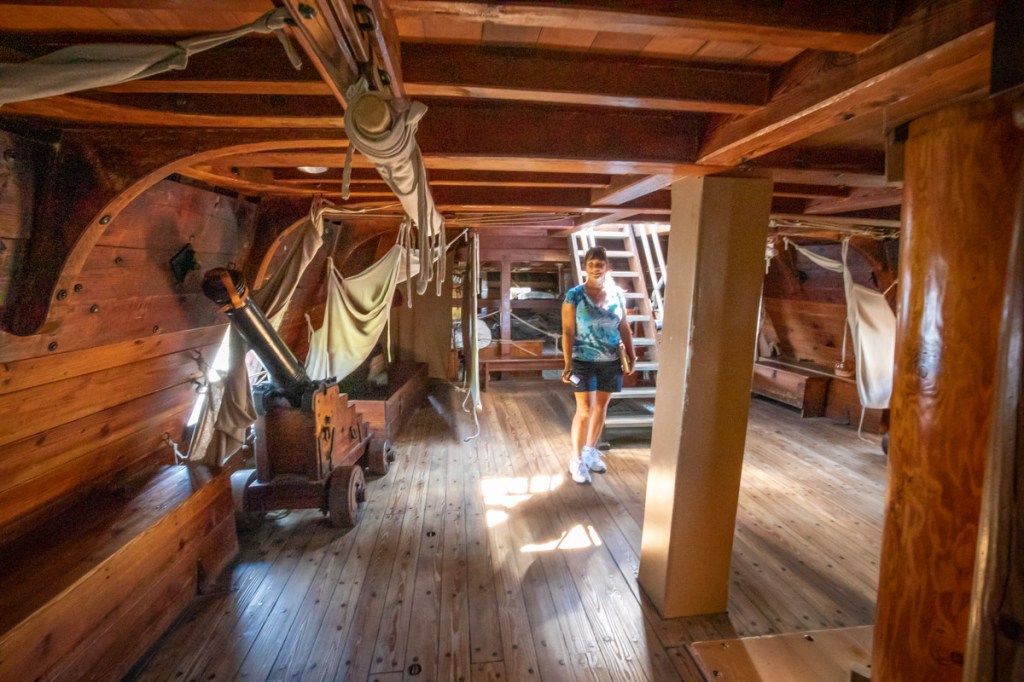
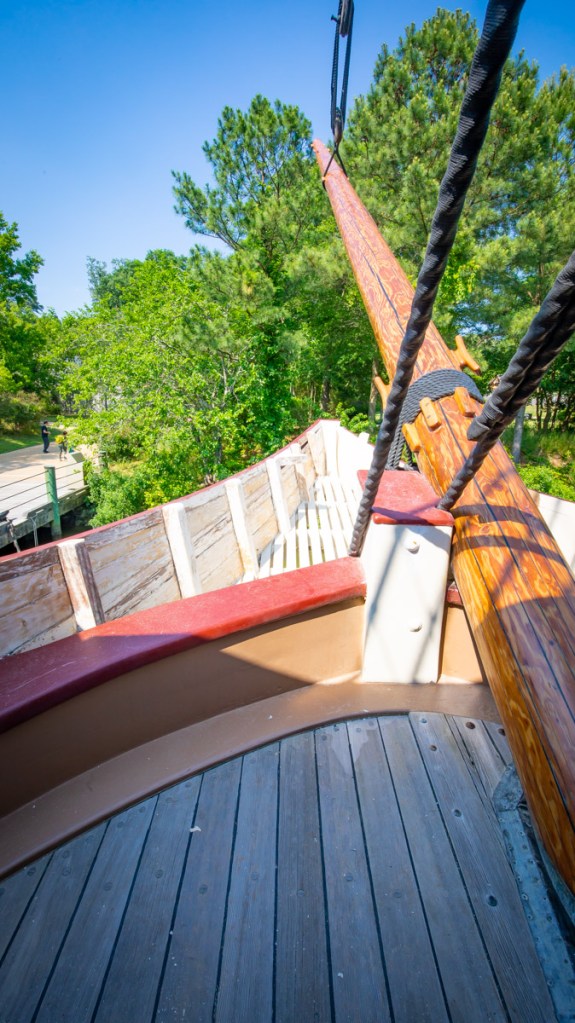
We went through James Fort and everyone was dressed In character and we witness re-enactments in the different areas within the fort. Down by the James River we were able to board 2 of the 3 of the ships that are recreated from 1607 that sailed to Virginia from English colonies. The Paspahegh/Powhatan Indian village was amazing!
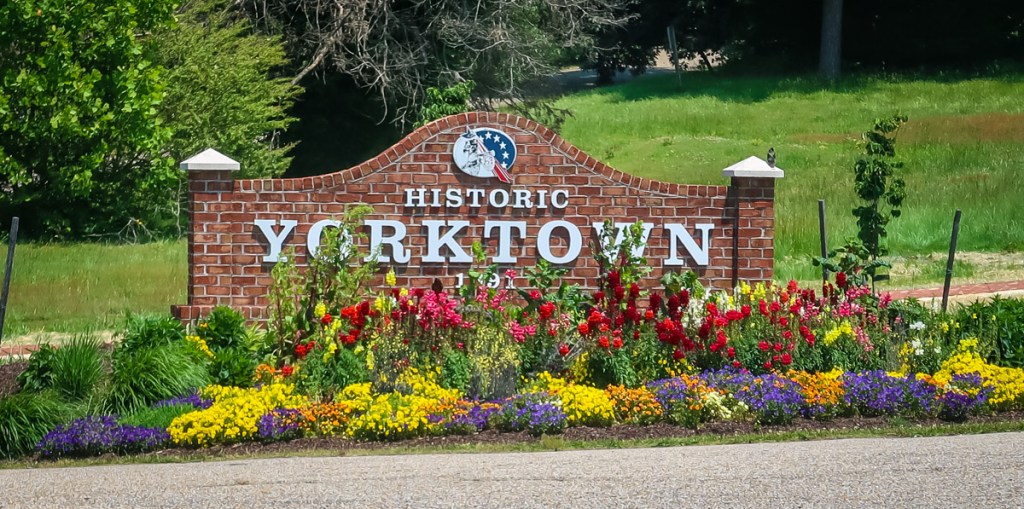
Yorktown-established by the Act for Ports of 1691, passed by the General Assembly at Jamestown (Virginia’s government seat for almost a century). In the fall of 1781, General George Washington, with allied American and French forces, besieged General Charles Lord Cornwallis’s British army. On October 19, Cornwallis surrendered, effectively ending the war and ensuring independence. This site is where the US became independent in the last major battle of the Revolutionary War.
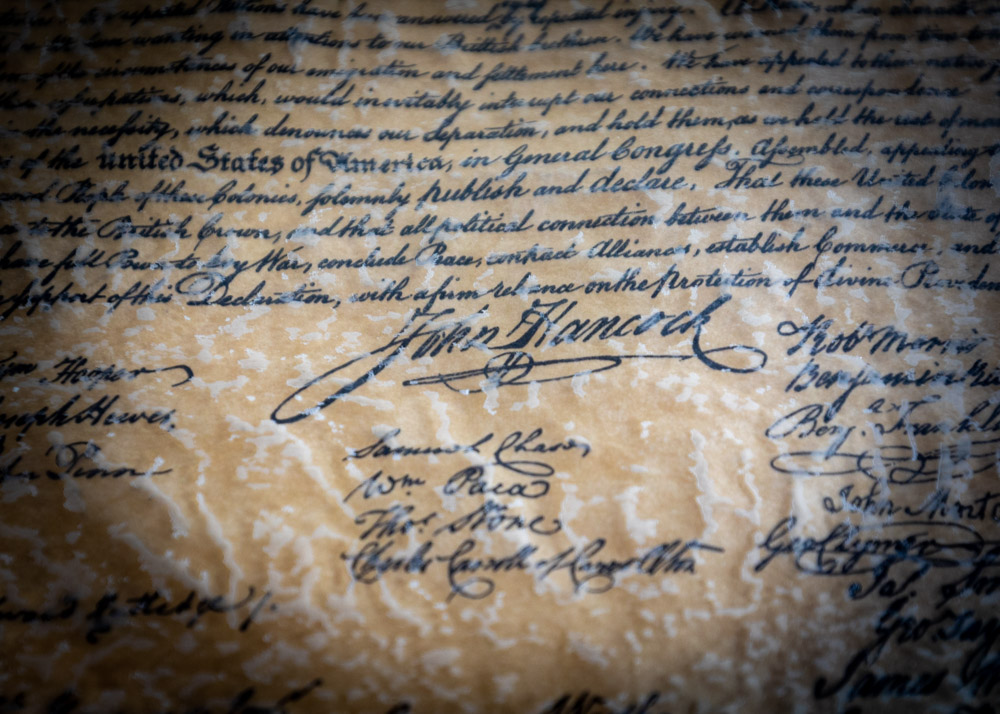
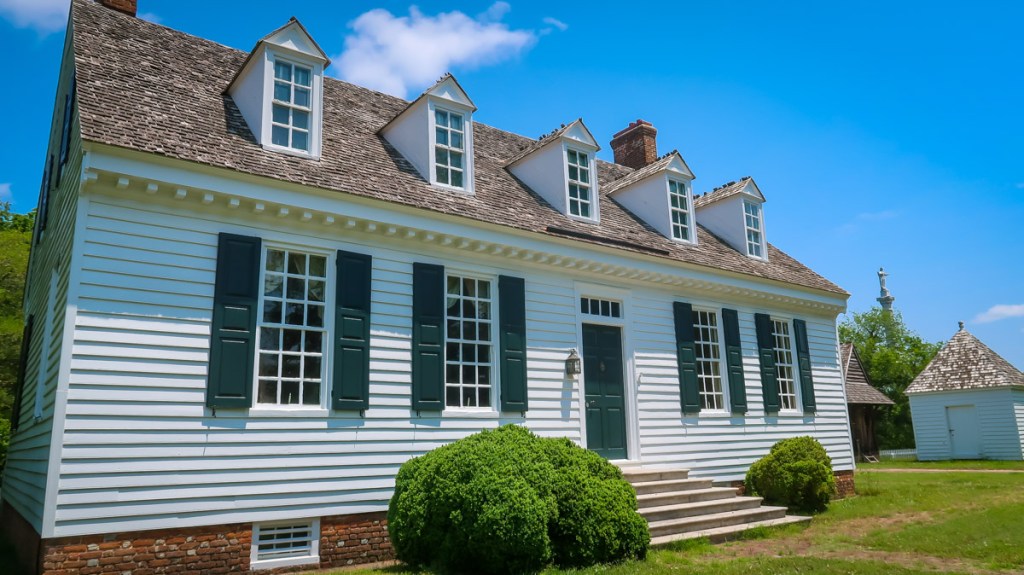
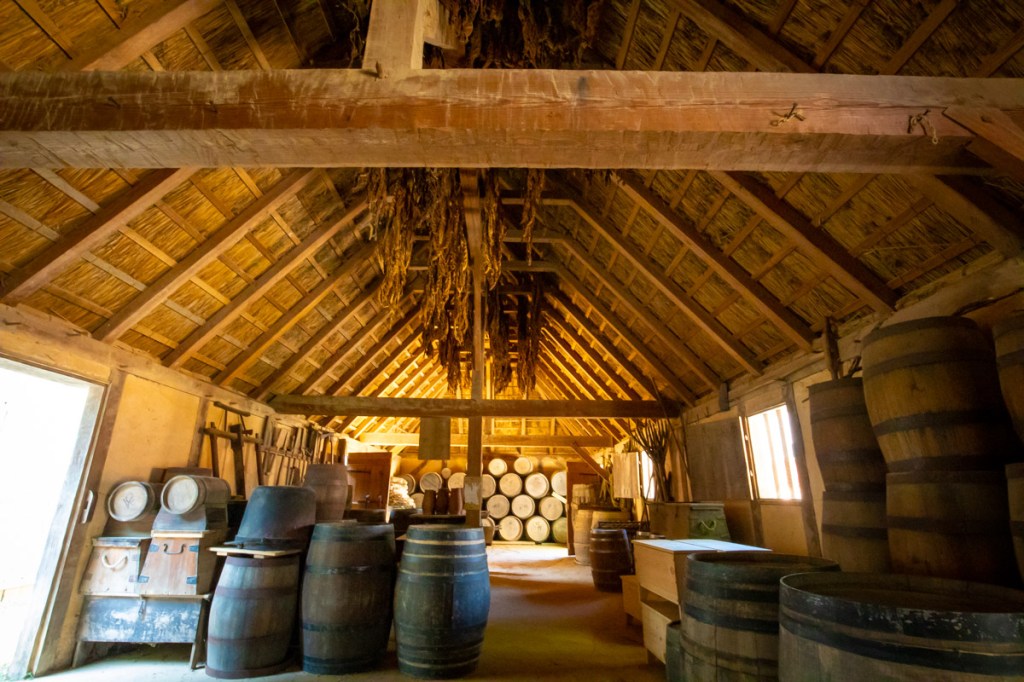
Yorktown became an important tobacco port, exporting crops from area plantations. At peak prosperity (1740-1770), Yorktown had several hundred buildings and almost 2,000 residents, making it a substantial 18th century community, and rivaling the size of the nearby colonial capital, Williamsburg. There were men of all types and classes along the streets and on the wharves – merchants, planters, prosperous yeomen, shopkeepers, indentured servants and slaves, travelers and seamen. Apprentices rose to become partners, as in the case of Augustine Moore (in 1781, owner of the Moore House where the surrender terms for the British army were negotiated) in the Nelson firm. Prominent families were united by birth and marriage with the wealthy gentry of the region. The most noted citizen of Yorktown was Thomas Nelson, Jr., a signer of the Declaration of Independence, Governor of Virginia and commander of the Virginia Militia at the Siege of 1781
🍻 Frothy Moon Brewhouse – Opened in October 2022, “All of our coffee begins with farm owner Alfredo in Ecuador”. The brewhouse features a variety of coffee and tea beverages at its coffee bar, as well as its own line of beers available from the tasting room in cans and on tap — there is even a root beer available for those under 21. There is an extensive outdoor patio an large outdoor back covered pavilion, fire pits and large field for kids to play & for food trucks. They refer to customers as “ crew members”! The atmosphere is all “ Space” 🪐 ✨ 🌌






























 Follow Tim & Sandy's Adventures